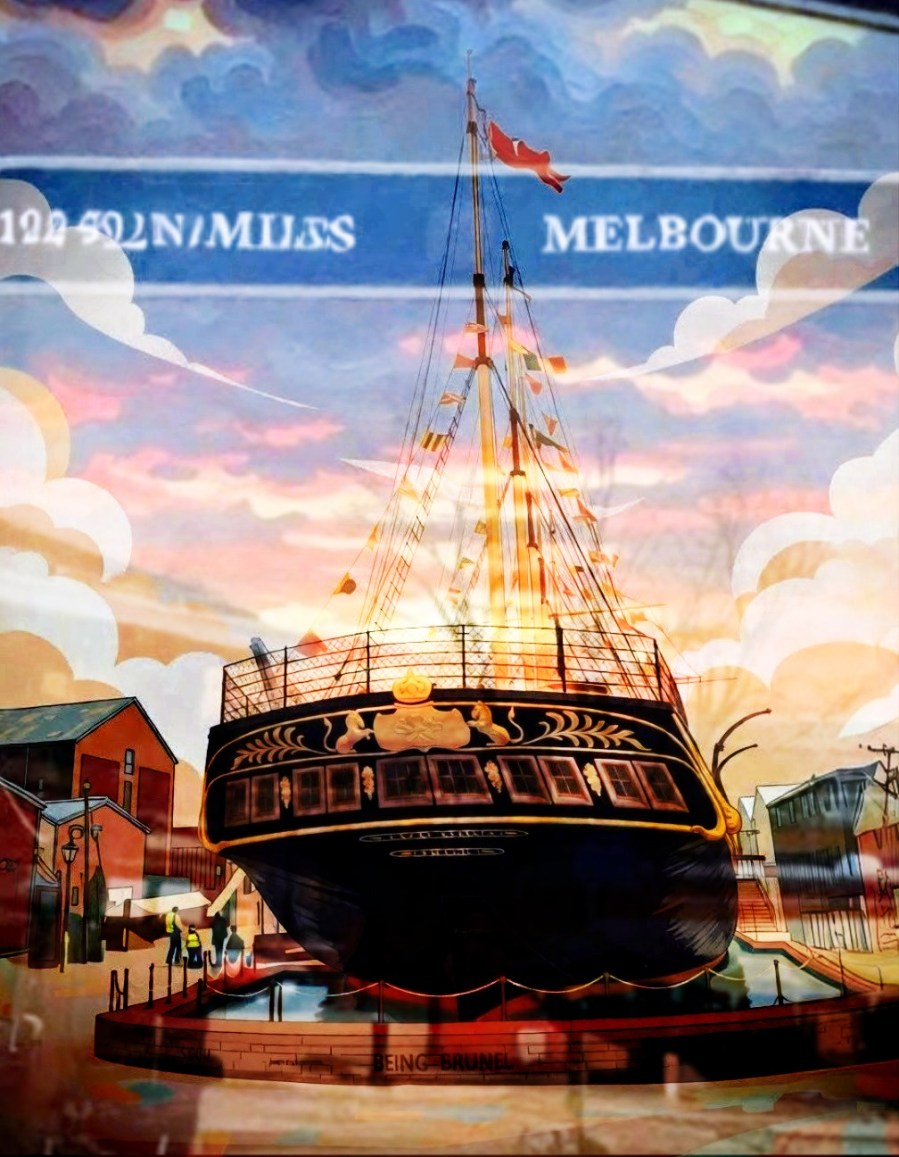
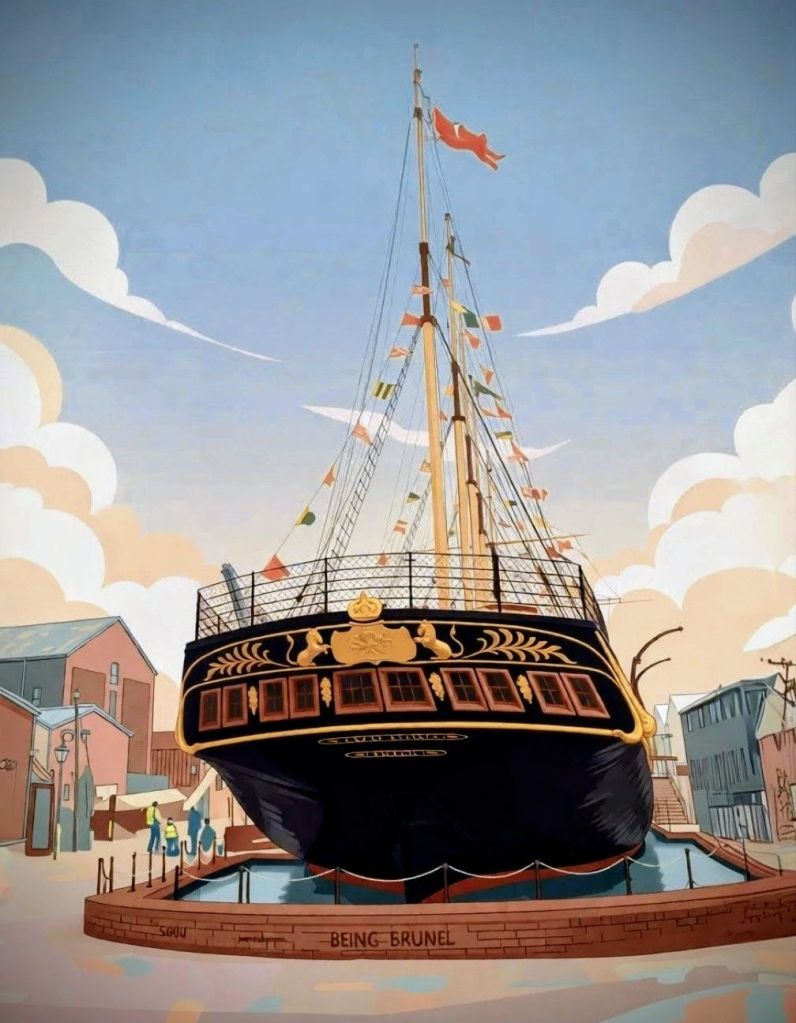
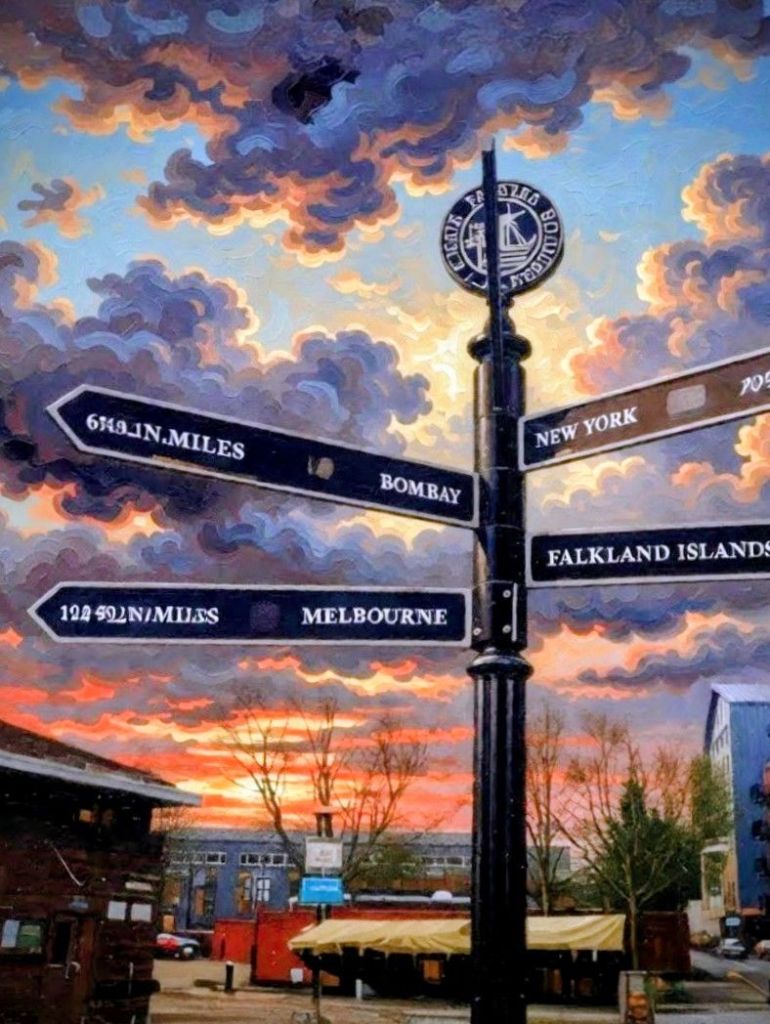
83 days ago we were in Melbourne, Australia. Yesterday we were in Bristol Historic Docks, gazing at the S.S Great Britain.
This is a tiny snippet of a blog built on a coincidence. Had we travelled on the inaugural S.S Great Britain trip to Melbourne we would have only just arrived. The journey was scheduled to take 60 days which would not have worked for our coincidence. 60 days non-stop became 83 days because there had been a miscalculation in the amount of coal required for the steam engine. So an unplanned visit to Cape Town, South Africa, occurred and many of the passengers took the opportunity of climbing Table Mountain.
Our flight arrived about ten minutes ahead of schedule, no mountains involved and we were fragrant enough to hug our friends on arrival. I suspect the greeting would have been more at arms length, or further, if we had been travelling 83 days and thrown in a casual mountain climb in a hot climate.
Yesterday was a day of really bright sunlight and a temperature of about 2 degrees Centigrade.
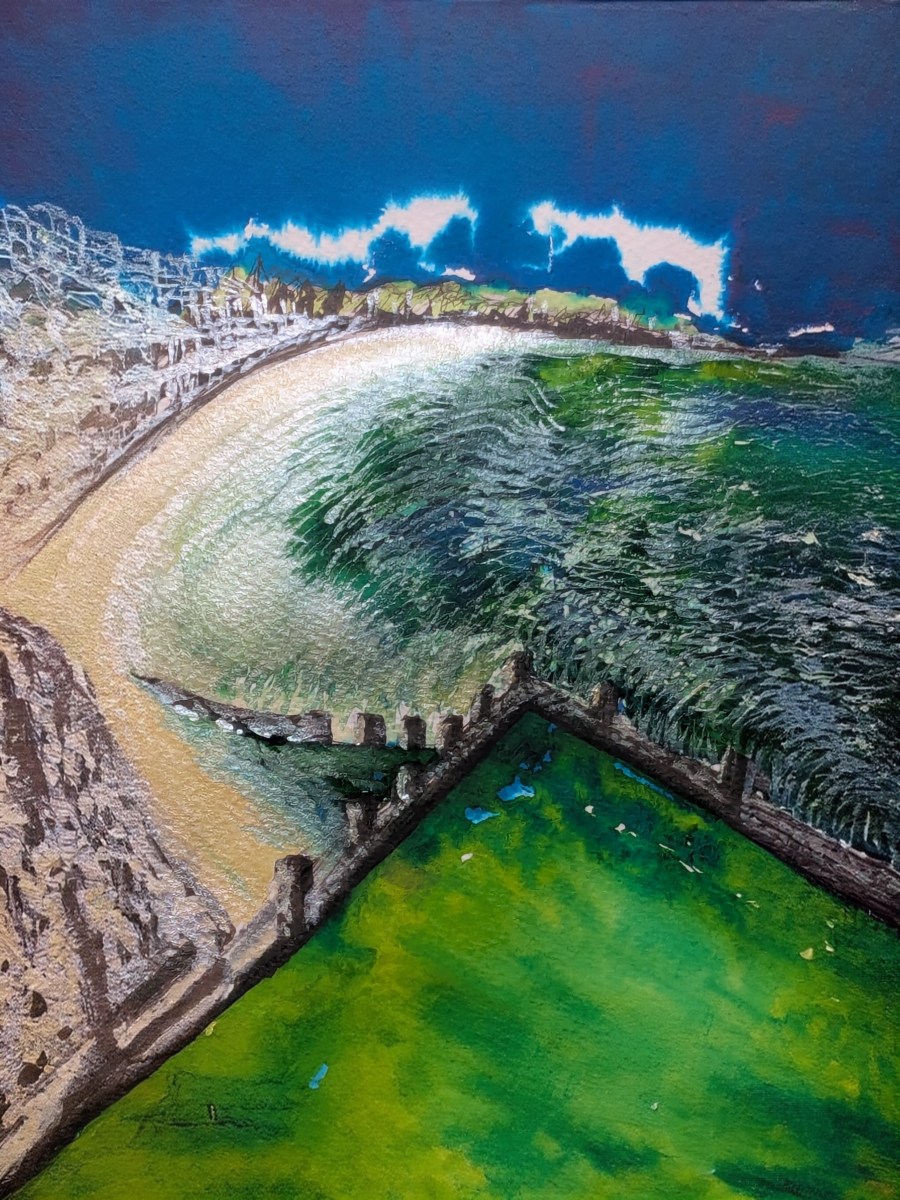
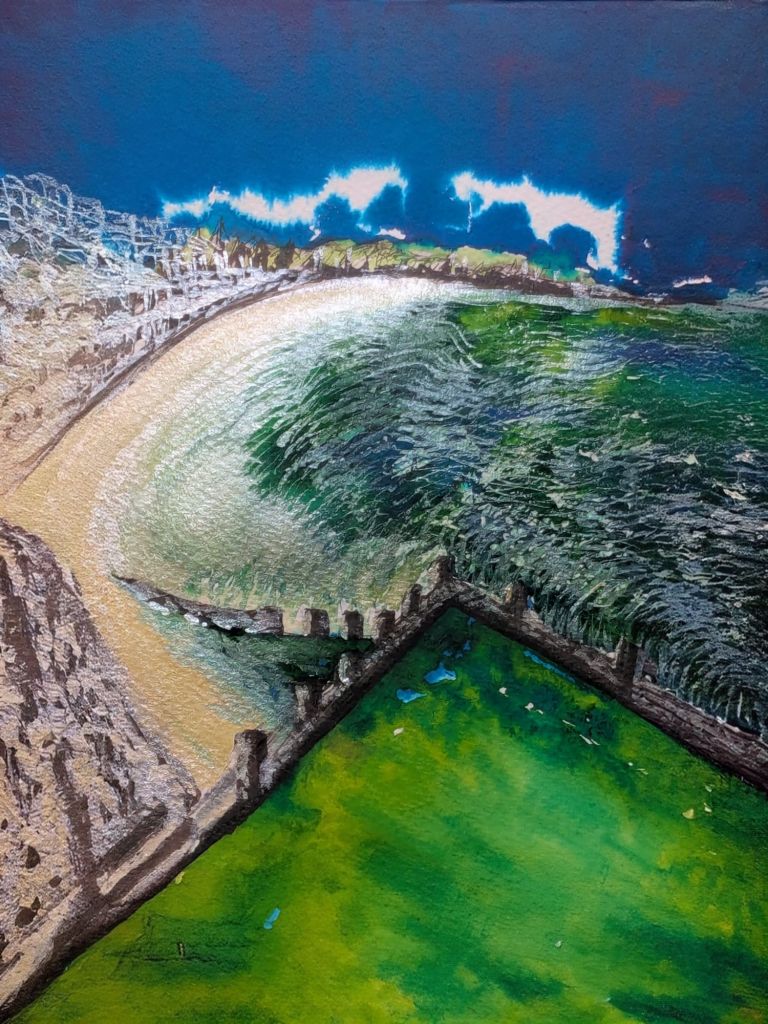
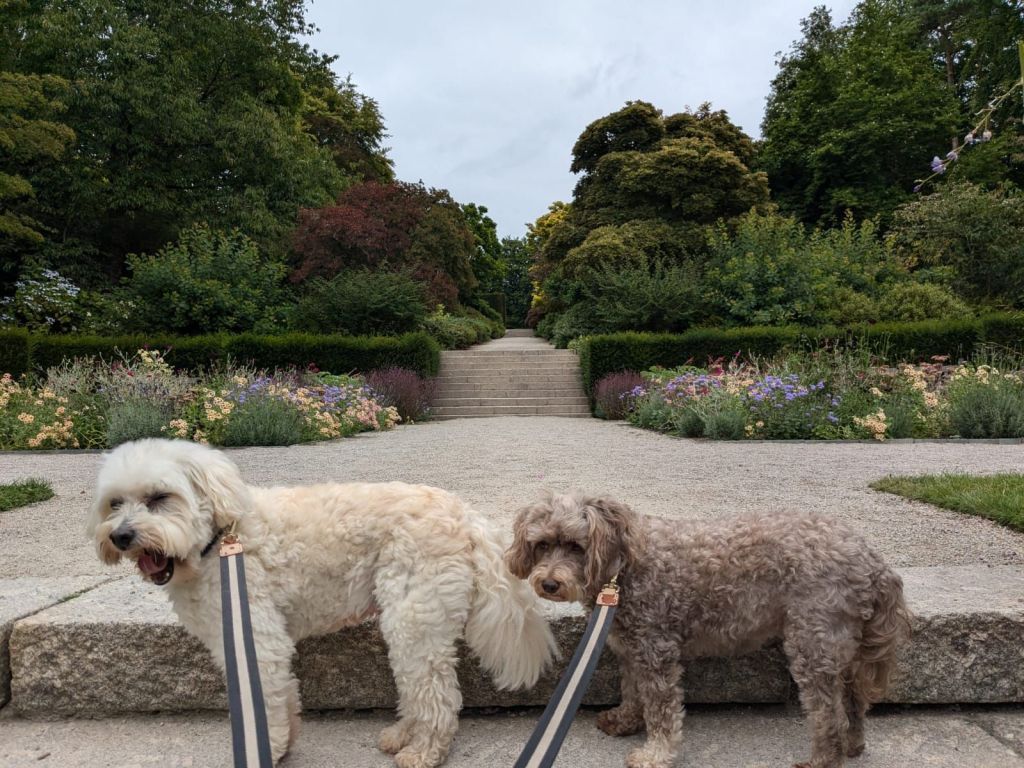
It was a day of dog walking, admin and another painting of Coogee Beach, more sunshine.
Coogee Beach, 27 degrees.
Beyond my day’s domestic plans, there was also some Tennis Club admin that needed to be done with a friend.
Beyond Tennis chat, we talked about Christmas, Grief, an erotic novel, kitchen plans, and our holidays. Mine in the past and hers upcoming. She is heading to Bergen and beyond in Norway. She is expecting to experience sunshine and temperatures of about -30.
The whole conversation blew my mind a little bit. Mostly because travel blows my mind a lot. The ease with which we discuss such things as women in the 21st Century is a delight unknown to most women in the past.
The kitchen that we sat in, nattering away, was built about 175 years ago. A home suitable for professional men and their families . The men would have worked either in a nearby Military base or Dockyard or been involved in the Maritime or Fishing industries. Plymouth was linked to London by train in 1848, making Plymouth an International Travel hub. Travel would not have been an unfamiliar subject even when my kitchen was new.
Travel would have been much more complex. Timescales would be significantly different. Climate adjustment slower and riskier
Sailing to Australia would have taken three to four months, one way. Sailing to Bergen took about two weeks.
Luggage of only 23 kg is more than adequate for either of us to have the right clothing for hugely different climates.
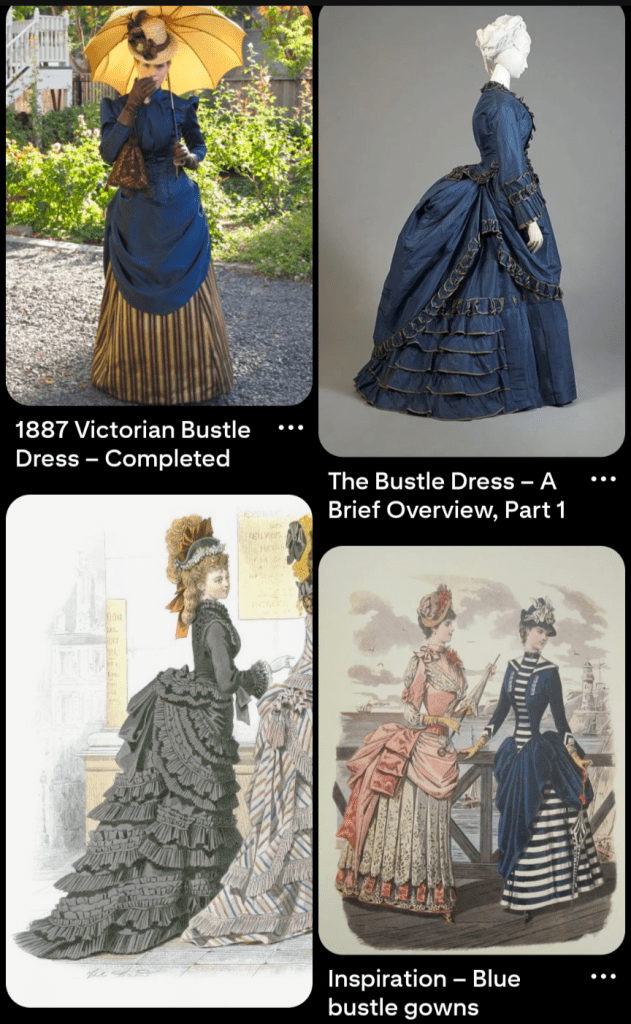
I cannot imagine how much luggage we would have needed to make such journeys 150 years ago. English women of all classes were wearing Bustles.
Just one dress would weigh more than 23kg!
Very few women travelled for pleasure or exploration in 1850. For the most part British women were shipped around the world to service the sexual and dynastic needs of British men abroad who were busy doing British things like Colonisation.
British men being the powerful people. Taking political, economic, and cultural control over other territories and populations. Exploiting resources, labour, people and land for the benefit of Britain.
How lucky are we in 2026 to be able to travel quickly to anywhere in the world and to any temperature with just 23k of luggage. Know with almost 100% certainty that we will return, to natter, at the kitchen table after our travels. Safe in the knowledge that travel will expand our minds and not require us to search for a husband or create children.
I love it when these beautiful Tall Ships pull up in the harbour. Night and day they are majestic creatures of the sea.
I was lucky enough to be on the harbourside when this ship set sail out of the harbour on a previous visit.
Of course ‘setting sail’ is not quite accurate as an engine is required but either way the ship silently left the mooring. Just a gentle creaking of wood and wind murmering on furled up sails. When Sutton Harbour was at its sail boat peak there were often 300 of these wonderful creatures jostling for space. That would not have been a silent experience with crews and harbour workers shouting instructions and demands to one another.
I would love to time hop to any point of the Age of Sail. An impossible hope of course, but what about the practicalities. First off I wear glasses so even if my clothes didn’t give me away my eyes would certainly set me apart with glazed windows on my face.
No public loos would be a worry. They were only invented after hundreds of tourists flooded into Plymouth to see Napoleon,as a celebrity prisoner, on the Bellerpharon in Plymouth Sound for ten days in July 1815. The first example of thousands of tourists flooding to one location all at the same time. The mind boggles. The amount of effluent left on the streets of Plymouth caused questions in Parliament. Never mind Napoleon and the Battle of Waterloo. Loos of a different sort were a bigger problem and so the Public Loo was decreed to be essential for Public Health reasons.
And Public Health or indeed my own health is always a concern when I ponder time hopping. What ghastly diseases might be picked up on a casual trip back 200 years, especially in a port city!
So I will stick with just the one ship , at two different times of day. No great risk there.
Maybe I should forget to write a blog more often. Yesterday’s slightly apologetic blog got more views than usual as you can see from my stats bar.
Somebody must have dropped off to sleep with their finger on the view button!
By way of celebration I have featured a golden horse, just because really, and because horses were the subject of an evening ponder, which was always going to be todays pondering.
We are watching a drama based around the time our house was built and set in a similar location.
A house identical to ours was a very brief twist in the plot. A man rode his horse up to the front door when he needed to visit.*
Obviously horses were the key method of transport. But I had never really visualised one being used in my urban street just as a motorbike would be used to transport a single traveller. My lack of imagination of course but the thought slightly blows my mind.
This would have been an entirely normal view out of our front window. In many ways unimaginable.
A bit like my stats of yesterday.
*
I realise that visitors may not have ridden to the front of the property and that riding to the front was a kind of dramatic moment. But honestly riding to the back or the front, who cares! Mindblowing.
In a different observation, mine was the sort of house where powerful men kept their illicit lovers, male or female. We have a massive fireplace in one of the bedrooms here. Oh the things it may have seen…
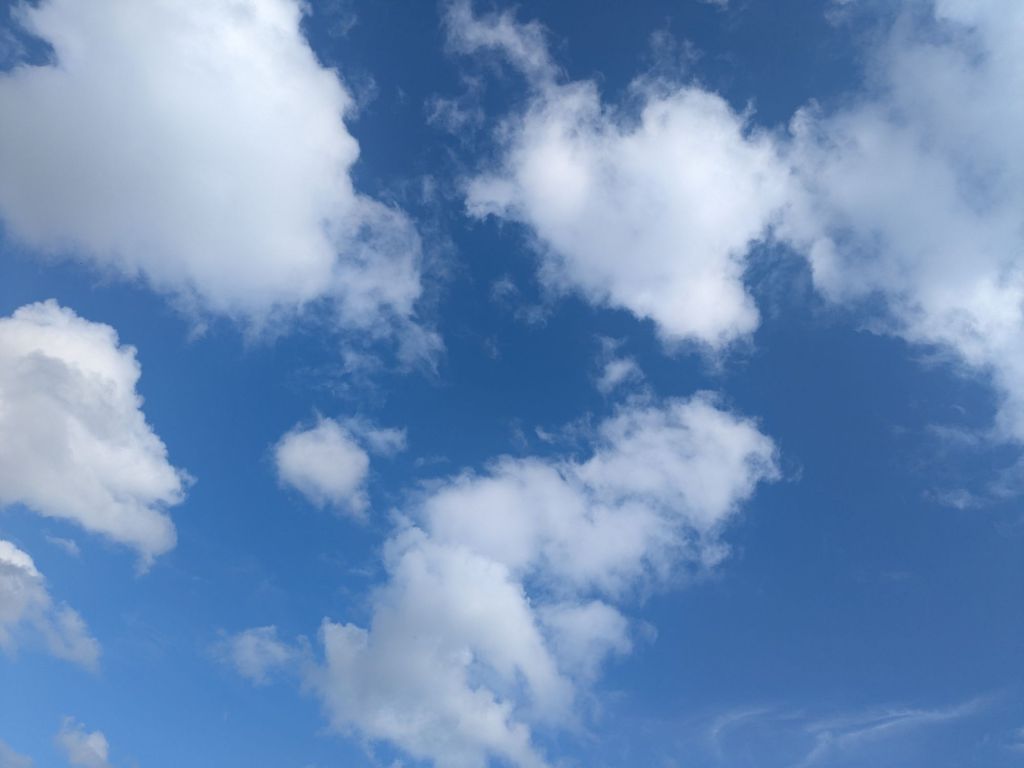
Just a bit of a blue sky ponder while we get on with chores in an industrial estate. Significantly the campervan needed its roof properly cleaned to remove the sap from being parked under trees. Coxside a 21st century industrial estate does not have the glamour or flawed history of the past.
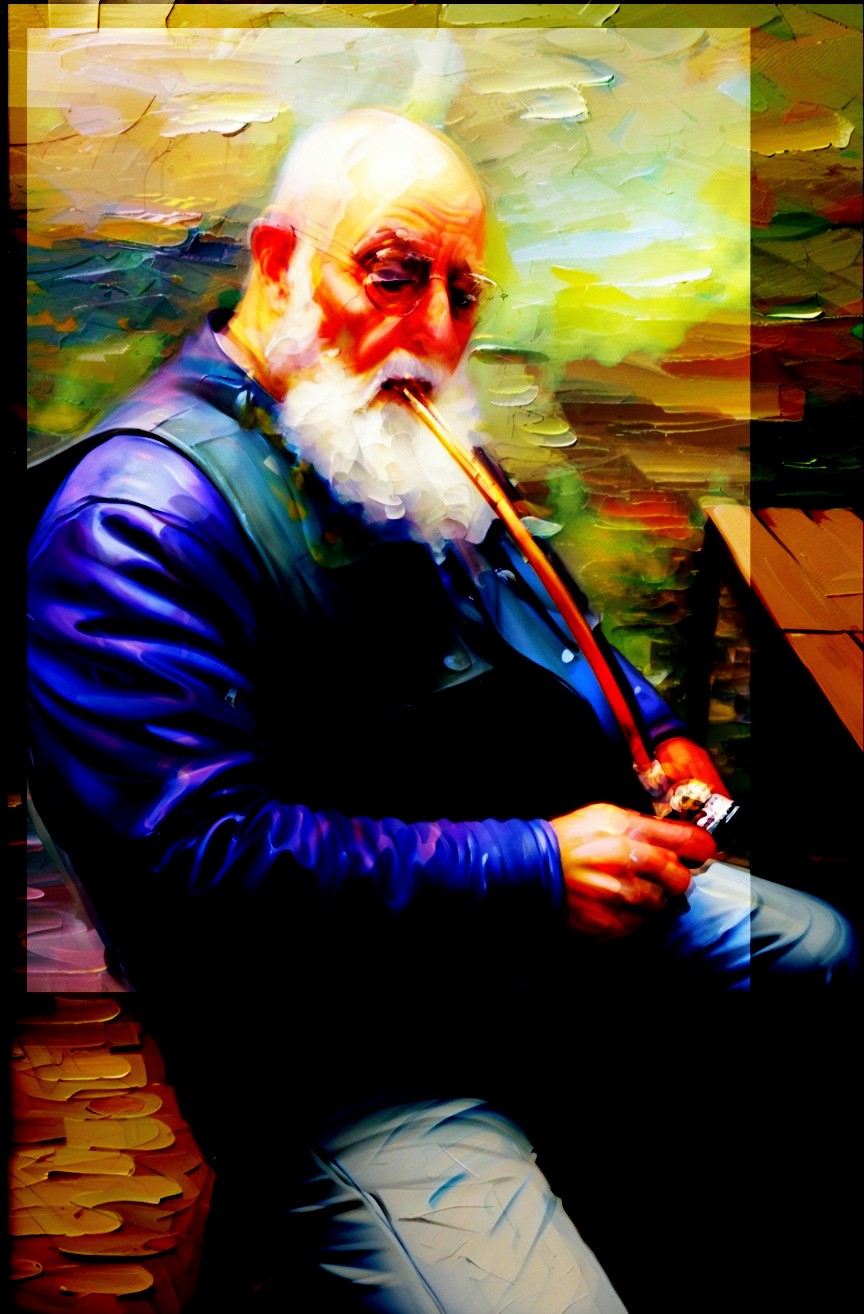
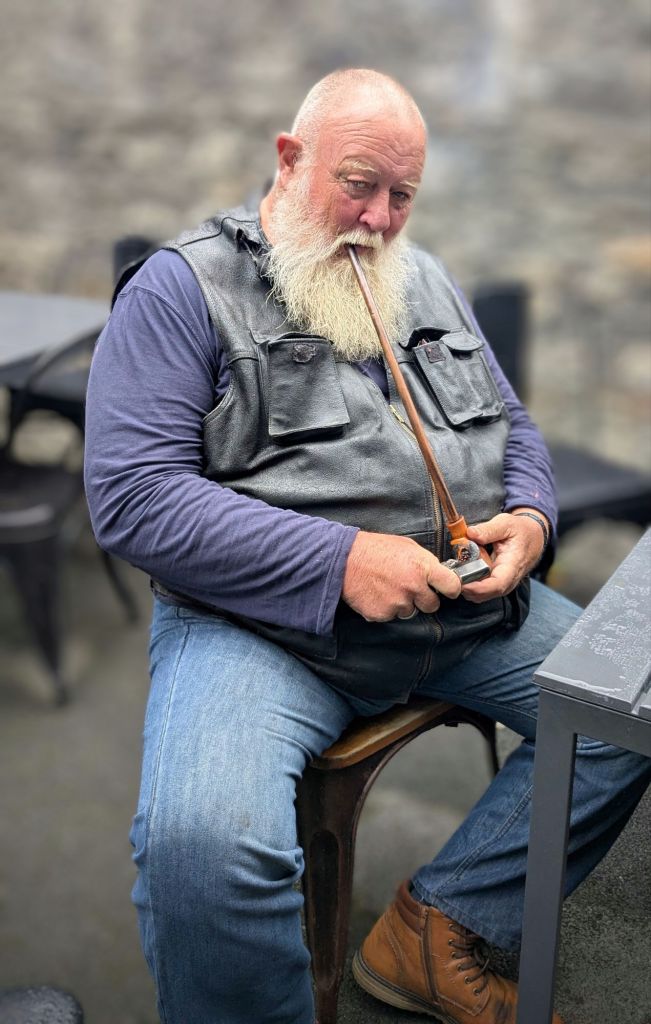
But it does have an excellent Bikers Cafe where we can while away the hour it takes to remove sap. Serendipity gave me this absolute gift of an image. A biker taking a long drag on his very long pipe.
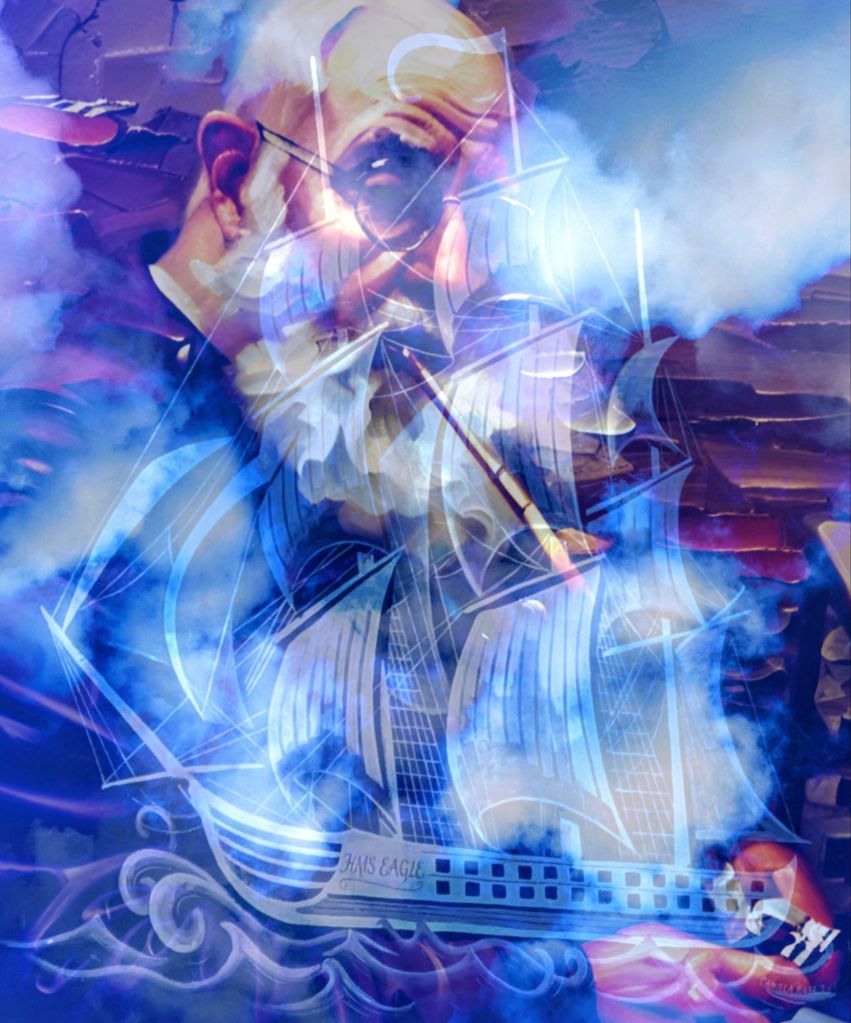
Men and women would have been smoking pipes like this in this area since the 16th century while taking a break from whatever trade they worked hard at. A bit of digital tweakery and the 21st Century Bikers’ gear becomes a little bit of history.
And he can conjure even more history from the smoke of his pipe.
Sunday morning and a gift of church bells, should you choose to watch the video above.
Today’s ponder was seeded in my head by the smallest of coincidences. Saturday found us on a back street walk at Ashburton, a market town on the edge of Dartmoor. We were pulled in the direction of the church by the bells ringing. On the way I caught sight of this blue plaque.
When we arrived in the churchyard we saw a small crowd of beautifully dressed wedding guests having a cheeky last minute smoke before going into the church.
Something Sir Walter, despite being entirely responsible, would never have seen during his stay in Ashburton. Smoking tobacco was only an upper class habit in England until the late 19th century and did not become commonly used by all of society until the end of the Industrial Revolution.
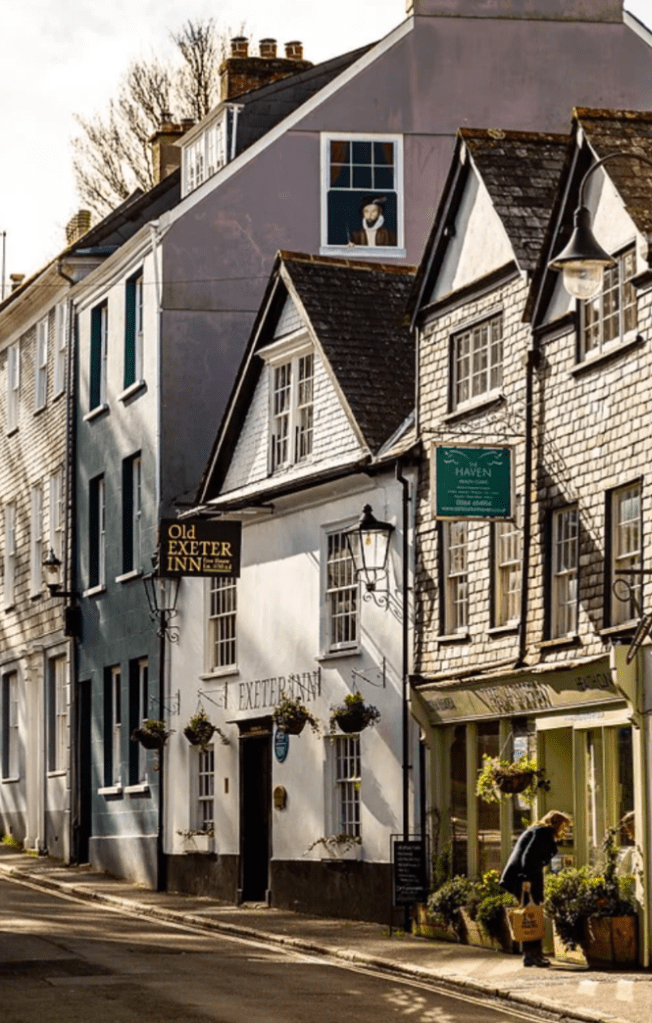
And with a delicious coincidence, there is a mural of Sir Walter actually pondering, overlooking the pub where he spent his last night of freedom. Before being locked up for twelve years in the Tower of London.
His ponders must have been far more consequential than mine ever are.
Not pissing off James 1st might have been a good thing to ponder. And after 12 years in jail and 3 years of freedom, not pissing off James 1st a second time would have been a prudent ponder in my humble opinion.
Our first Christmas themed outing last night to a Choir and Brass Band charity concert. The dark evening and Christmas Lights made the city look both contemporary and historic in the same moment.
Somehow Christmas always seems to open a portal into the past in a way that other celebrations don’t.
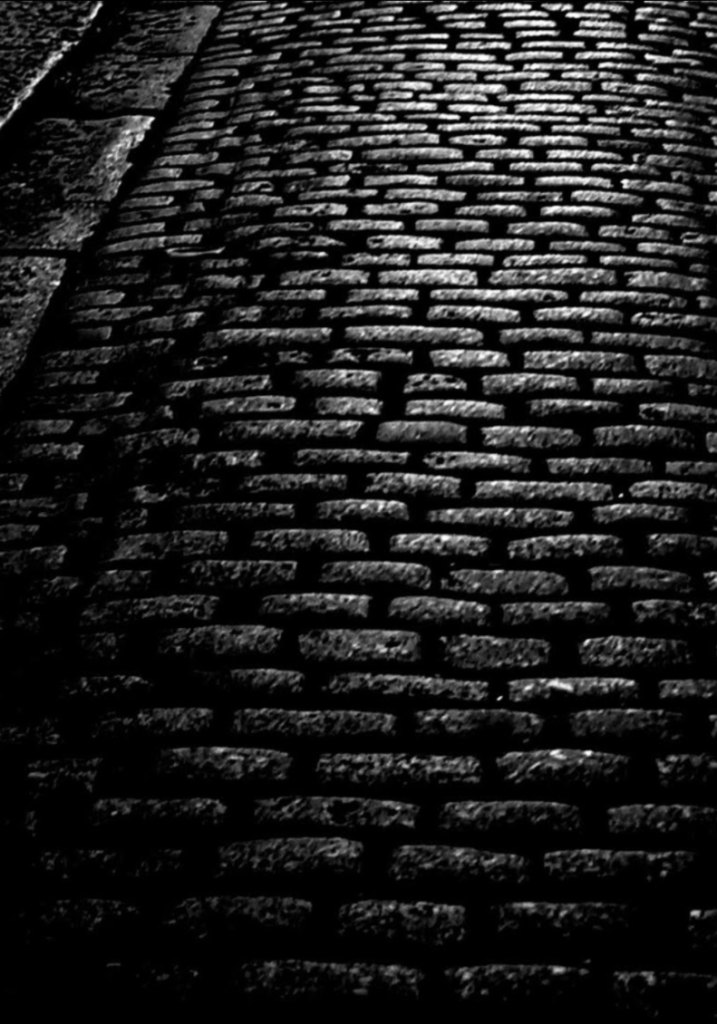
Our journey was very much 2024. The local shopping Mall was alight with shop lights and Christmas decorations, but all entrances were cordoned off and there were police cars and fire engines with flashing blue lights. In the moment the area looked like a film set. The shopping Mall was also our destination of choice for parking so some quick thinking was needed. A small backstreet carpark was found and that inconsequential change of plan flipped us back through the centuries in an instant. Instead of walking to the venue on 21st century paving we had to use an old back lane.
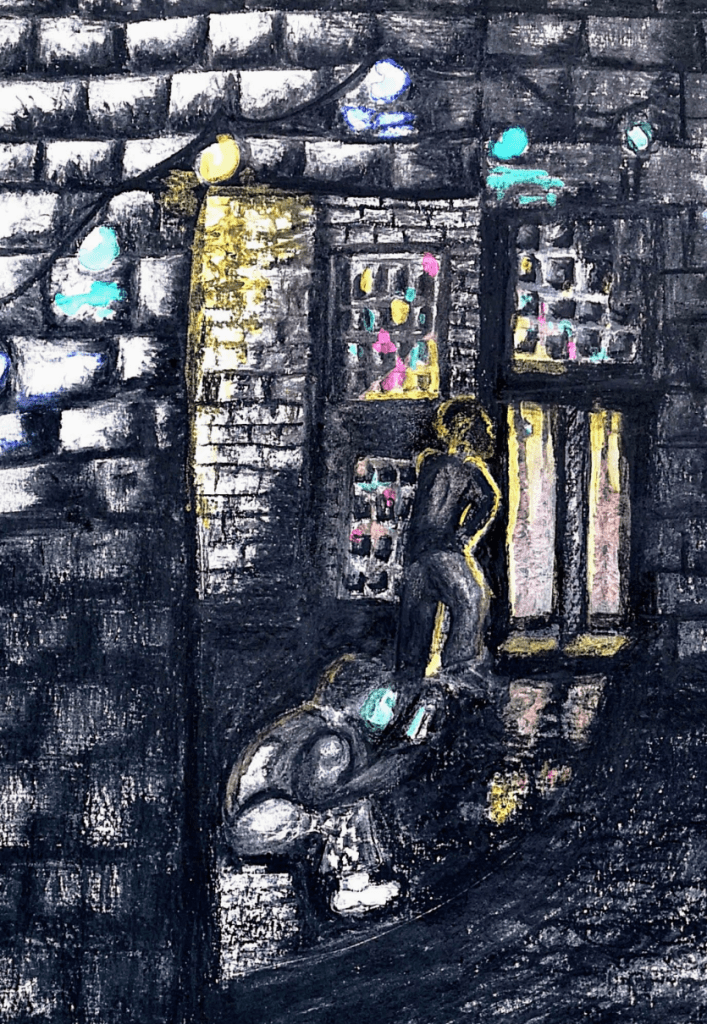
And that was the inspiration a couple of years ago for the charcoal sketch of Dublin.
A man takes a pee in a back street. Illuminated by the lights emerging from a pub. It could be an image from anytime in history except the second figure, a cook on his break, is illuminated by his mobile phone.
What is it about Christmas that makes the portal between now and the past just a little easier to see?
And so on to 26 days to Boxing Day with H for History.
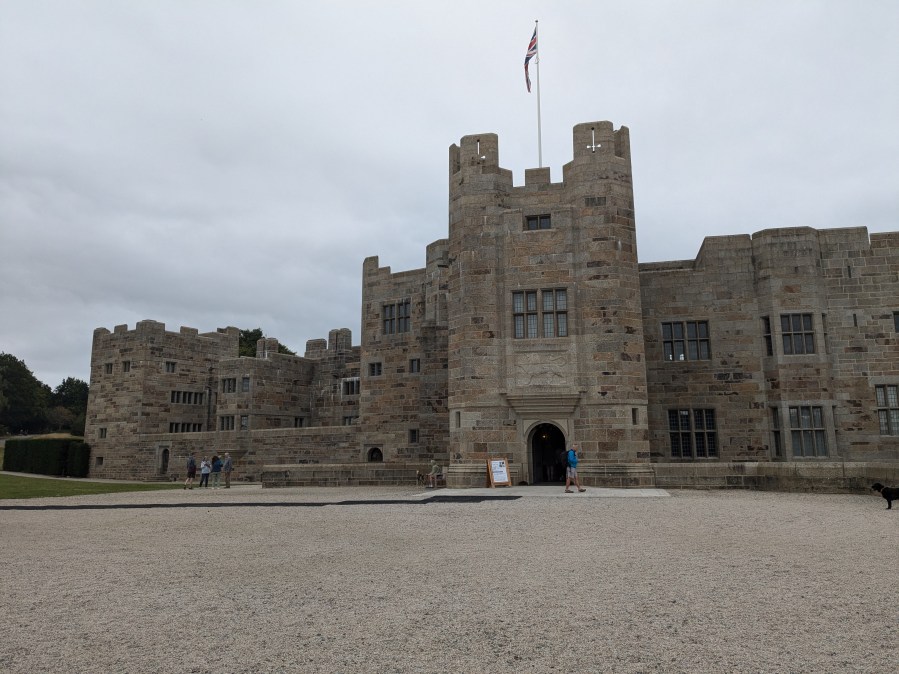
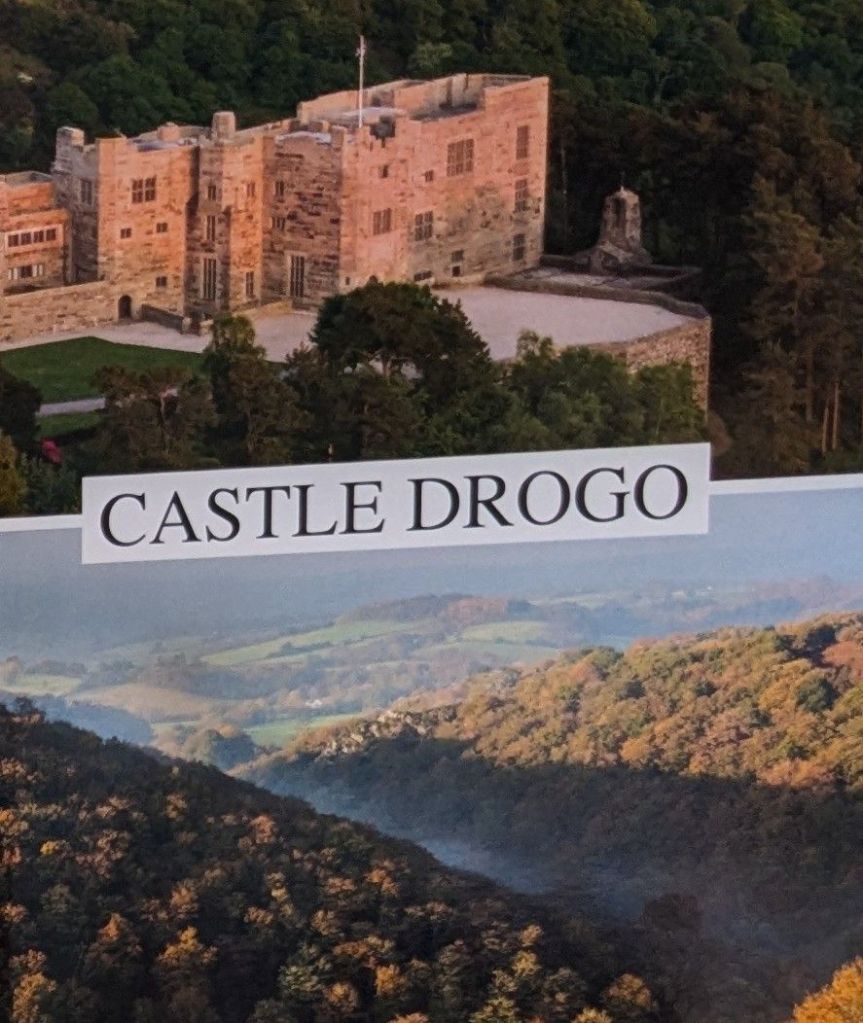
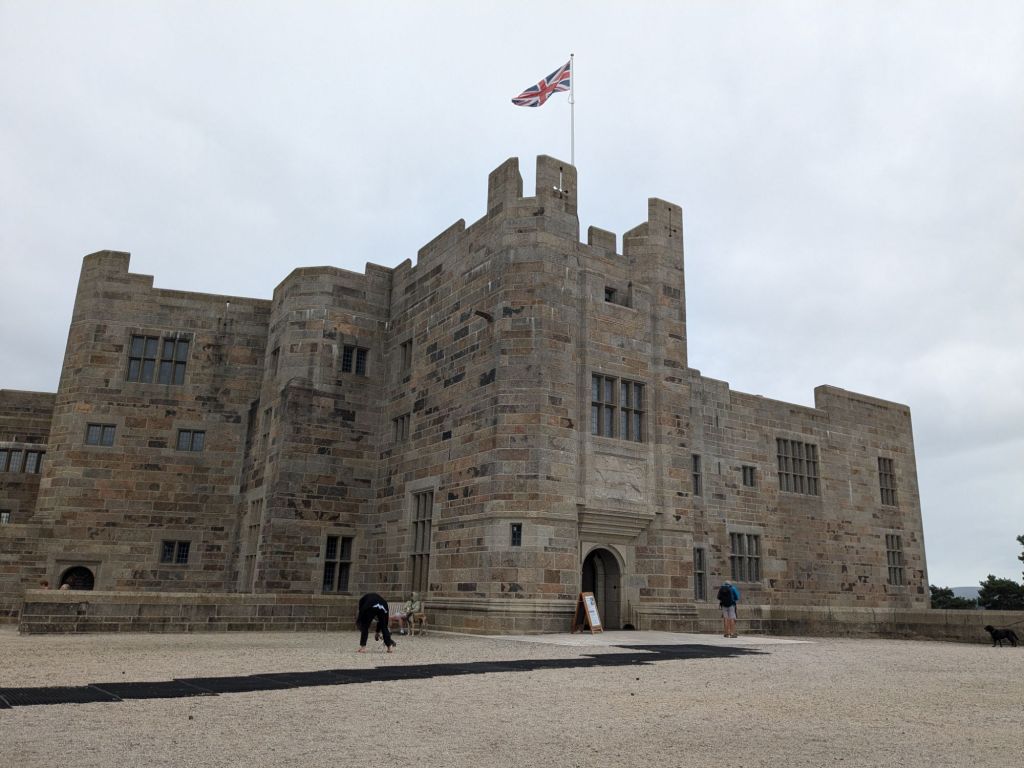
Yesterday we took a trip to the last castle built in England. Built between 1911 and 1930 by a multi-millionaire.
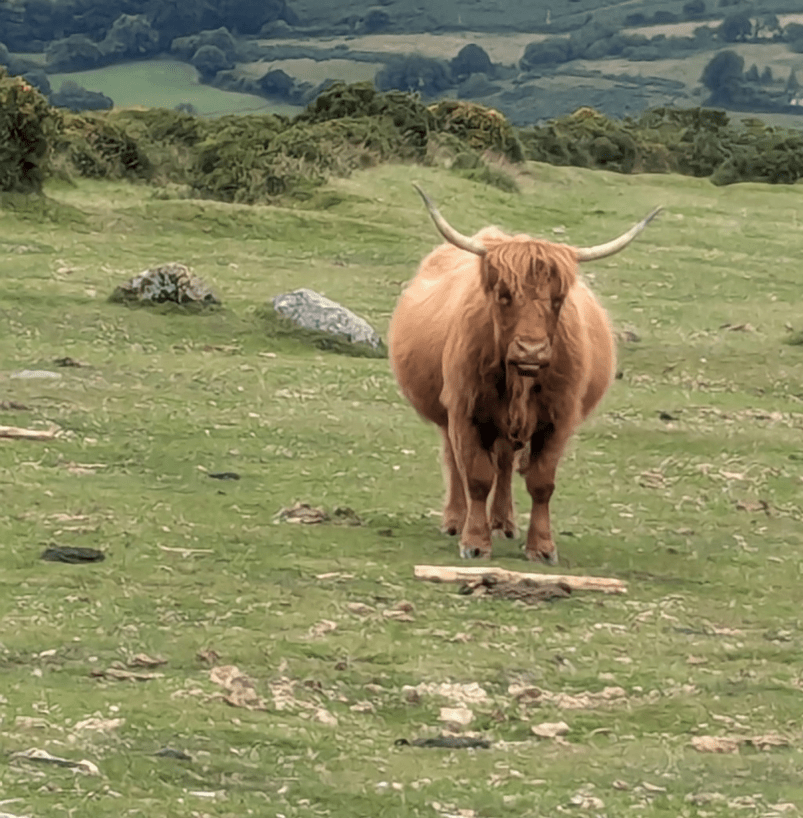
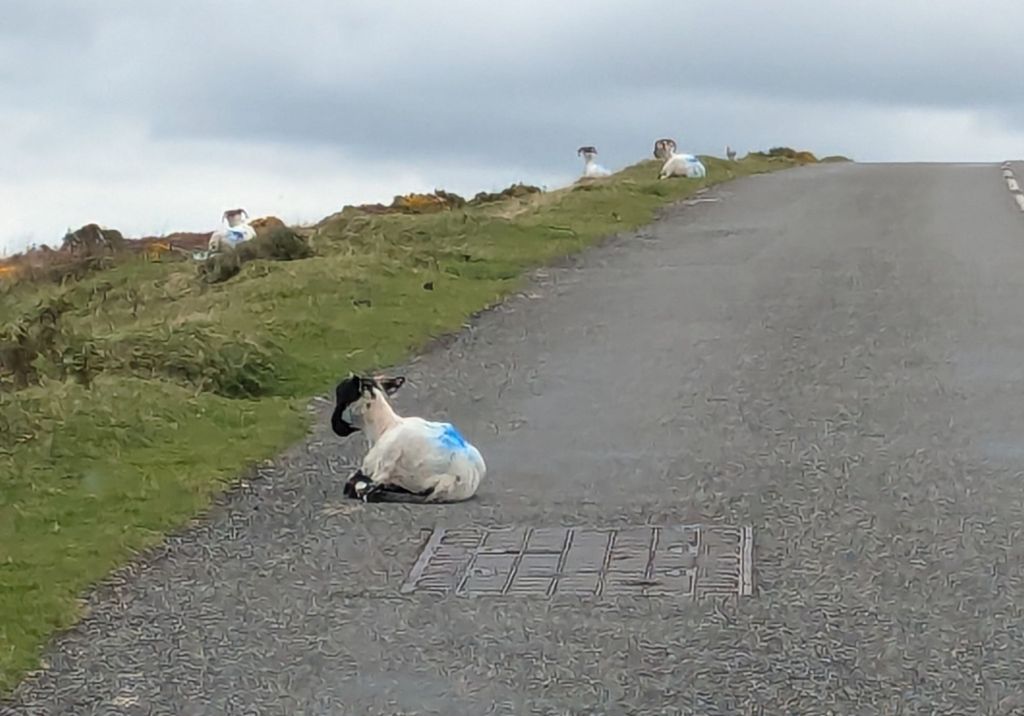
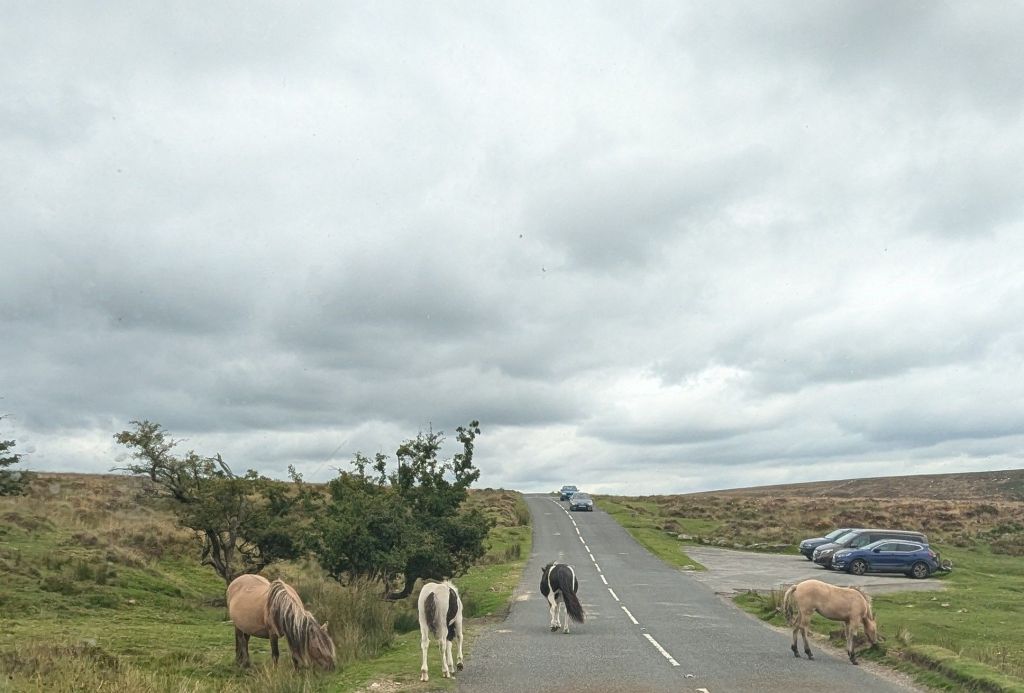
Google maps suggested that the quickest route was via Dartmoor.
The livestock had other ideas.
Feeling immediately at home in a castle is not, I would suggest a normal feeling. But that was exactly the feeling as I entered Castle Drogo.
Castle Drogo took 21 years to build being finished in 1931. My Granddad took 10 years to build a three bedroom bungalow between 1920 and 1930.
Hugely different in scale and cost, the similarities made the Castle feel comfy.
The millionaire who built the castle owned the Home and Colonial stores, forerunner of supermarkets. My grandparents shopped at Home and Colonial. The architect and garden designer were aspirational designers of their day. Edward Lutyens and Gertrude Jekyl
Quiet corners of a massive castle were replicated in a small bungalow.
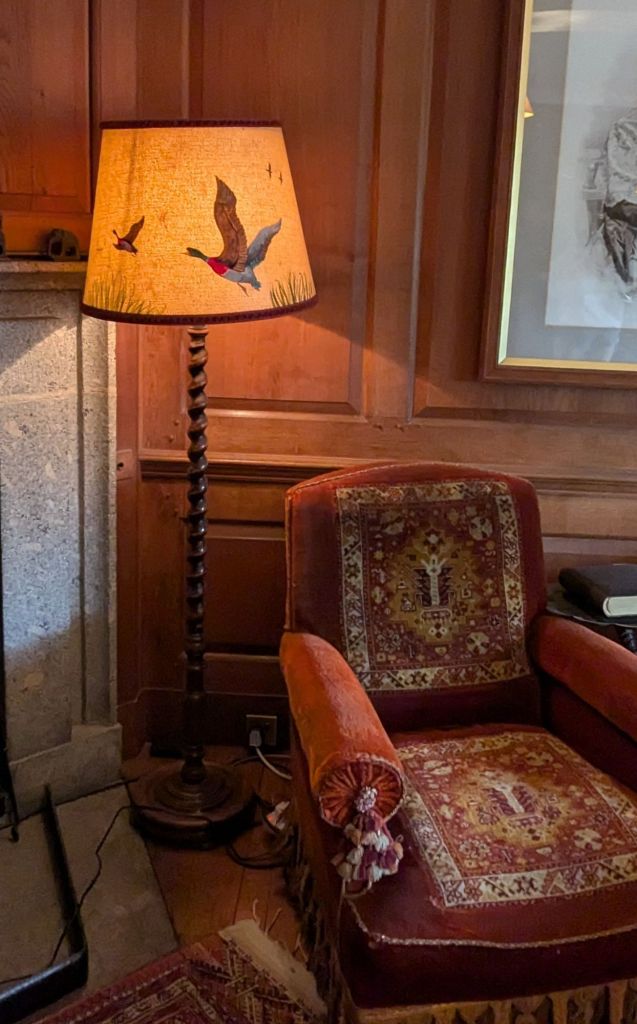
A standard lamp with a flying duck.
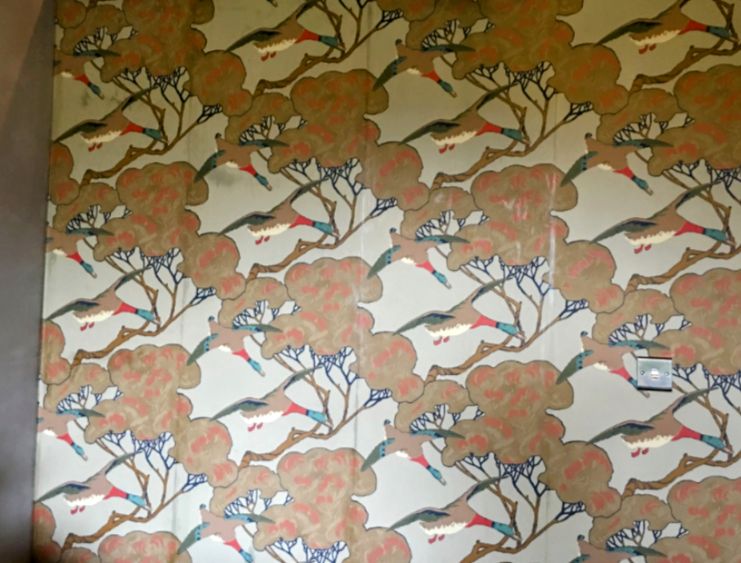
Which in turn, unknowingly until yesterday,my we replicated when we converted the actual Old Mortuary.
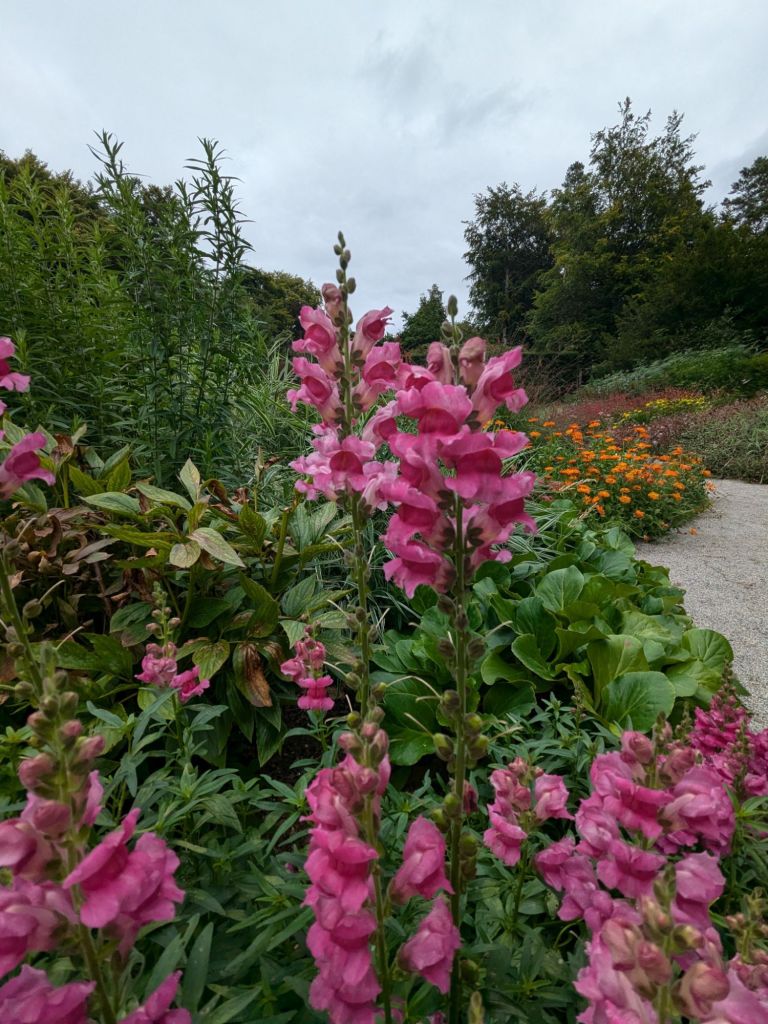
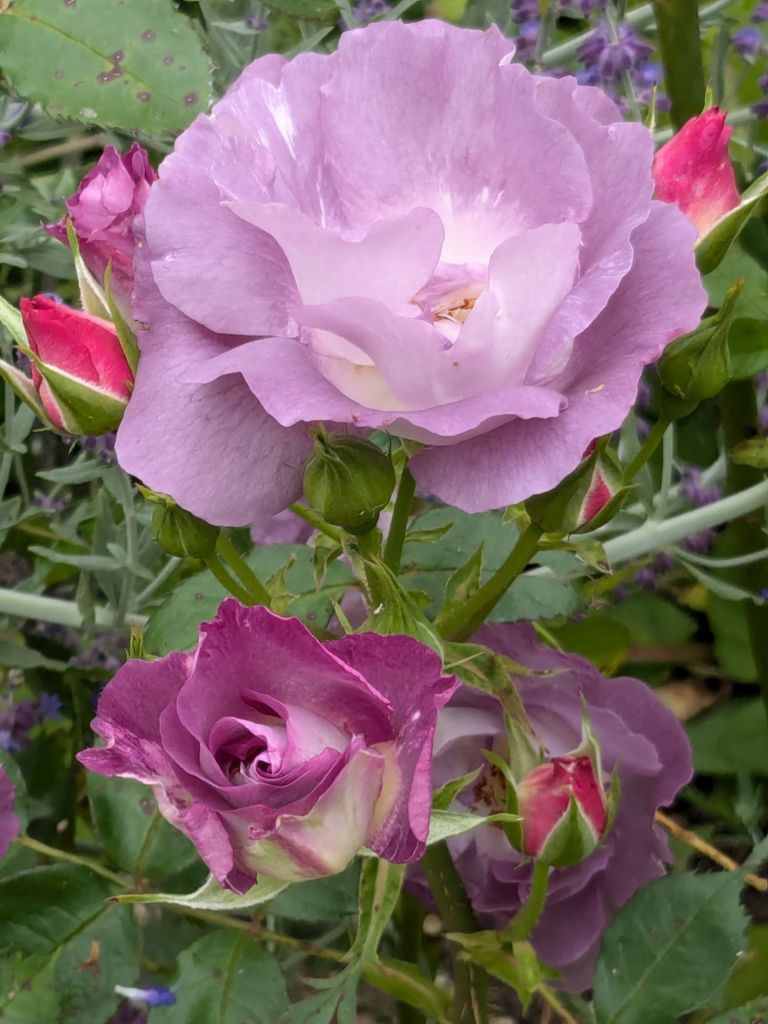
My Granddad was an avid gardener and very much a follower of Gertrude Jekyl. I still have one or two old terracotta pots with their rims painted white which she advocated and he copied. He also planted his front garden in her ‘swathes of colour’ style. Replicated yesterday at a castle in Devon but to me it felt like a very familiar acre of Essex garden design.
Below are some links to actual useful information about Castle Drogo should you care to know more.
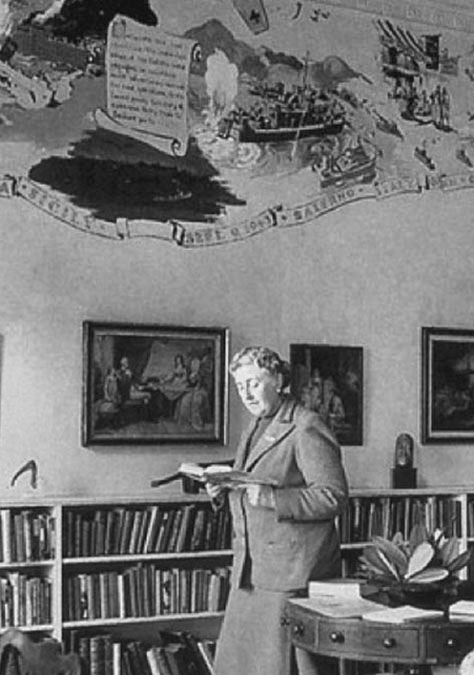
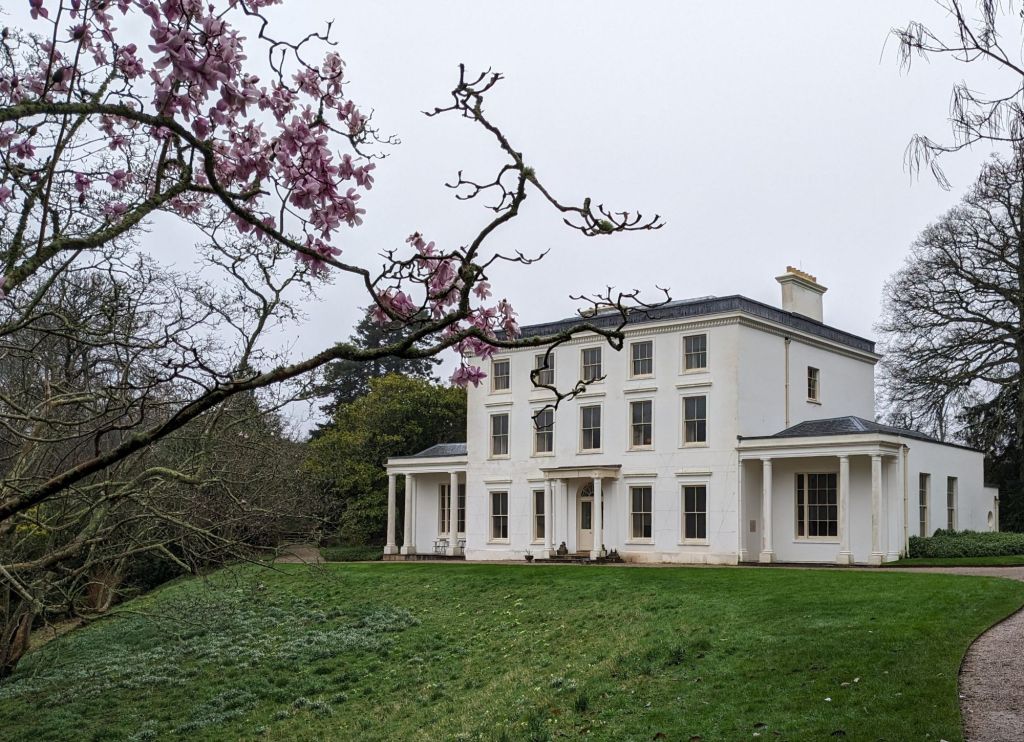
Visiting a famous author’s home, when I hadn’t read one of her books for more than 40 years, felt a lot like attending a lecture without doing my homework. In my defence this was always a reconnaissance visit, to get the measure of the place before we brought other people here. In between times I will read some Agatha Christie and watch some film and T.V adaptations.
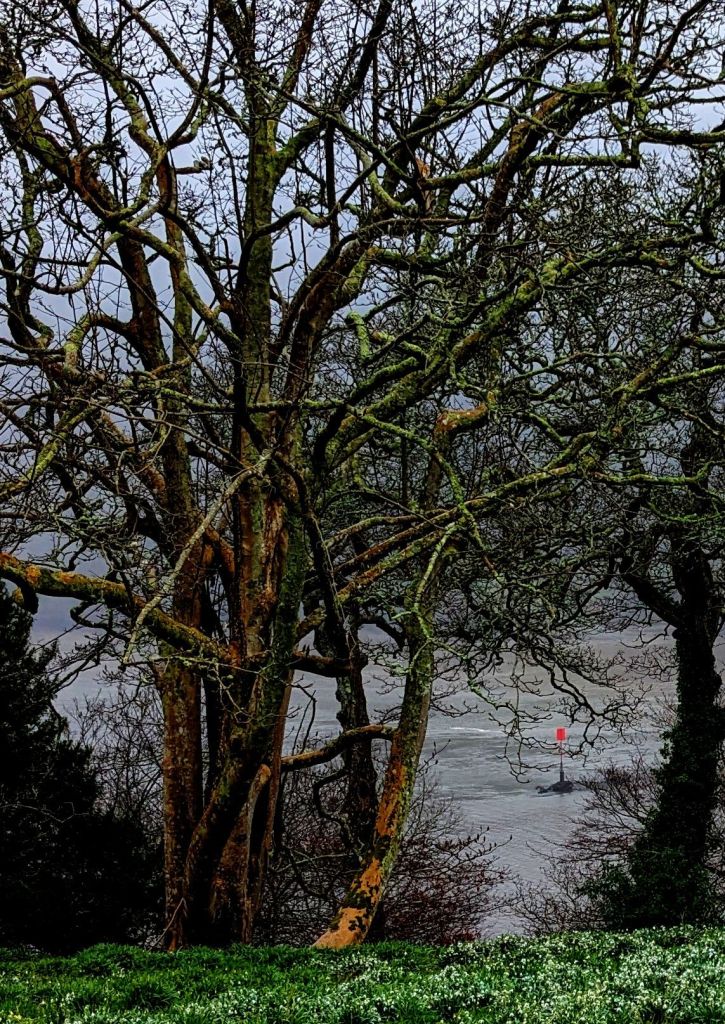
There are other stories attached to Greenway that I can recount without feeling hopelessly under-researched. The house is on the river Dart almost opposite Dartmouth. The estate was once the home of Sir Walter Raleigh the man who brought tobacco and the smoking habit, from his travels in America in the 16th century. Sir Walter was taking a crafty puff down by his boatshed, when it is said a servant thought he was on fire and pushed him into the river. He would have been gazing out at the Anchor Stone/Point, a rocky outcrop in the middle of the river that is never fully submerged.
In medieval times women, who were accused of being gossips or fornicators, were rowed out to the rock and left there for a full circuit of tide changes, to give them time to think about their misdeeds. I must presume the rowers were men, who of course, are never known to gossip or fornicate.
Fornication takes me rather neatly to the last non- Agatha story that I picked up.
During WW2 the U.S Coastguard service were stationed at Greenways which had been requisitioned by the British Government during the war. U.S personnel were there to prepare for the D Day Landings.
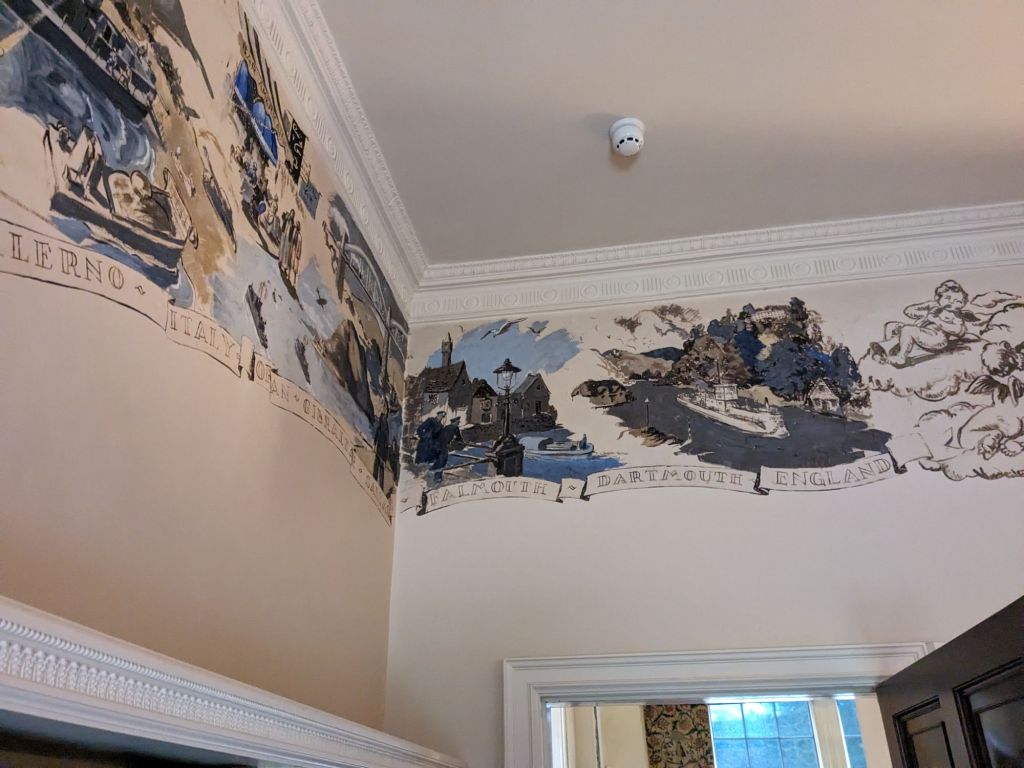
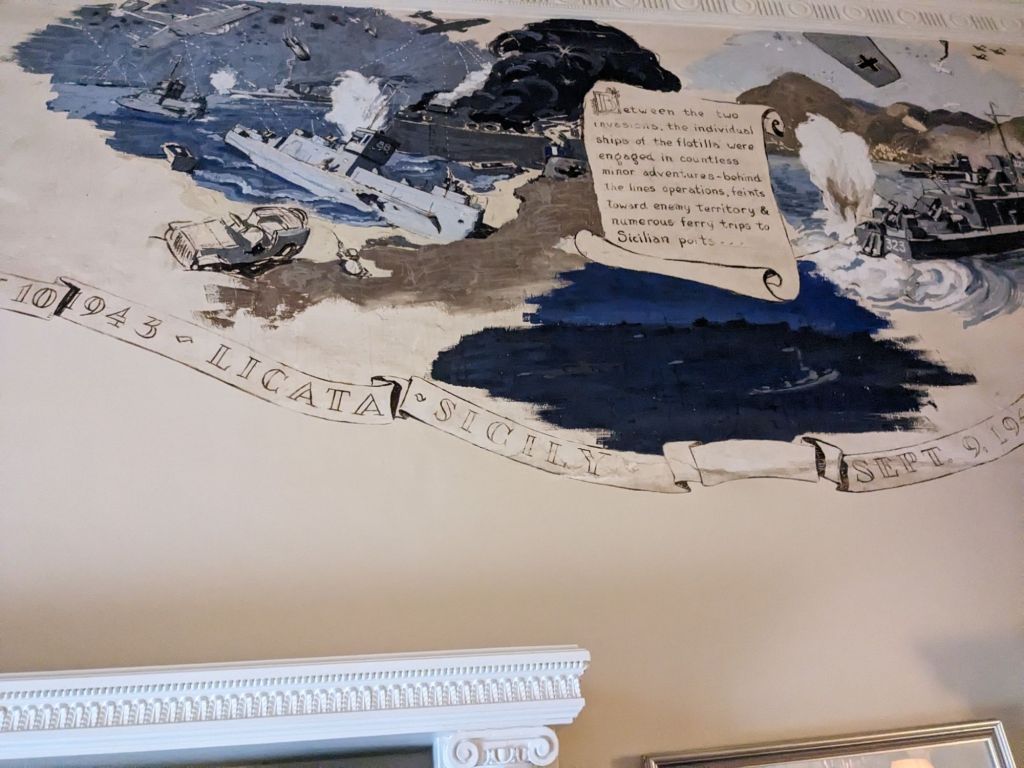
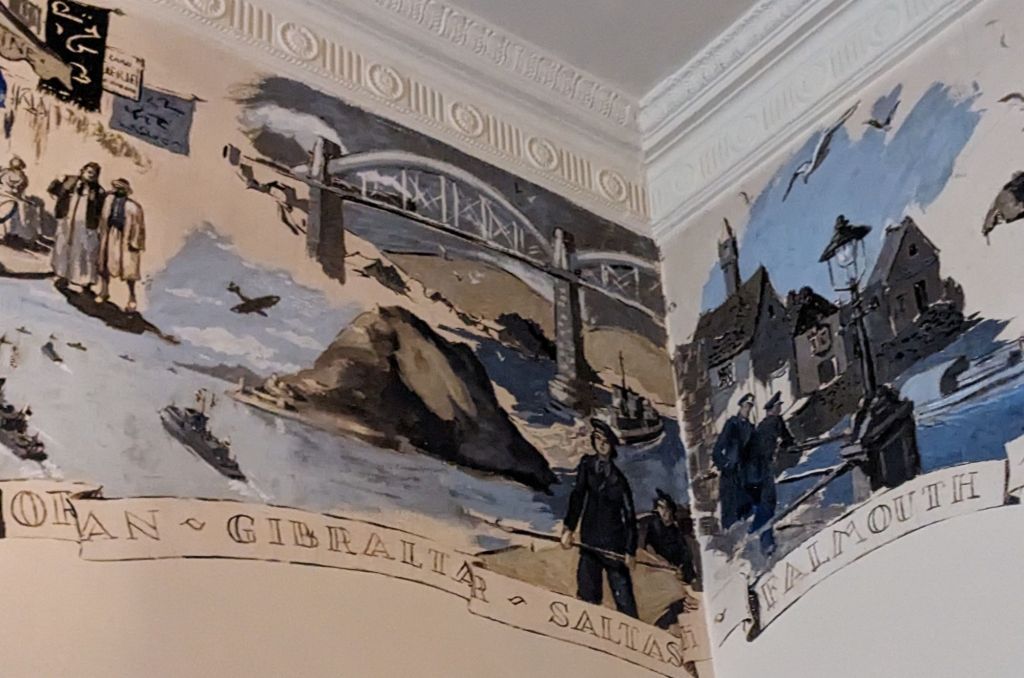
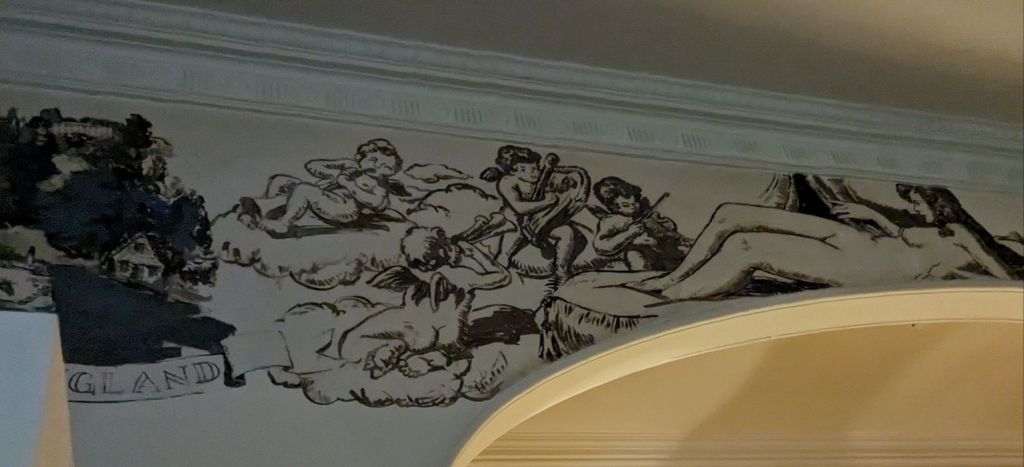
Flotilla #10 had a talented artist Lt Marshall Lee in it’s midst. He painted a mural depicting the deployments of Flotilla #10 during the U.S involvement during the later parts of WW2.
Beautifully rendered paintings of the locations where they had been stationed.
Leading up, we must assume, to some traditional R and R.
Never fully fleshed out it seems. Which makes me ask a question.
Did Lt Marshall Lee not survive the D Day landings to finish his masterpiece. Or did the carnal or other delights of Dartmouth put him off his brush strokes. I really hope it was the latter and that his earthly delights were not dragged off to the anchor rock for punishment.
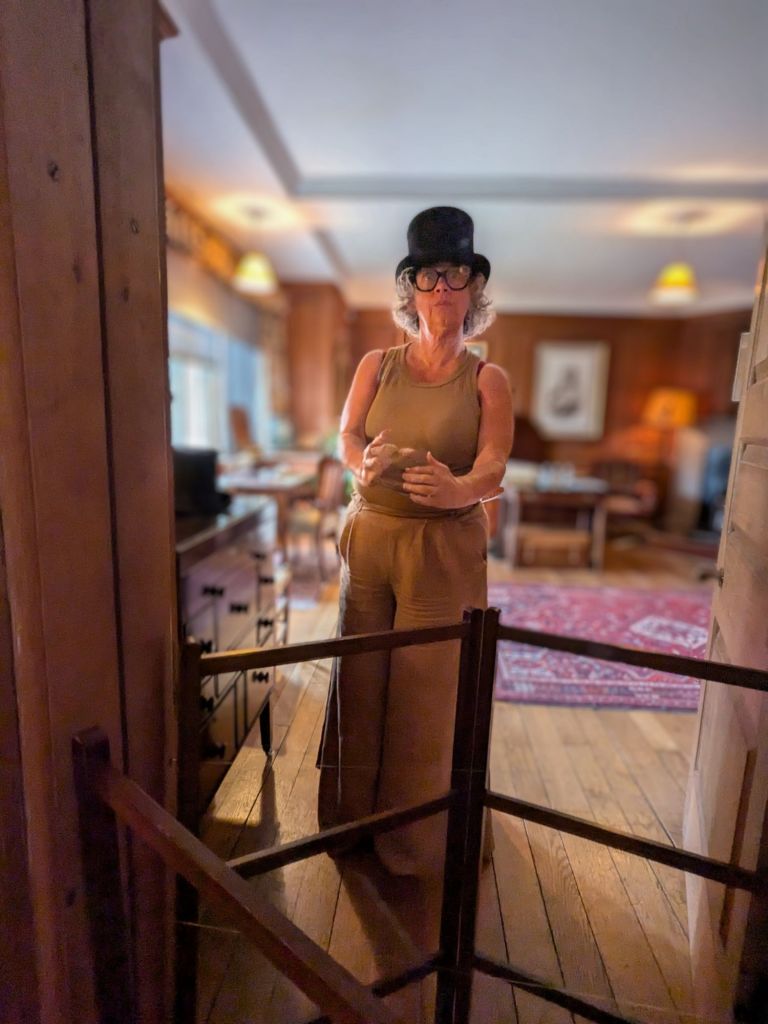
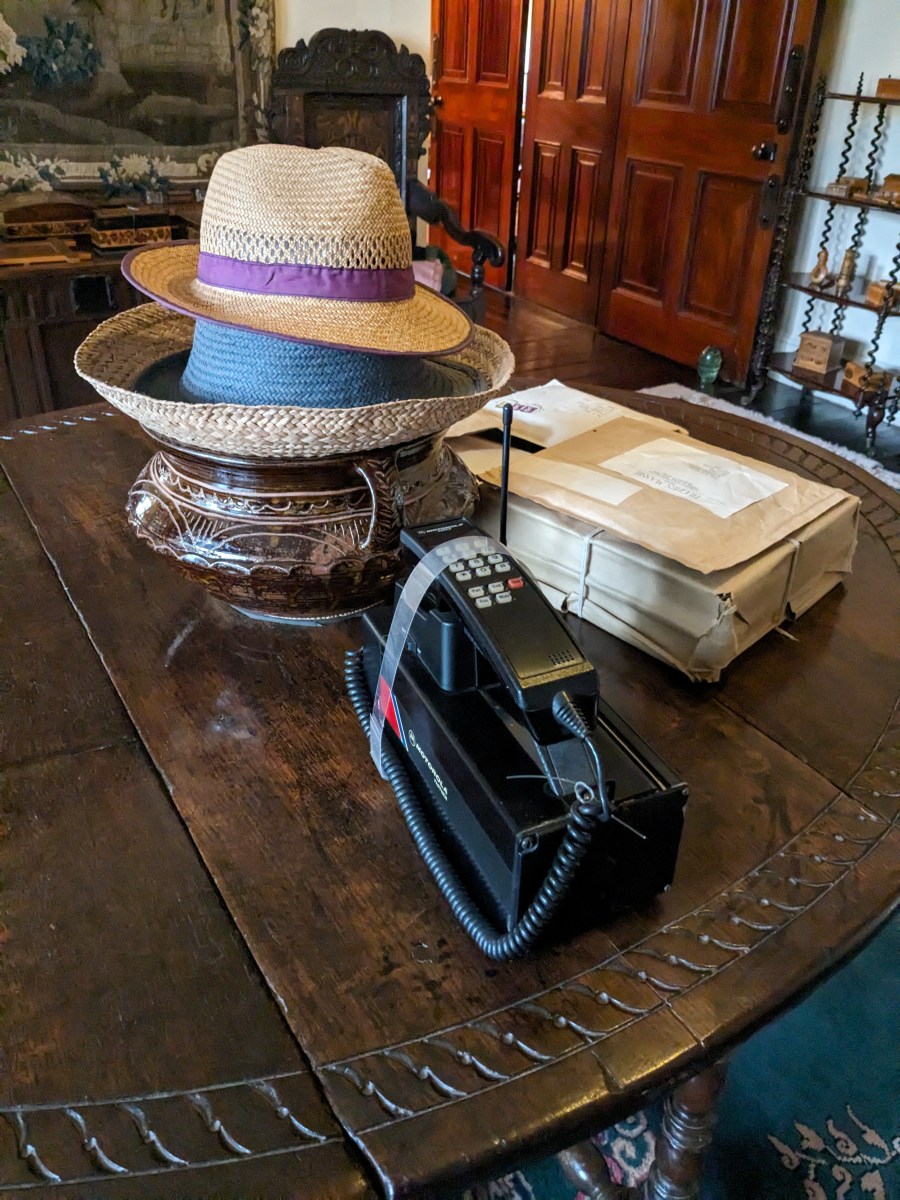
Hats and an early mobile phone at Greenway
P.S This is why I love to blog, just a little digging found me this lovely nugget of information. Do read it.
Marshall Lincoln Lee was born February 12, 1921 in Brooklyn, NY. His father, Jack Lee, was born 1887 in Russia and came to America in 1895. His mother, Ruth Lee, was born in 1897 in NYC of Polish ancestry. His parents married in 1916 and had two children. His older sister Doris Lee was born in 1918. They lived at 350 Fort Washington Avenue in the Washington Heights section of uppermost Manhattan. His father owned and operated an automobile garage.
As the family grew prosperous they moved to 117 Glover Avenue in Yonkers. NY, a suburb just north of the Bronx.
On November 16, 1929 his father died at the age of forty-three. His mother supported the family by working as a stenographer at a newspaper.
He had a natural talent for drawing and became interested in a career as a commercial artist while working in the newspaper pressroom during summer vacations.
IN June of 1936 he graduated from Yonkers High School.
In September of 1936 he began to attend the Pratt Institute in Brooklyn. He studied illustration with Nicholas Reilly and H. Winfield Scott. Two of his fellow classmates were Sam Savitts and Attilio Sinagra. During his senior year he was elected Class Vice president.
In June of 1939 he graduated from Pratt. He moved to 50 Commerce Street in Lower Manhattan and began to work as a free-lance commercial artist.
His illustrations appeared in Red Mask Detective Stories, Five Novels Monthly, Clues Detective Stories, The Lone Eagle, The Avenger, Jungle Stories, Two-Complete Detective Books, Ten Detective Aces, Baseball Stories, and Action Stories.
During WWII he enlisted in the U. S. Coast Guard Reserve. Several other artists also served in this branch of the military during WWII, such as Herman Vestal, Rafael Astarita, John Falter, and Frederick Blakeslee, as well as the pulp magazine publisher Harry Steeger.
He was promoted to Lieutenant and was made Commanding Officer of the U.S.S. LCI(L)-96, which stands for Landing Craft, Infantry (Large). His ship participated in the North African occupation in Tunisia and afterwards landed troops at Salerno during the invasion of Sicily.
In January 1944 they were stationed in England in preparation for D-Day. Many large British manor homes were requisitioned by the military for the duration, and he was among several officers billeted at the country estate of Agatha Christie near the Royal Naval College at Dartmouth. Lt. M. Lincoln Lee painted a decorative mural in the library, which served as a recreation room. His mural depicted the worldwide exploits of his ship, the U.S.S. LCI(L)-96. When the famous mystery author finally returned the Admiralty apologized for the mural and offered to paint it over, but Agatha Christie said, “No, it’s a piece of history. I would like to keep it.” She spent nearly every summer at the home for the rest of her life.
On June 6, 1944 the U.S.S. LCI(L)-96 participated in the Normandy Invasion at Utah Beach. After D-Day he became Harbor Master at the Port of Cherbourg, and then went to SHAEF HQ in Frankfurt-am-Main.
After his honorable discharge in 1946 he became the U.S. Director of Inter-Allied Cultural Relations in Europe.
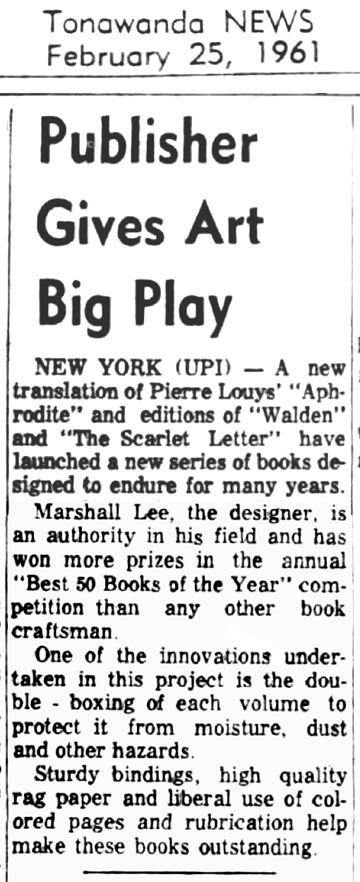
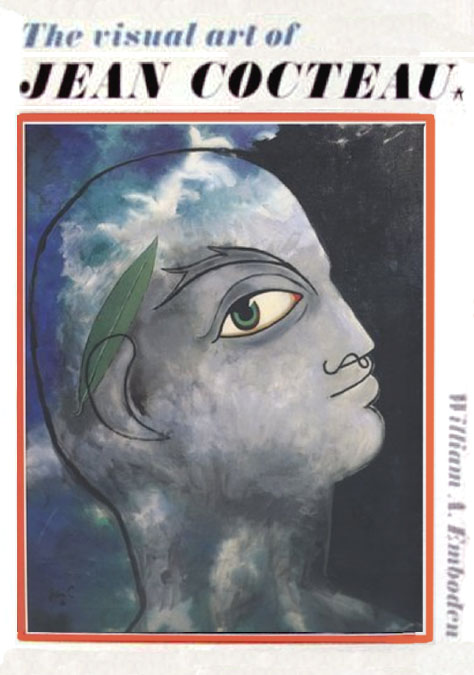
In 1948 he returned to New York City and resumed his career in publishing. He became an award-winning book designer. He lived at 219 East 69th Street in the affluent Upper East Side of Manhattan.
By 1952 he was a college professor teaching book design at New York University.
In 1965 Doubleday published his reference work, Bookmaking – Editing, Designing, and Production, which became a standard textbook on the subject.
In the 1970s he became Vice President of Harry N. Abrams Art Books Inc. He moved to 25 Church Street in Schuylerville, NY.
In 2000 the U.K. National Trust restored Agatha Christie’s manor house, including the library mural of the U.S.S. LCI(L)-96 by Lt. Lee. British art conservators contacted the artist for consultation and The Daily Mail reported, “he was extremely delighted to learn his mural had survived over the years and been preserved, so it will be there for future generations to see.”
Marshall Lee died at the age of eighty-nine on April 21, 2010 in Schuylersviller, NY.
Fascinating that he was known as a pulp artist. For many years Agatha Christies books were reproduced using such cheap materials that their manufacture would have been included in the genre Pulp Fiction. I hope they met.
How can I share the joy of a plunge in cold, clean, seawater or indeed the joy of plunging generally.
In life I am a plunger. I love the word. It begins with an upbeat feeling and then ends with a soft J-like sound that feels like a cuddle.
I don’t plunge without regard to safety or without a good bit of research. Plunging is an immersive experience.
If plunge was a Danish word I could see it being trendy in the way hygge has.
To plunge is to do something whole heartedly.
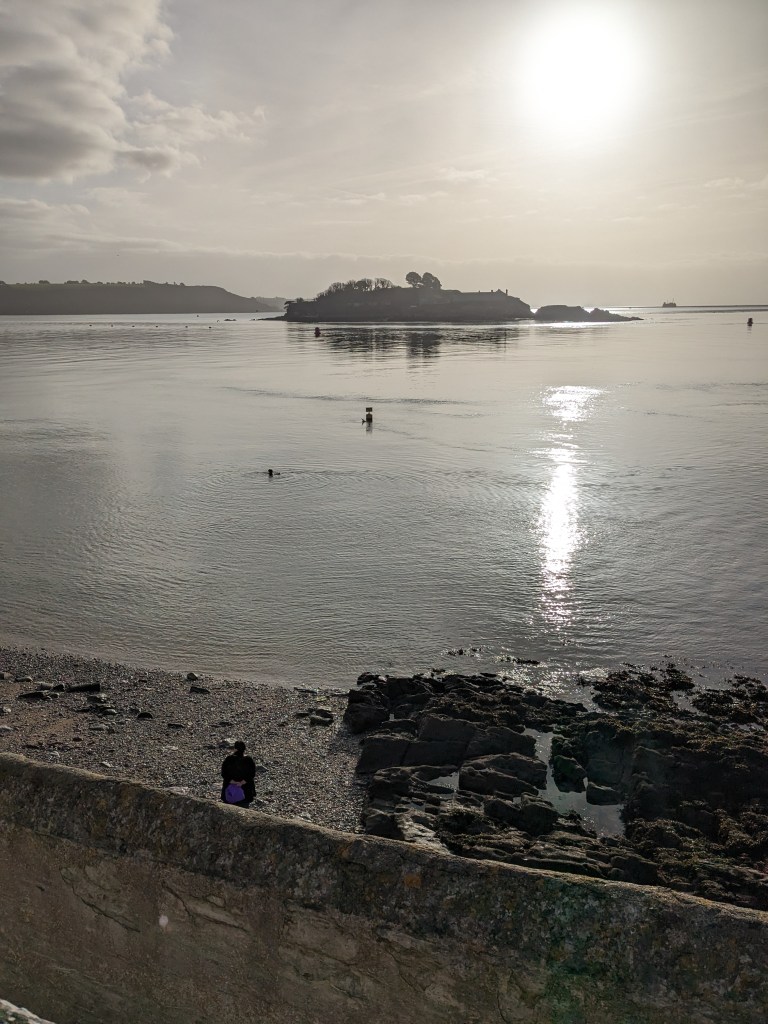
This morning I plunged into the sea. It was breathtaking and wonderful.
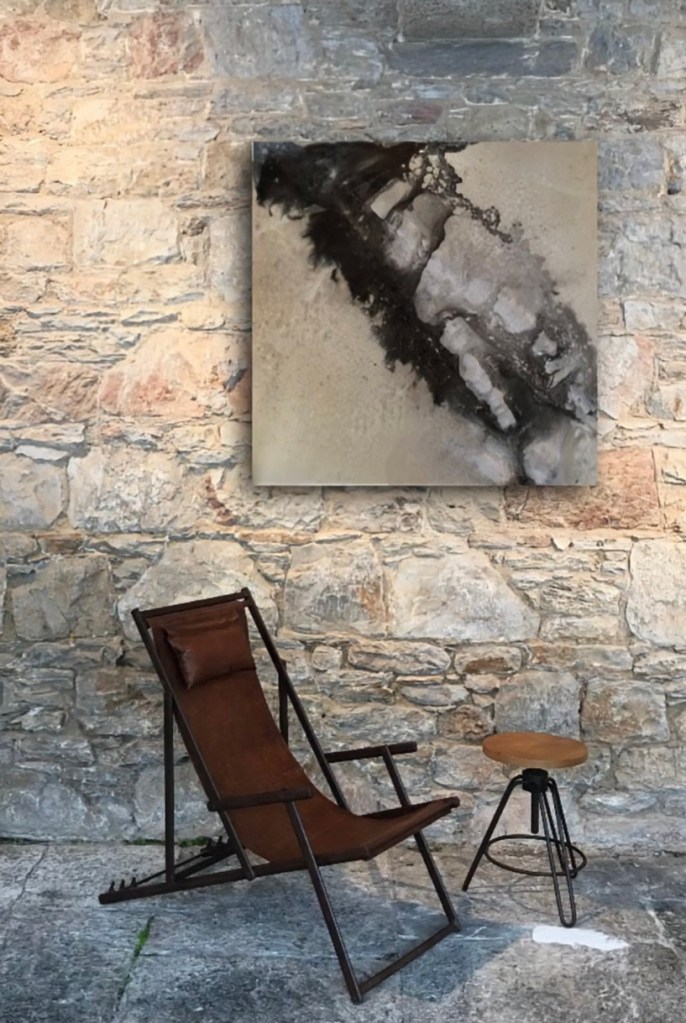
A long time ago I painted a plunge. The moment a hand cleaves into water.
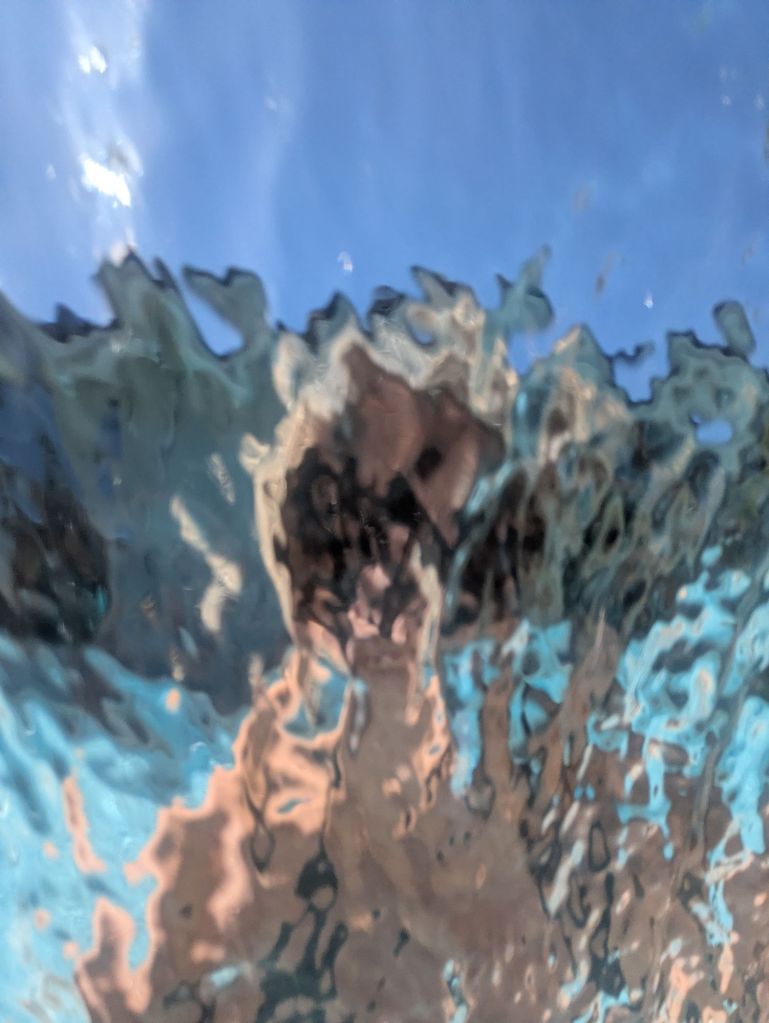
In the header photograph I took an image of the inside of a plastic water bottle. The small amount of warm colours merging into crisp blues is another way of trying to depict the act or experience of the moment of peak plunge.
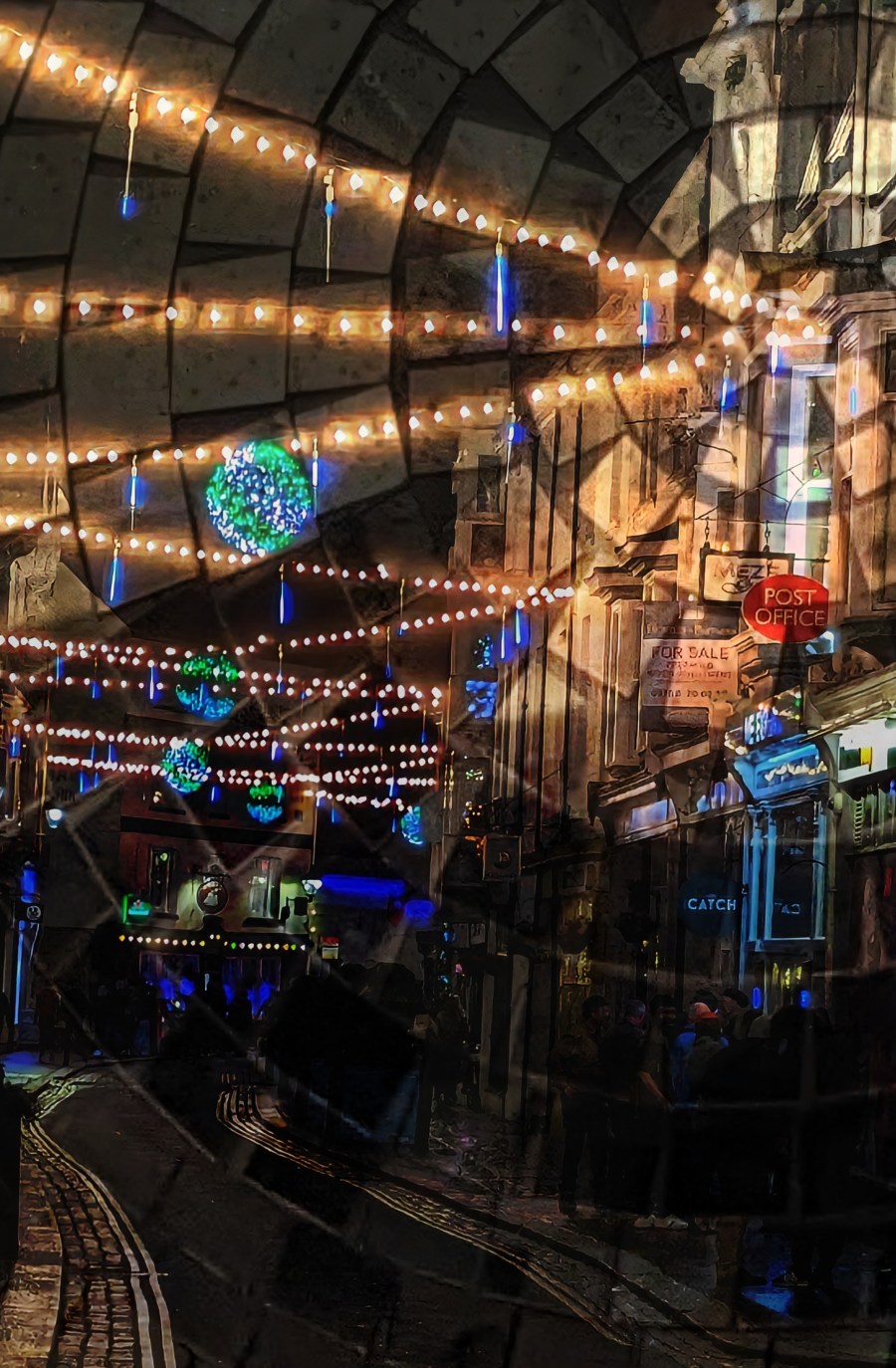
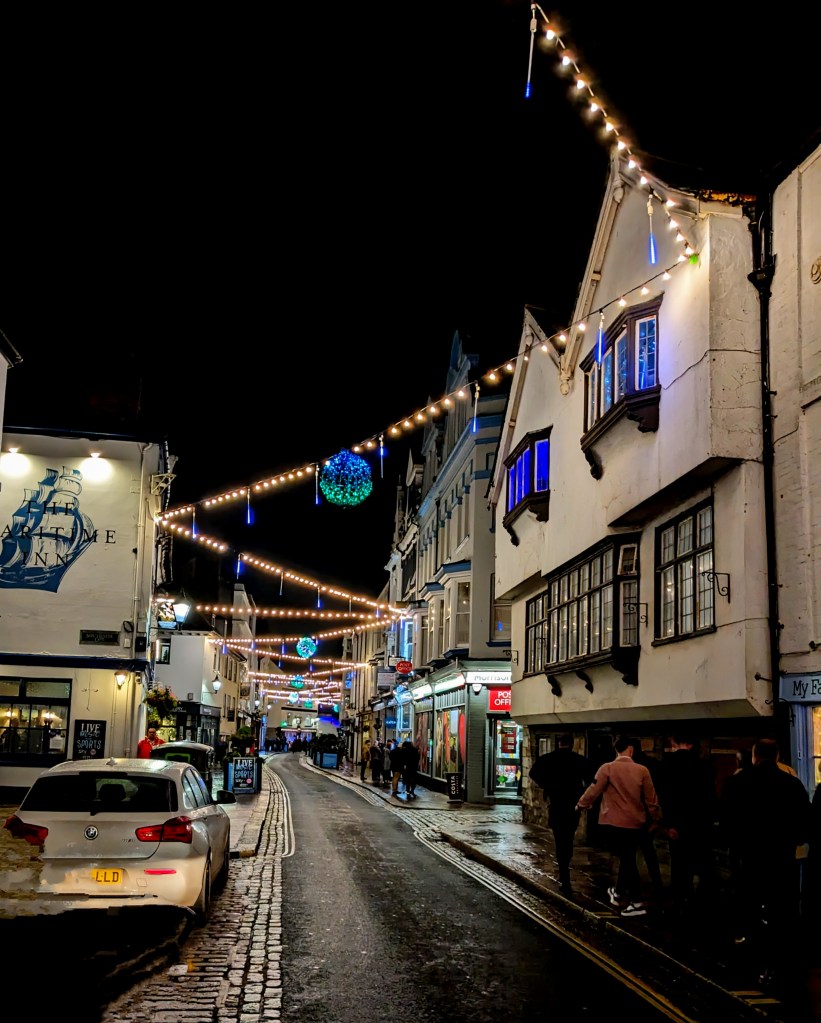
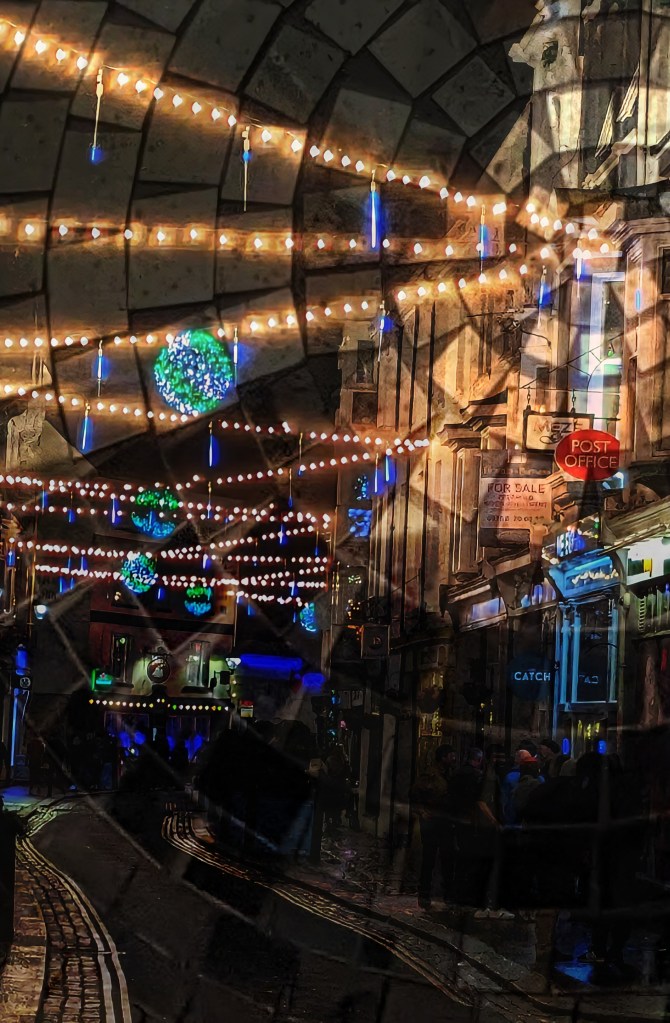
At this point serendipity hits. Last night we quickly left a Christmas music event to head to the Barbican in Plymouth for a different event. The Christmas lights were a fabulous likeness to my water bottle image.
As you can see from these two images the Barbican was full of people intent on ‘ making a night of it’ in the run up to Christmas.
No big deal you might think but here is a plunge into history. Southside Street and the even older New Street which runs parallel and slightly higher; both lead to Sutton Harbour and existed in some form from about 700AD. When Anglo-Saxon mariners settled here trading goods and fish. Greatly developed in the Medieval periods, the pubs, alehouses and brothels would have seen festive drinkers and pleasure seekers making merry at this time of year. For pagan festivals initially, and then for the conveniently timed Christian Festival of Christmas from about the 10th century. Any excuse to banish the glumness of extra long dank and dark nights in a Northern Hemisphere winter.
This contemporary image of groups of people moving from pub/bar/alehouse seeking pleasure in late December is so timeless it slightly unnerves me . Oh to be a time traveller in this area, with appropriate vaccinations. Plunging through history…
















 theoldmortuary.design