Advent#23

http://www.dulwichdiy.com/

Tinsel

Is Tinsel ‘ camper’ than Christmas. Is it set to return to Christmas in the next decade?

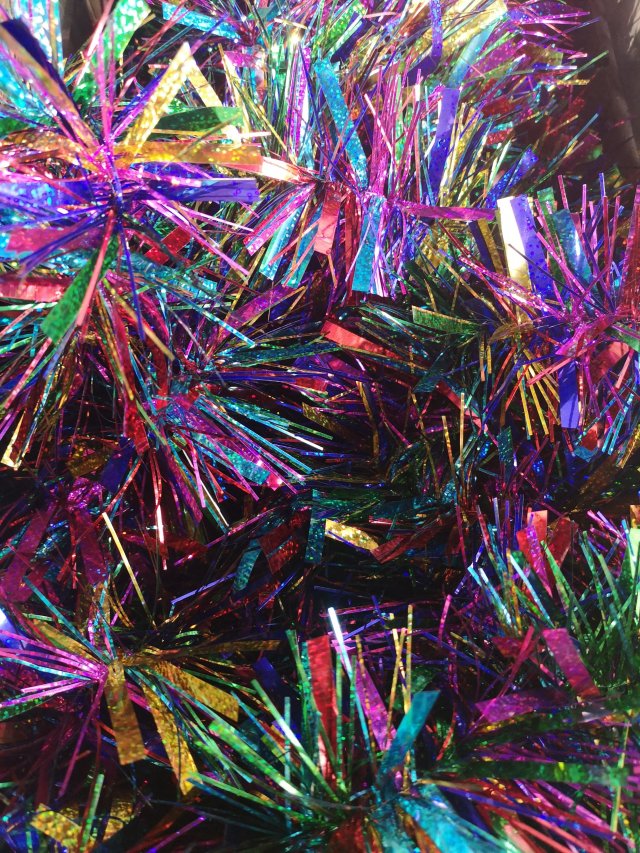
Tinsel was invented in 1610 in Nuremberg. It is a twinkly metal garland invented to reflect the flicker of candle light on Christmas trees, it is intended to mimic icicles. When the shiny strips are not tethered to a central thread it is known as lametta. Tinsel has been adopted around the world as a festival decoration. It is Tinsels role as a garment or prop in the theatre that has raised its ‘camp’ credentials and given it year round legitimacy. In particular, Drag acts and Pantomime are never knowingly underdressed. Tinsel and lametta are a staple accessory to bring a pop of sparkle to an outfit or even provide a stage name.

9E9639F4-4A74-4513-BA94-656C6D8DD750
allevents.in New Hope

Tinsel was hugely popular in the fifties, sixties and seventies. I remember the skinny cheap stuff that came from Woolworths, however by the seventies trips to London exposed us, as a family, to lush, dense, luxurious garlands, from Liberty or Harrods. Tinsel in our house was used year after year , being stored between each Christmas in the loft . It developed a musty dusty smell that became a familiar fragrance of December. As tinsel fell out of favour it stayed in the loft, gathering more dust instead of draping the tree.The skinny Woolworths stuff became stiff and brittle but the luxury version , supple and glossy rested in the roof waiting for it’s retro return.

My parents died in the nineties, the dreadful job of clearing their house was an absolute nadir of life. In the context of Tinsel it was also tinsels lowest point of popularity, without a second thought it went on the discard pile.

Rumour of Tinsels resurgence started on-line in about 2010. 400 years after it was first invented. I realise some people never abandoned it. However it seems to have taken another 10 years to see Tinsel stepping back into the limelight on domestic Christmas trees rather than magazine illustrations or commercially decorated corporate trees. Shops have started offering wide selections of tinsel and I bitterly regret binning my inherited luxury swags.

http://www.dulwichdiy.com/

Coincident with my Saturday ponderings on Tinsel a post appeared on Instagram from an Editor I used to write for. . #nakedforchristmas on Instagram shows Tinsel at its resurgent best.

#nakedatchristmas Instagram

Advent#6

Why an advent blog? Actually why not, theoldmortuary blog is a flimsy insubstantial thing. A daily pondering of no real significance, so why not ponder productively whilst the evenings are long.

Advent is not solely the possession of the Christian Church, like many things considered to be Christian, it was a pagan tradition beforehand. Advent in the Northern hemisphere belongs to December when the days are short and the weather intemperate. Some days feel as if almost nothing is achieved within daylight hours. The long dark evenings are good for cosy activities like reading or indeed pondering. Advent ponders are whatever crops up in my day that makes me think…
Today it’s baubles.

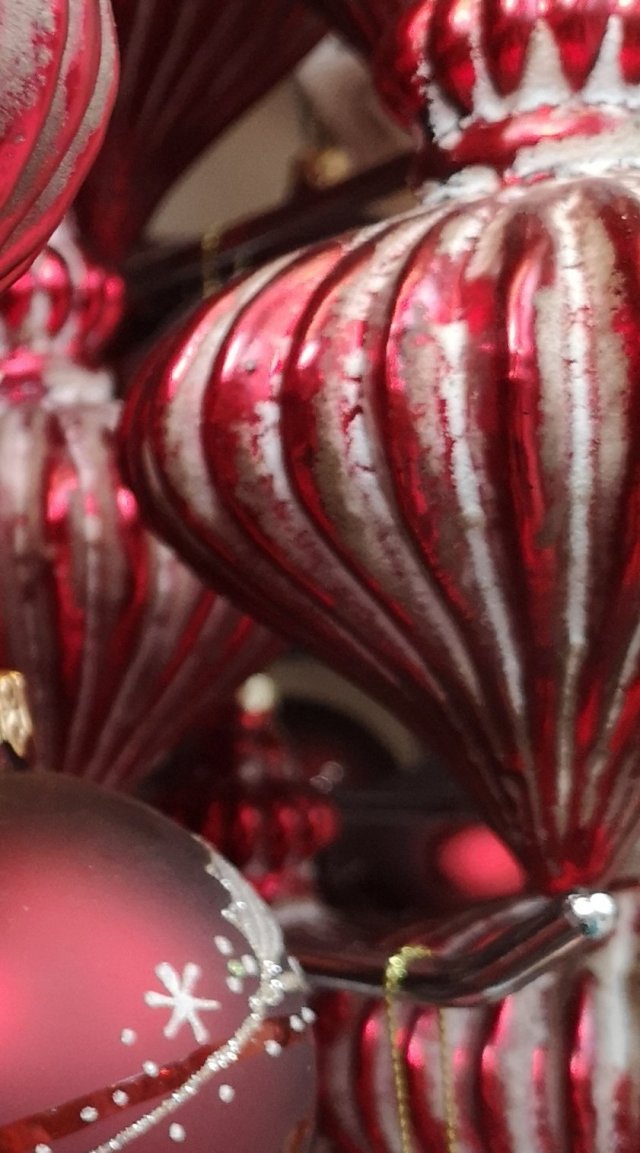
These amazing baubles hang in a local garden centre. These particular ones have travelled from Slovakia, others from the Ukraine, but most come from China and in particular Yiwu.

This article from The Guardian in 2014 explains their production.
https://www.theguardian.com/artanddesign/architecture-design-blog/2014/dec/19/santas-real-workshop-the-town-in-china-that-makes-the-worlds-christmas-decorations

Gisella Graham is a bauble designer and wholesaler. theoldmortuary has loads of her baubles, some from the Garden Centre and some from Liberty, London. The ones we mostly buy are London inspired, they also make great gifts for our family and friends abroad. I’m unsure where I thought baubles came from, but it wasn’t factories in China or wholesalers near the Elephant and Castle. Like Yiwu, Elephant and Castle is not a remotely Christmassy location. I only mention this because I once got lost nearby and discovered this bauble Mecca. Just as in China, normal people work there. No Elves. Shame.
https://www.giselagraham.co.uk/contact-us/

I’m sure the baubles of my youth came from Poland and Hong Kong. They were fine and fragile. None have survived my many moves. These random thoughts have inspired me to research the history of the bauble.

Germany was the home of the first blown glass bauble in the 16th Century. Hans Grenier produced glass beads and tin figures in the small town of Lauscha. In the next two centuries, the growing popularity and commercial success of his original decorations inspired other glass blowers in the town to make baubles. By 1880, F W Woolworth had discovered the German baubles of Lauscha and started to import them, despite bauble manufacturing beginning in New York in 1870. This German business grew and flourished until the end of World War Two.

After WW2, the Lauscha bauble factories became state owned and production ceased. However, after the Berlin wall came down most of the companies re-established themselves as private companies. They positioned themselves as high-end manufacturers, not competing with mass production and continue to produce baubles of very high quality.

Meanwhile, to fill the gap created by the closure of the Lauscha producers after WW2, mass production of baubles started, in the second half of the twentieth century, in Poland, other Eastern European countries, Mexico and China.

My recollection of Hong Kong baubles proved to be correct. During the Korean war, there was an American embargo on China. Hong Kong quickly increased its manufacturing capability not only to produce the products it would normally import from China but also produced enough goods to export to the rest of the world replacing China’s output. Glass blowing had been established in Hong Kong in the 1920’s, so inevitably baubles became another mass produced item that Hong Kong could export all over the world.

Bauble pondering, a journey of changing destinations, sometimes caused by war. Fascinating.