


Sunday, full disclosure, I didn’t write the main body of this blog. I am the ‘ old friend’ mentioned in the text. These blogs do all come out of somewhere, my daily interactions with people, this one comes from a real but email friendship. I love the writing style of my lovely friend Dai. We grew up in the same idylic village in North East Essex. We were awkward teenagers in the same location, young adults,medium adults and now older adults half a world apart. Our email contact mulls over all sorts of topics. We truly do not stick to reminiscing. I had no idea quite how to introduce this guest blog until a fact brought the 1970’s into sharp focus.
2022 is as far from 1970 as 1970 was from 1918. With that mind bending thought the blog is officially handed over to Dai. Not so much a blog more a Sunday Supplement.
It’s a modern trope often heard among the cohort of a certain age, that modern music isn’t a patch on the music of their day, which was without question the ‘golden age’ of popular music. Being a child of the 70s, I often find myself lapsing into this sort of diatribe in which the hopelessness and futility of the younger generation is laid bare by what passes as creative output in the form of the latest modern music. At such times I find myself sounding frighteningly similar to my own father who would bang on in the same vein whenever I cranked up the volume on the latest Slade single, or heaven forbid started playing that awful racket of an album, The Rise and Fall of Ziggy Stardust.

As far as my father was concerned the zenith of popular music had already been reached by the likes of Mr Acker Bilk, Vera Lynn, Paul Robeson, and in all likelihood such heights would never be surpassed despite all the recent advances in recording technology.
So, what is it with popular music? Is it simply a generational thing, or is there more to it than that? George Bernard Shaw, observed that, “music is the brandy of the damned.” But then, again, he also promoted eugenics and opposed vaccination, so it could well be that when it came to popular music old Georgie boy was more of a conservative in his views than my father. Noel Coward, on the other hand claimed, “It is extraordinary how potent cheap music is.” And that is a statement with which we can agree because there is no doubting the power of music to uplift, to decrease anxiety and to invoke memories and emotions long locked away and all but forgotten. “Music has the charms to soothe the savage breast (yes, the correct quote is breast and not beast as is often quoted), to soften rocks, or bend a knotted oak.” William Congreve (dramatist of the 1600s). Music provides the soundtrack to our lives and in cases of individuals suffering even severe dementia, music has proven to possess the power to slice through the fog to release and retrieve old memories believed, lost forever, as well as restoring a sense of happiness and a lessening of depressive thoughts. Medical research, through the use of brain imaging technology has also demonstrated that listening to melodic music can stimulate the brain to produce increased amounts of dopamine and serotonin, the ‘feelgood’ hormones which may even result in the improvement of some disease symptoms without the need for pharmaceutical intervention.
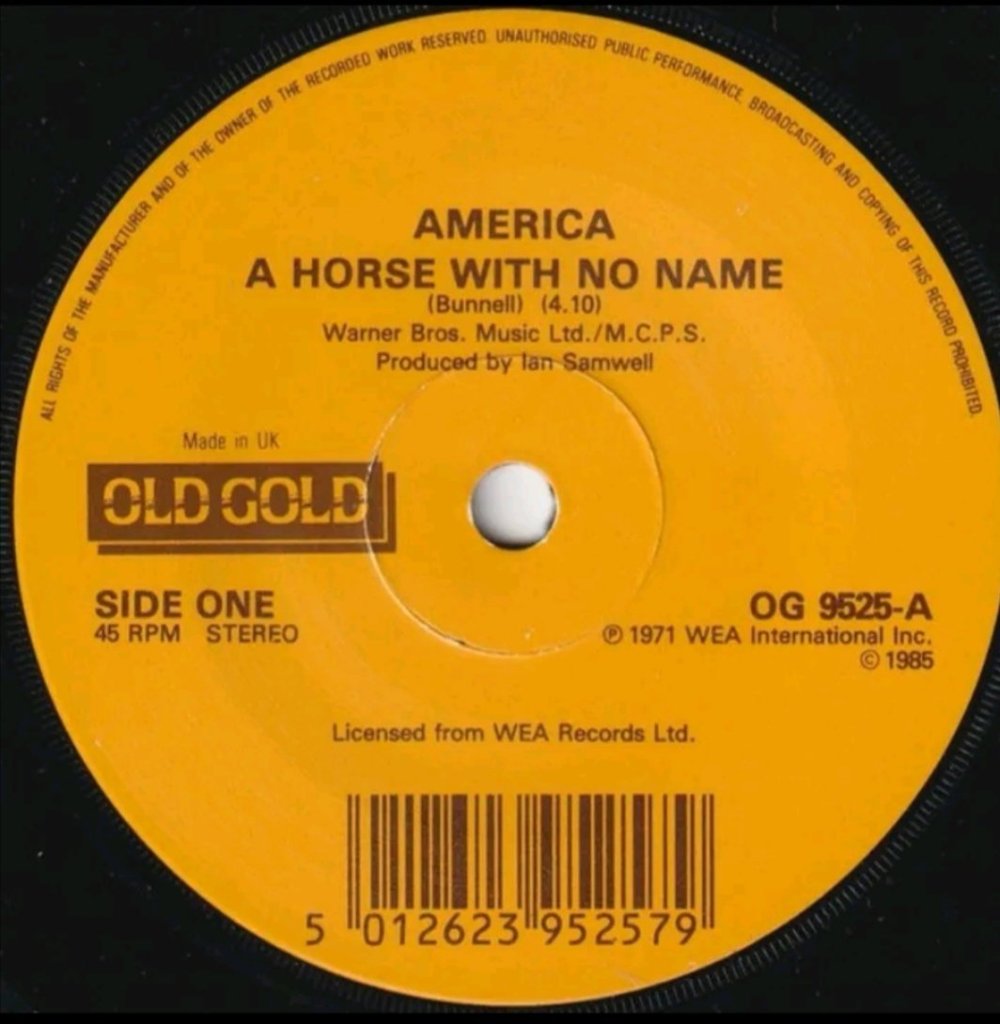
Without too much effort we can all probably name a piece of music which can instantly transport us back to a specific time and place, complete with the attendant emotions and sensations we were experiencing that particular moment in time. In the case of an old school friend the trigger is the song by America, The Horse With No Name. The mere sound of the opening strummed chords and she is instantly teleported back 50 years in time and immediately becomes once again, despite all her subsequent achievements and success, that awkward, insecure lonely teenager trying to negotiate that most difficult of transitions from a small insular primary school to the overwhelming chaos of a large comprehensive secondary school. It isn’t just the music and the song she can recall so vividly but all of the associated emotions, passions and feelings. Music has the power to summon forth this episodic memory, often connected with a difficult or stressful period in life, which can lie dormant and suppressed until released by the strains of a familiar song. For me it’s Bachman Turner Overdrive belting out You Ain’t Seen Nothing Yet. The reason being this song was on high rotation at the time my family decided to emigrate to Australia, a decision with which I was not in total agreement as it meant being uprooted and removed from all that was familiar, including an only recently discovered love-interest, at a critical time in my life.
Hearing that song and I am immediately transported from the perpetually sunny climes of cosmopolitan Melbourne back to the damp overcast mediocrity and greyness of Northeast Essex. The reaction on hearing the music is a visceral one. Yes, it can be a painful experience but simultaneously an uplifting and joyful one as I morph once again into that wide-eyed 17-year-old ready to take on the world; and, as things turned, out more or less succeed.
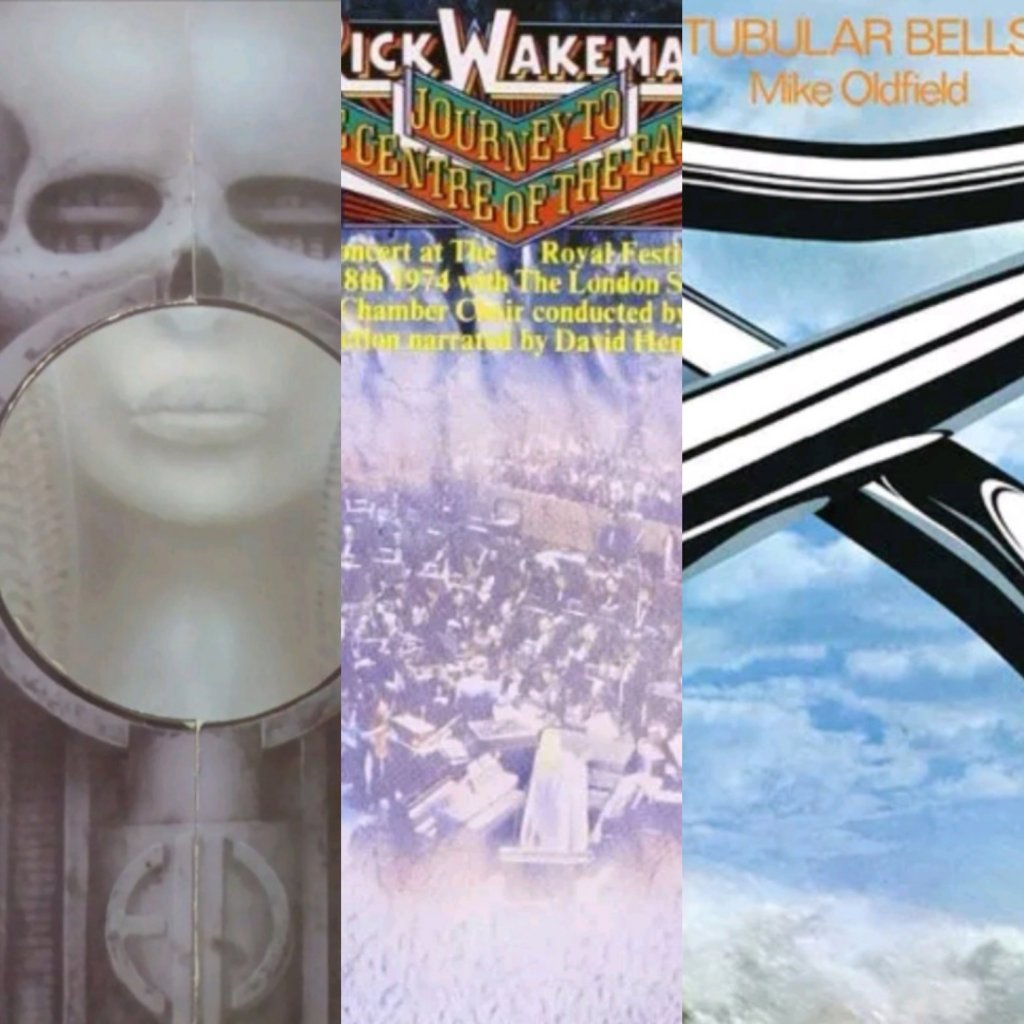
We’ve probably all got a song that can performe a similar time-shifting trick, complete with stirring emotional resonances but does this prove that music of yesteryear is better than the contemporary efforts? Well, no, but there are further aspects to this argument which should be explored before we cast a final judgement. The thing about music in the 70s was that it was generally speaking new and fresh. When Jimi Hendrix burst onto the scene the things, he was doing with the electric guitar had never been done before, and I don’t just mean setting fire to it. It was like WOW! Did you hear that? What made Bowie so incredible was the originality and creativity of the man as he strode so confidently down a road absolutely no one had walked before him. Bob Dylan may not have been everyone’s cup of Lap sang su Chong but he was a pioneer in fusing popular music with older more traditional forms such as folk he may never win any prizes for his singing but he did win a prize for his lyric writing, a Nobel prize for literature no less. Which means that today’s music almost inevitably is saddled with a sense that it’s all been done before and let’s be honest usually much better. But I believe there’s more to it than that. The way the music was presented was also an integral part in the way it was consumed. The pop charts mattered, most of us listened to the same radio station and watched the same tv music show simply because there weren’t many options. This meant that when a song became popular it permeated and left an indelible mark on the collective consciousness.This was also the age of the long form content. In this time of Tick Tock and Twitter and SMS texts, the concept of the LP is probably a totally alien one for the present generation to grasp. But back in the day the album reigned supreme, The artist would put as much care and effort into sorting out the track listing as in the writing of the material. And the listener would devour the album as a complete entity not as individual pieces of music. The other aspect of albums was the cover artwork, many album covers of this period became as iconic as the music itself, think Pink Floyd’s Dark Side of the Moon, the Rolling Stones Sticky Fingers, the Beatles, Sgt Peppers. The list is extensive. The songs on an LP can’t be shuffled skipped or readily rearranged. The listener is forced to hear the work complete in the exactly way the artist intended. This requires a certain commitment and level of concentration on behalf of the listener, which would not come naturally to the fickle, more easily distracted youth of today. On the subject of albums when I was 17 there were three albums that were played constantly on the rickety old turn-table in the 6th form common room, namely
Rick Wakeman’s Journey to the centre of the Earth
Mike Old field’s Tubular Bells and
Emerson Lake and Palmer’s Brain Salad surgery
These records were what was referred to as progressive rock, in fact they were quasi classical in style.
And not a hit single between them. They definitely required commitment and a certain intellectual response from the listener. Yet they were all highly successful both critically and commercially and would be played from start to finish over and over again. Each track, you could hardly call them ‘songs’. Would go on for 20 minutes or more. I would argue that our brains were obviously more highly developed than those of the present custodians of popular culture who are so easily satisfied by gorging themselves stupid on the output of Justin Beiber, Katy Perry and One Direction. And as problematic and contentious as it may be. I am happy to state for the record, no pun intended, that the both the music and the listening public of my youth, are in a completely different class when compared to the examples of today.
Or am I being too harsh? After all, no matter how dismissive and disparaging I am of the state of modern music it is the batch of contemporary artists who will create the soundtrack and music memories for the current generation, though, only time will tell whether this output will be as memorable and enduring as that of earlier eras. Then again, not all music generated in the 70s was fresh, innovative and ground-breaking, some examples were derivative, shallow, disposable bubble-gum pap, I’m looking at you Gary Glitter. Perhaps trying to decide whether one period of music is better than another is simply too subjective an exercise to be able to produce a really definitive answer. For example, if 20 people were asked to compile a list of the best albums of all time, the chances are no more than one or two albums would appear on multiple lists. Still, maybe thinking about constructing such a list might provide an interesting and equally contentious subject for a future blog.




 theoldmortuary.design