
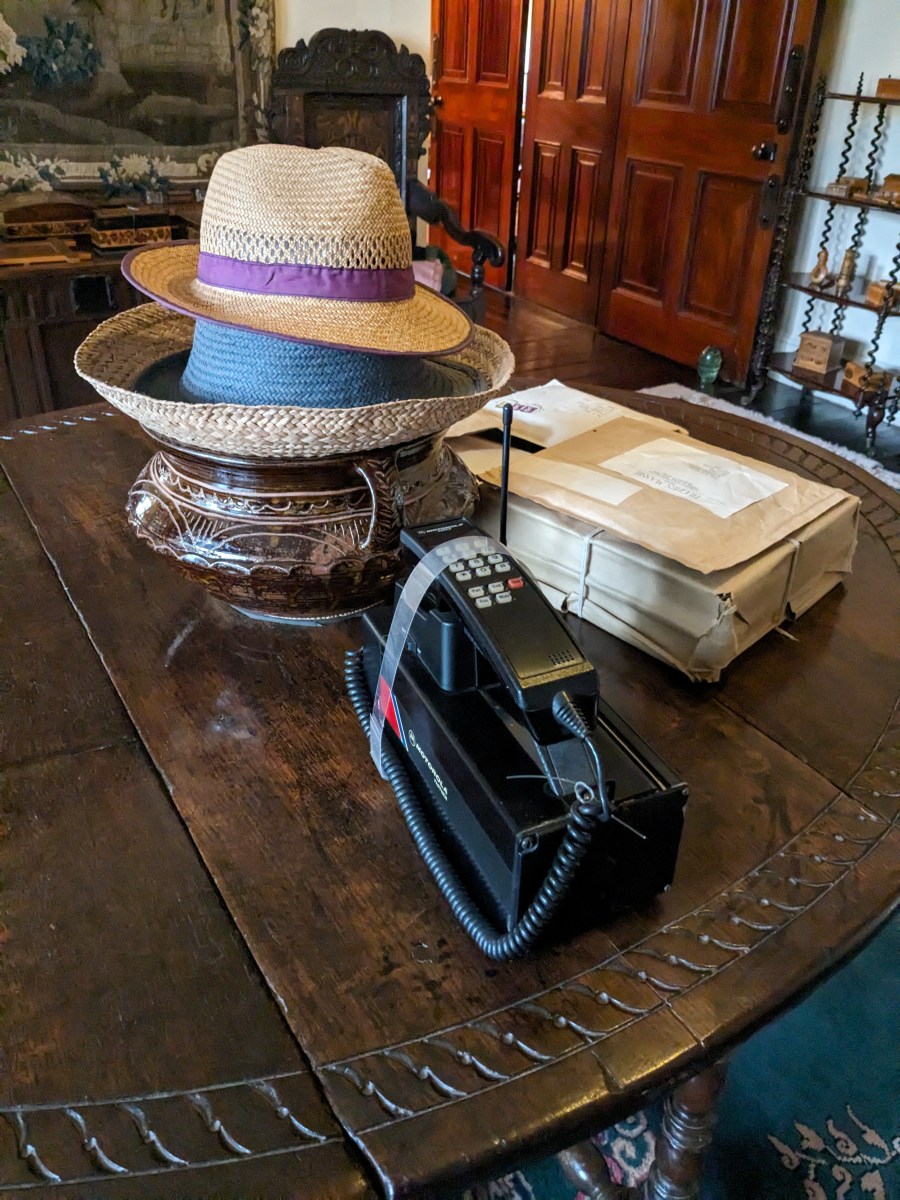
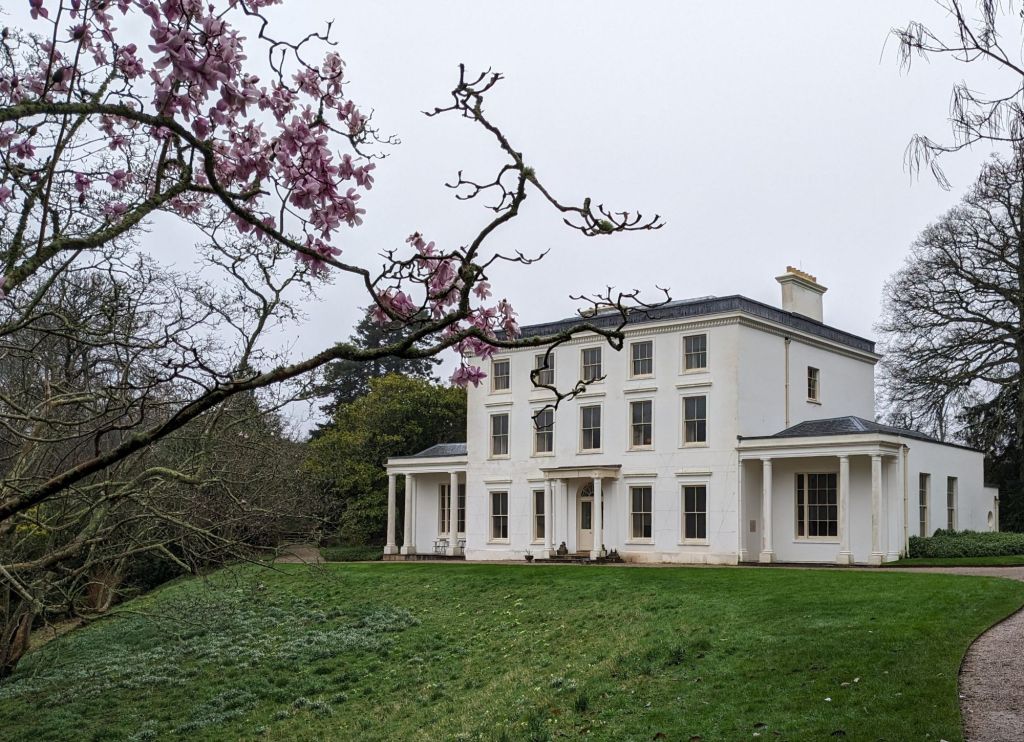
Visiting a famous author’s home, when I hadn’t read one of her books for more than 40 years, felt a lot like attending a lecture without doing my homework. In my defence this was always a reconnaissance visit, to get the measure of the place before we brought other people here. In between times I will read some Agatha Christie and watch some film and T.V adaptations.
There are other stories attached to Greenway that I can recount without feeling hopelessly under-researched. The house is on the river Dart almost opposite Dartmouth. The estate was once the home of Sir Walter Raleigh the man who brought tobacco and the smoking habit, from his travels in America in the 16th century. Sir Walter was taking a crafty puff down by his boatshed, when it is said a servant thought he was on fire and pushed him into the river. He would have been gazing out at the Anchor Stone/Point, a rocky outcrop in the middle of the river that is never fully submerged.
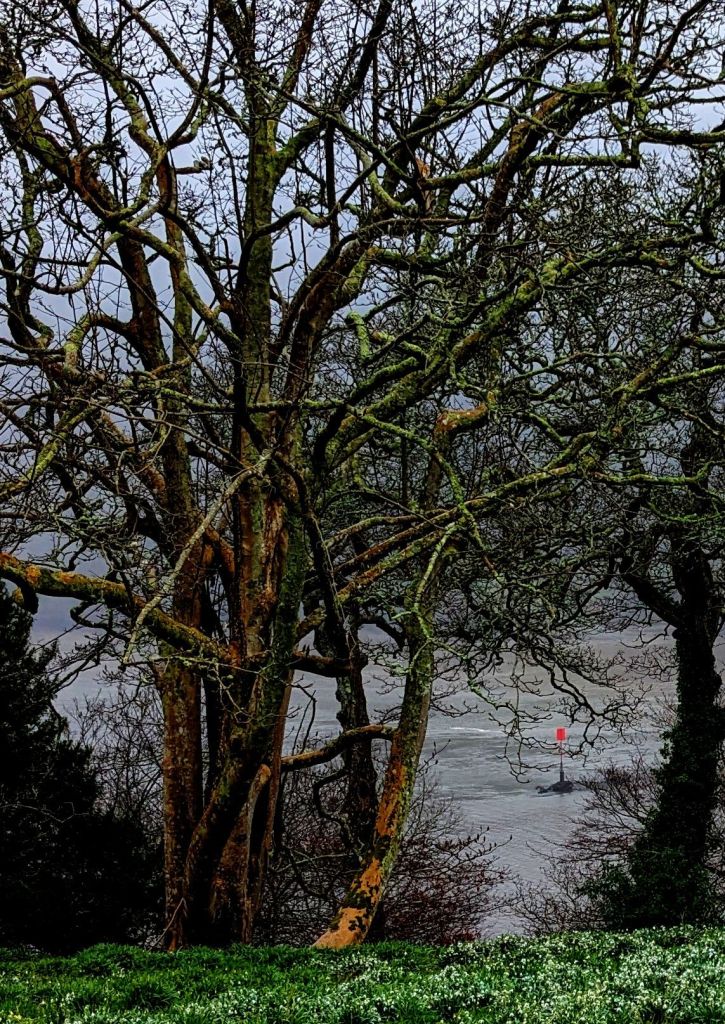
In medieval times women, who were accused of being gossips or fornicators, were rowed out to the rock and left there for a full circuit of tide changes, to give them time to think about their misdeeds. I must presume the rowers were men, who of course, are never known to gossip or fornicate.
Fornication takes me rather neatly to the last non- Agatha story that I picked up.
During WW2 the U.S Coastguard service were stationed at Greenways which had been requisitioned by the British Government during the war. U.S personnel were there to prepare for the D Day Landings.
Flotilla #10 had a talented artist Lt Marshall Lee in it’s midst. He painted a mural depicting the deployments of Flotilla #10 during the U.S involvement during the later parts of WW2.
Beautifully rendered paintings of the locations where they had been stationed.
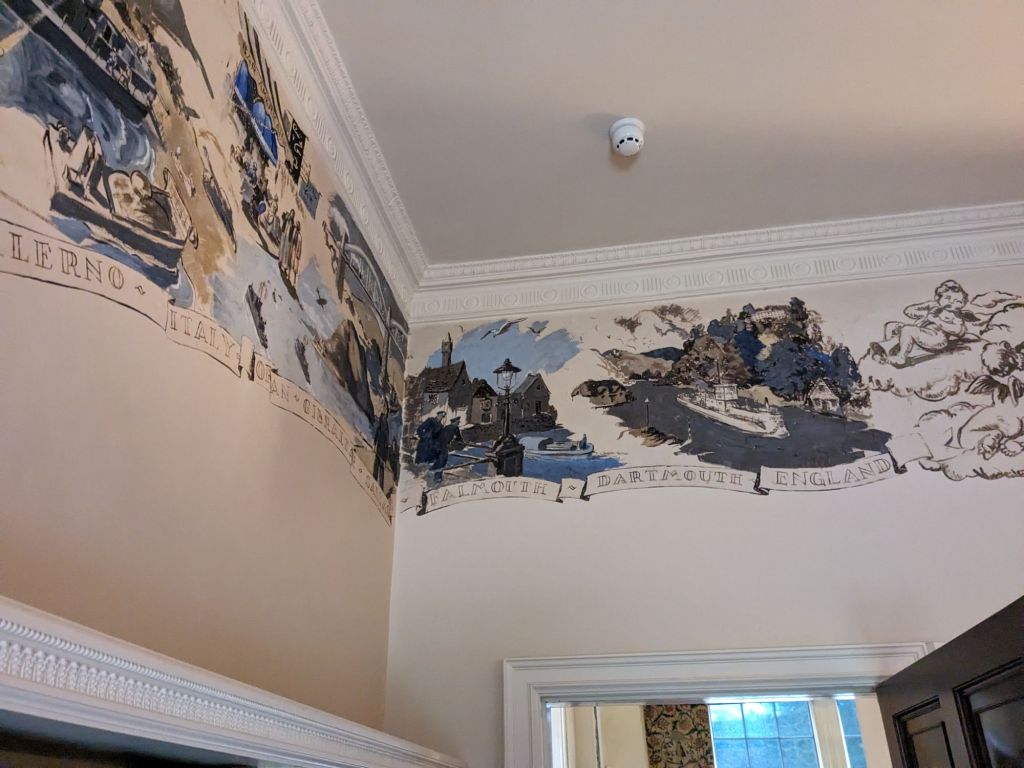
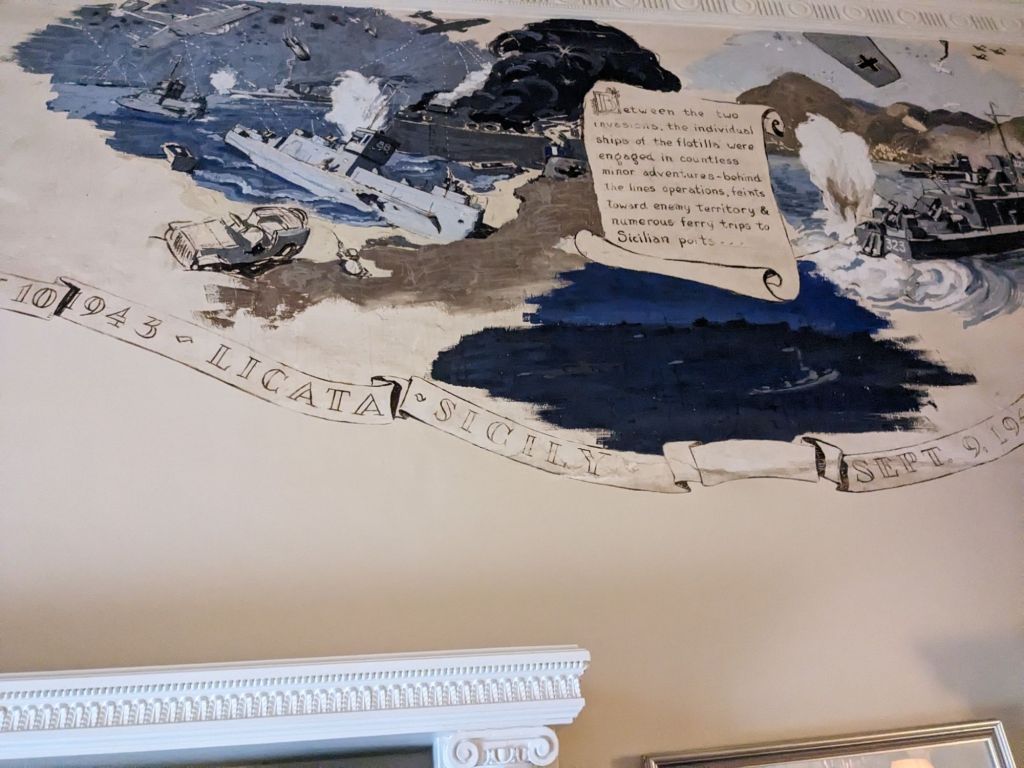
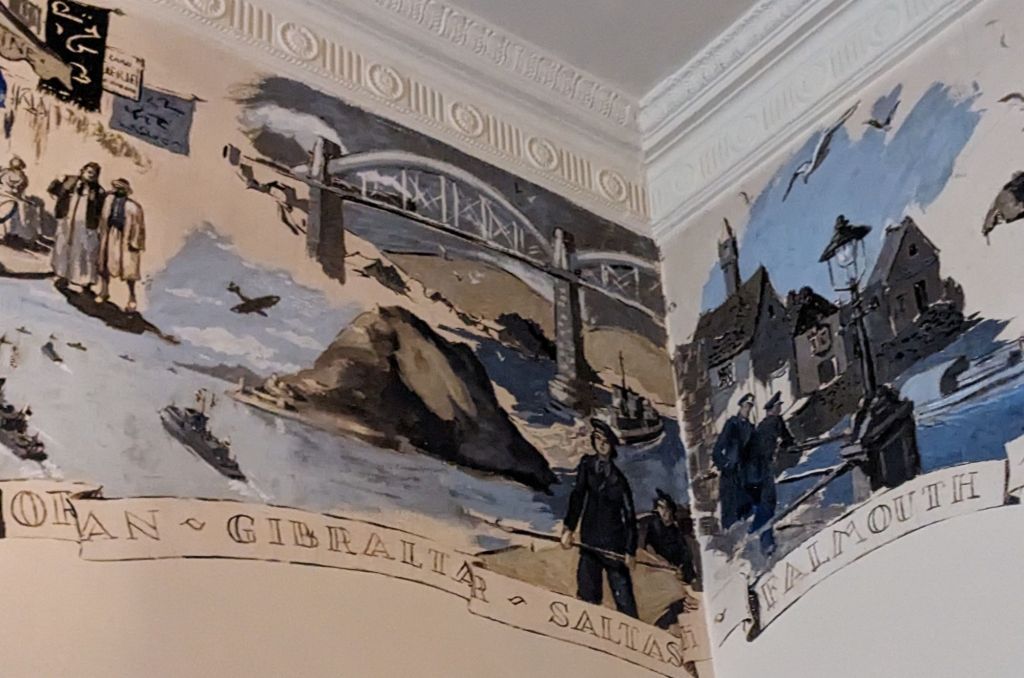
Leading up, we must assume, to some traditional R and R.
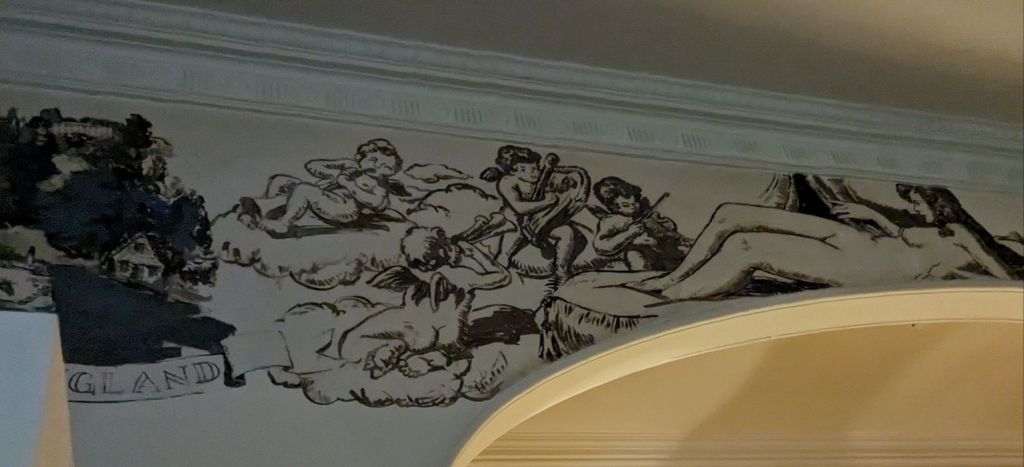
Never fully fleshed out it seems. Which makes me ask a question.
Did Lt Marshall Lee not survive the D Day landings to finish his masterpiece. Or did the carnal or other delights of Dartmouth put him off his brush strokes. I really hope it was the latter and that his earthly delights were not dragged off to the anchor rock for punishment.

P.S This is why I love to blog, just a little digging found me this lovely nugget of information. Do read it.
https://www.pulpartists.com/Lee.html
M. LINCOLN LEE
(1921-2010)
Marshall Lincoln Lee was born February 12, 1921 in Brooklyn, NY. His father, Jack Lee, was born 1887 in Russia and came to America in 1895. His mother, Ruth Lee, was born in 1897 in NYC of Polish ancestry. His parents married in 1916 and had two children. His older sister Doris Lee was born in 1918. They lived at 350 Fort Washington Avenue in the Washington Heights section of uppermost Manhattan. His father owned and operated an automobile garage.
As the family grew prosperous they moved to 117 Glover Avenue in Yonkers. NY, a suburb just north of the Bronx.
On November 16, 1929 his father died at the age of forty-three. His mother supported the family by working as a stenographer at a newspaper.
He had a natural talent for drawing and became interested in a career as a commercial artist while working in the newspaper pressroom during summer vacations.
IN June of 1936 he graduated from Yonkers High School.
In September of 1936 he began to attend the Pratt Institute in Brooklyn. He studied illustration with Nicholas Reilly and H. Winfield Scott. Two of his fellow classmates were Sam Savitts and Attilio Sinagra. During his senior year he was elected Class Vice president.
In June of 1939 he graduated from Pratt. He moved to 50 Commerce Street in Lower Manhattan and began to work as a free-lance commercial artist.
His illustrations appeared in Red Mask Detective Stories, Five Novels Monthly, Clues Detective Stories, The Lone Eagle, The Avenger, Jungle Stories, Two-Complete Detective Books, Ten Detective Aces, Baseball Stories, and Action Stories.
During WWII he enlisted in the U. S. Coast Guard Reserve. Several other artists also served in this branch of the military during WWII, such as Herman Vestal, Rafael Astarita, John Falter, and Frederick Blakeslee, as well as the pulp magazine publisher Harry Steeger.
He was promoted to Lieutenant and was made Commanding Officer of the U.S.S. LCI(L)-96, which stands for Landing Craft, Infantry (Large). His ship participated in the North African occupation in Tunisia and afterwards landed troops at Salerno during the invasion of Sicily.
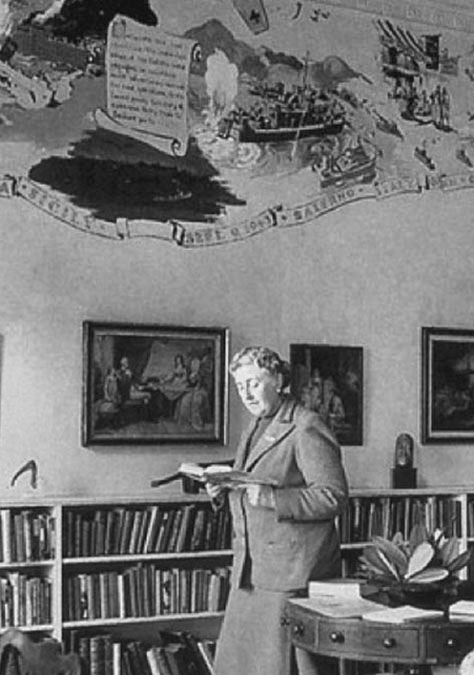
In January 1944 they were stationed in England in preparation for D-Day. Many large British manor homes were requisitioned by the military for the duration, and he was among several officers billeted at the country estate of Agatha Christie near the Royal Naval College at Dartmouth. Lt. M. Lincoln Lee painted a decorative mural in the library, which served as a recreation room. His mural depicted the worldwide exploits of his ship, the U.S.S. LCI(L)-96. When the famous mystery author finally returned the Admiralty apologized for the mural and offered to paint it over, but Agatha Christie said, “No, it’s a piece of history. I would like to keep it.” She spent nearly every summer at the home for the rest of her life.
On June 6, 1944 the U.S.S. LCI(L)-96 participated in the Normandy Invasion at Utah Beach. After D-Day he became Harbor Master at the Port of Cherbourg, and then went to SHAEF HQ in Frankfurt-am-Main.
After his honorable discharge in 1946 he became the U.S. Director of Inter-Allied Cultural Relations in Europe.
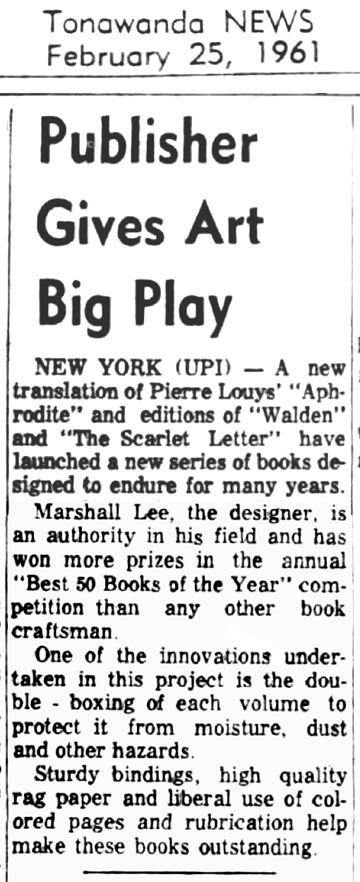
In 1948 he returned to New York City and resumed his career in publishing. He became an award-winning book designer. He lived at 219 East 69th Street in the affluent Upper East Side of Manhattan.
By 1952 he was a college professor teaching book design at New York University.
In 1965 Doubleday published his reference work, Bookmaking – Editing, Designing, and Production, which became a standard textbook on the subject.
In the 1970s he became Vice President of Harry N. Abrams Art Books Inc. He moved to 25 Church Street in Schuylerville, NY.
In 2000 the U.K. National Trust restored Agatha Christie’s manor house, including the library mural of the U.S.S. LCI(L)-96 by Lt. Lee. British art conservators contacted the artist for consultation and The Daily Mail reported, “he was extremely delighted to learn his mural had survived over the years and been preserved, so it will be there for future generations to see.”
Marshall Lee died at the age of eighty-nine on April 21, 2010 in Schuylersviller, NY.
© David Saunders 2013
Fascinating that he was known as a pulp artist. For many years Agatha Christies books were reproduced using such cheap materials that their manufacture would have been included in the genre Pulp Fiction. I hope they met.
 theoldmortuary.design
I would love to visit this house, and love learning the back stories, they are always so rich with detail and endlessly interesting. I have a feeling that had I lived in that era, in that place, I would have spent a lot of time out on that rock.
LikeLike
It was a fabulous place to visit. I’m sure we will go often.
LikeLiked by 1 person