A late blog because meetings and swimming kept me busy from early today. I rushed through the early morning chores and quickly typed this little thought on water colour paper. Or that was the plan, the mornings meeting was a creative one where planning and exchanging ideas are accompanied by people creating small projects at the same time. What I had actually typed onto was blotting paper, so the words were more prophetic than the original plan. Painting onto blotting paper is highly unpredictable. Some colours just stuttered to an immediate halt, no hope of all the usual watercolour tricks and effects. But something emerged. The conversations also flowed and stuck in unexpected places. Two succesful exhibitions have just closed. The talk as it often is, was about change in general and the role of Social Media in promoting the work of arts organisations and indeed communicating with members via social media and electronic newsletters.
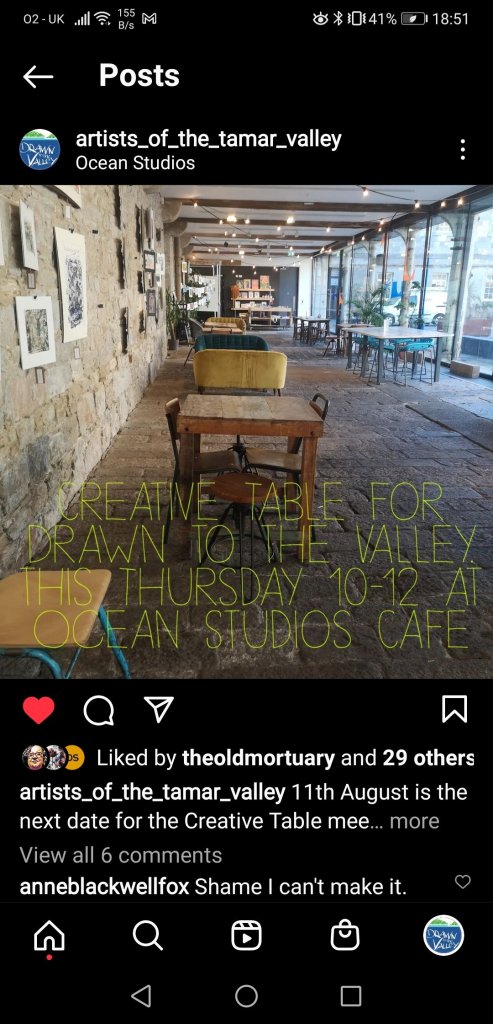
Electronic NewsletterInstagram post reminding members about a meeting
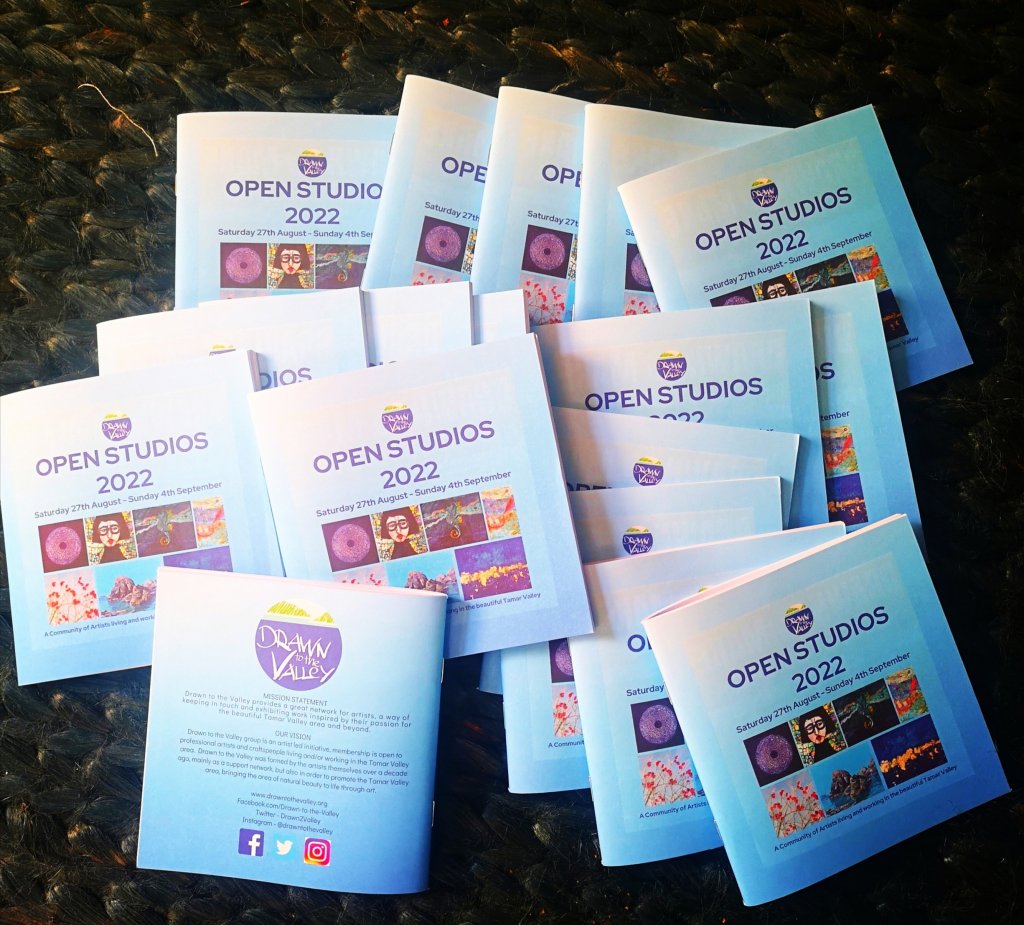
I’m sure most people involved with any small to medium voluntary or creative organisation must be wrangling the same discussions. The love of familiar hard copy, something to hold onto, something to keep V information only accessible by using a computer, tablet or smartphone. The only time we have produced an actual paper brochure post pandemic is for an Open Studios Arts Trail.
Even this is best used with a QR code.
Feelings and opinions are strongly felt and the old ways of doing things worked but I think a global pandemic has pushed forward so many things often in unexpected ways , I think however that going back to even how things were done three years ago is a boat that has already sailed.
On a more personal level I probably don’t need to paint on blotting paper ever again.
Desire Paths have always fascinated me. Reading a recent blog from Spitalfields Life, nudged me into writing this blog today.
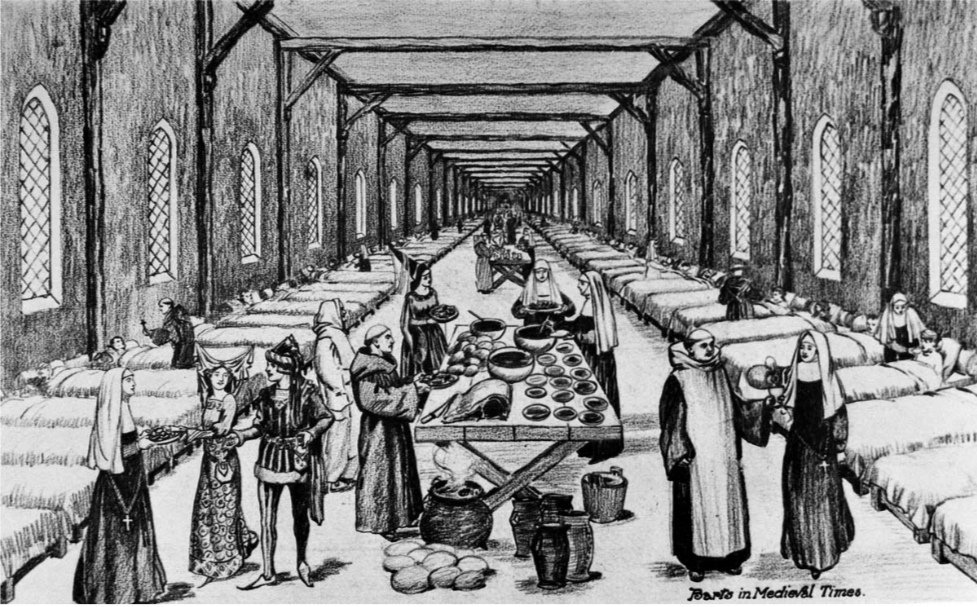
When I was a student at Barts Hospital my chosen Desire Path took 5 minutes off my journey to Moorgate Station. It was an ancient right of way. For nearly a thousand years medics and butchers have shared adjacent plots in the City of London.
My short cut, or desire path, took me from the hospital boundary through slaughter yards, with bloodied water running into open drains. My desire path was almost certainly created by butchers, through history, making their way to and from one of the City gates. Moor Gate, so named because it led out to marshy ground known as Moor Fields. The to and fro on my little cut way was not just medical folk and butchers trying to make a quick access or escape, but, by passing so close to active slaughter yards the route may only have been tolerable for those with minds and stomachs already hardened to the sight snd smells of blood and gore. Butchers sometimes used the path as walking wounded, a quick way in to seek medical attention when sharp knives and cleavers have cut through living human flesh. A cleaver cutting through a femoral artery is a mucky and life or limb threatening event. Butchers, before the days of Health and Safety, often had bits missing, and the butchers of Smithfield were very regular and grateful customers when Barts had a fully functioning A and E. Anyway, I digress this blog is about a coastal desire path with much less to talk about. When I returned to work at Barts in 2013 I was hugely sad, but not entirely surprised, that I could no longer follow my short cut to Moorgate.
A desire path (often referred to as a desire line in transportation planning), also known as a game trail, social trail, fishermen trail, herd path, cow path, elephant path, goat track, pig trail, use trail and bootleg trail, is an unplanned small trail created as a consequence of mechanical erosion caused by human or animal traffic. The path usually represents the shortest or the most easily navigated route between an origin and destination, and the width and severity of its surface erosion are often indicators of the traffic level it receives.Desire paths typically emerge as convenient shortcuts where more deliberately constructed paths take a longer or more circuitous route, have gaps, or are non-existent. Once someone has already treaded out a path through the natural vegetation, subsequent traffics tend to follow that visibly existing route (as it is more convenient than carving out a new path by oneself), and the repeated trampling will further erode away both the remaining groundcover and the soil quality that allows easy revegetation.*
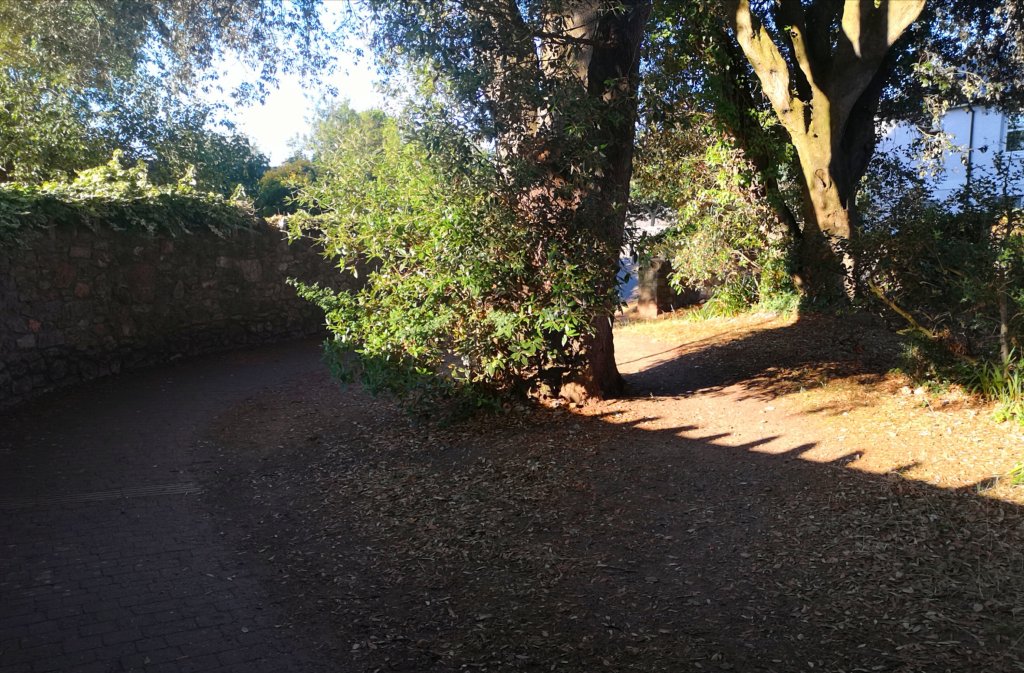
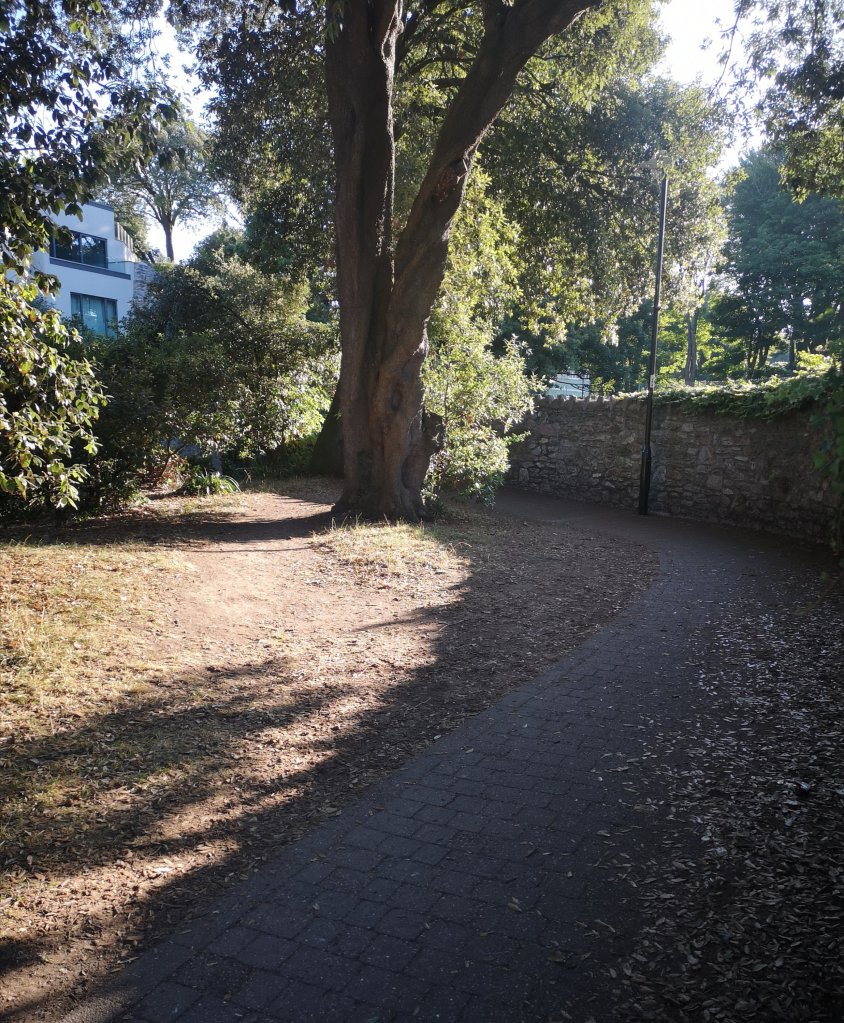
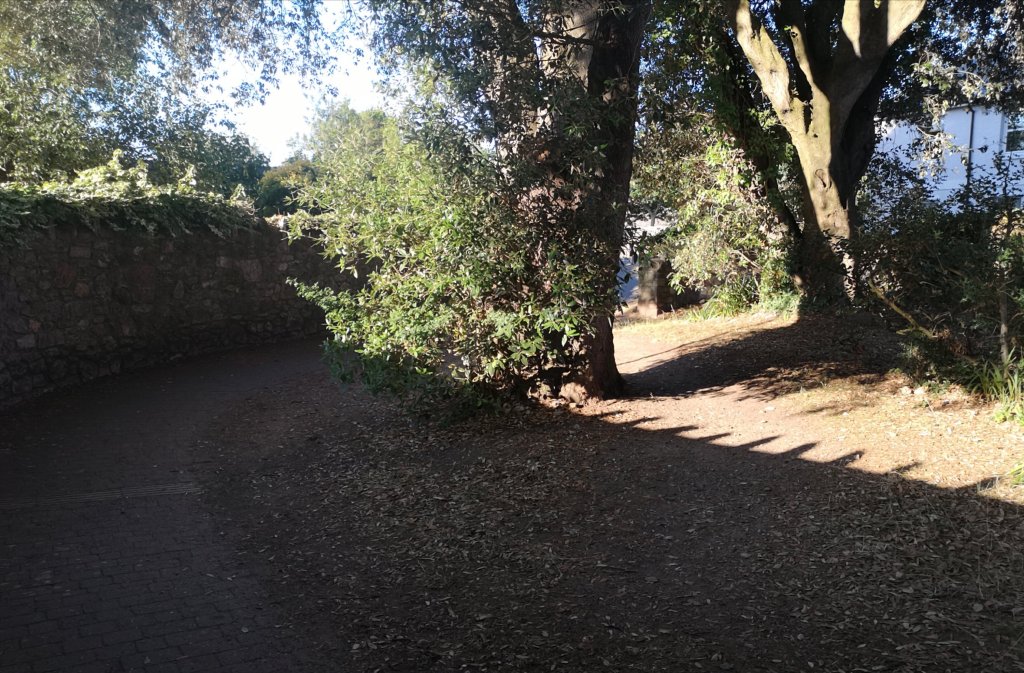
The desire path I walk on most days has none of the history of the Barts desire path. It cuts off only seconds of an already brief walk to the beach . It is the area in sunlight in this picture, the actual, brick path runs close to the wall of Stonehouse Tennis Club. But such is pondering that I only realised today that the South West Coastal Path, that both this Desire, and official, brick path lead to, must be made up entirely of historic desire paths that have been linked together. Unexpected enlightenment on a Wednesday
Today I am a rubbish photographer and have managed to cut off the vital words on this plaque. South West Coastal Path are the words I needed but managed not to include in this image.
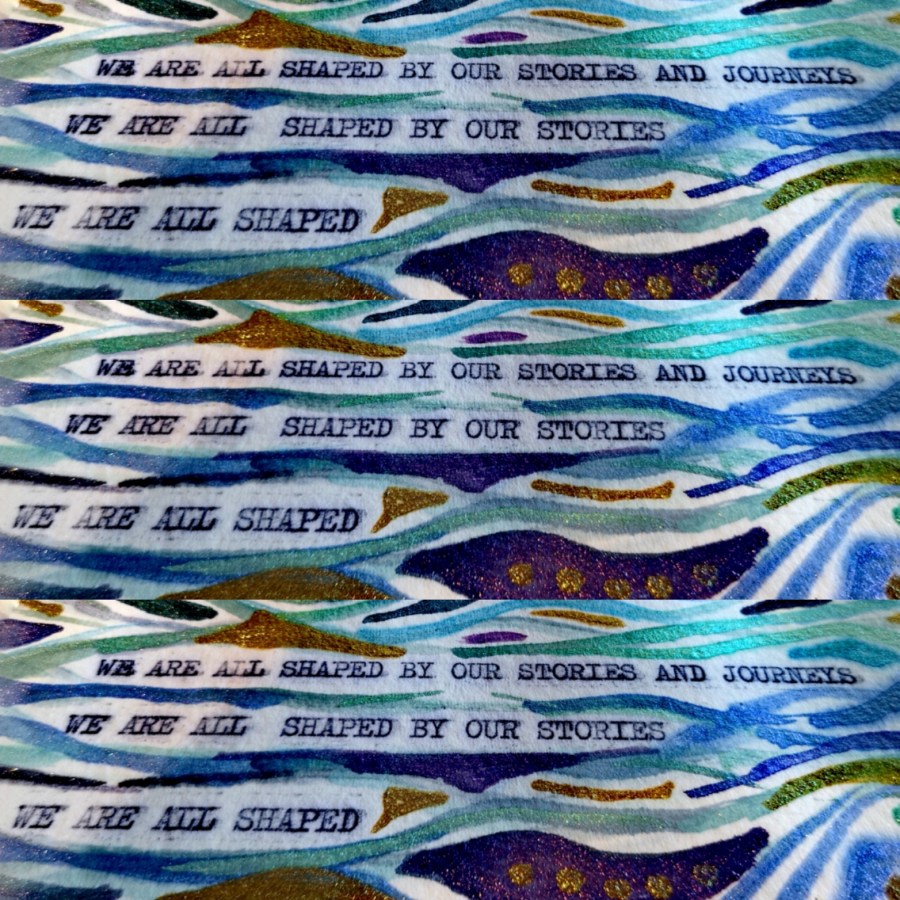
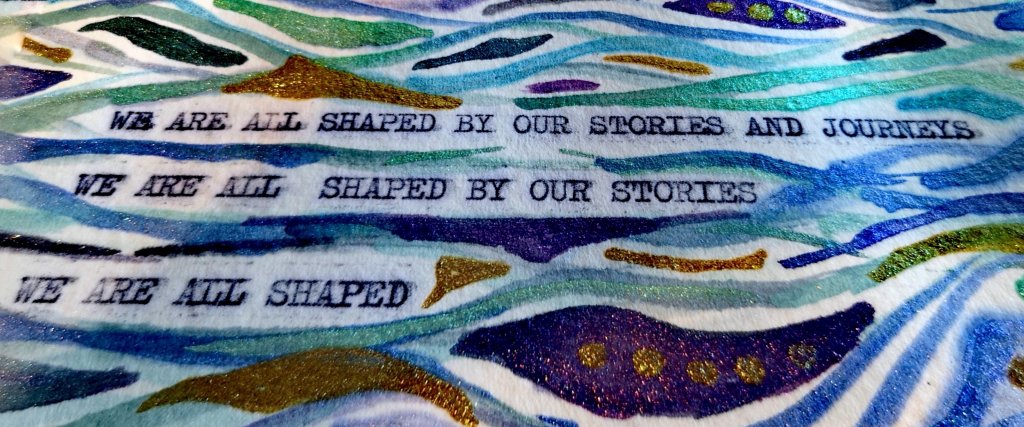
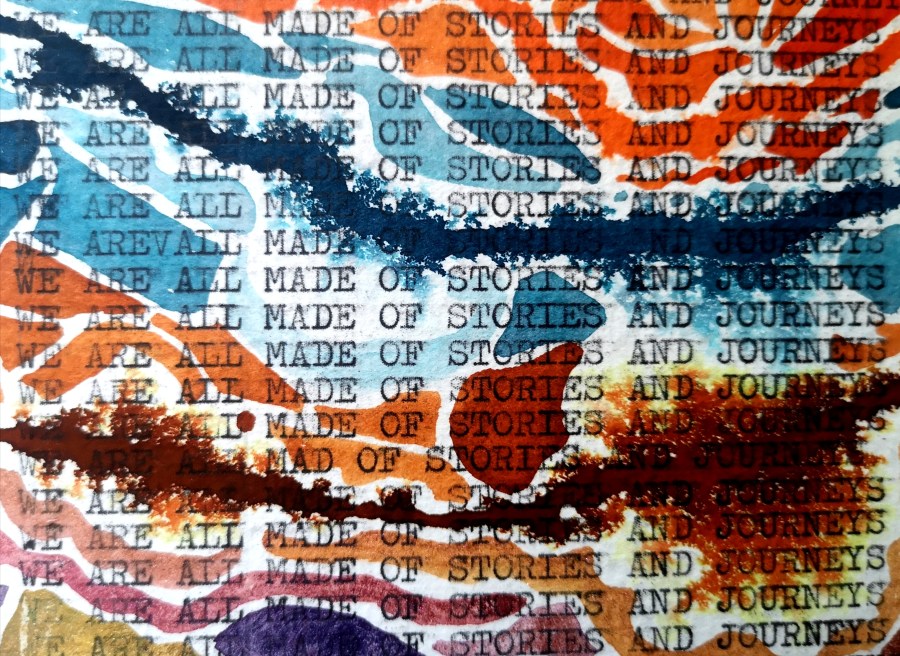
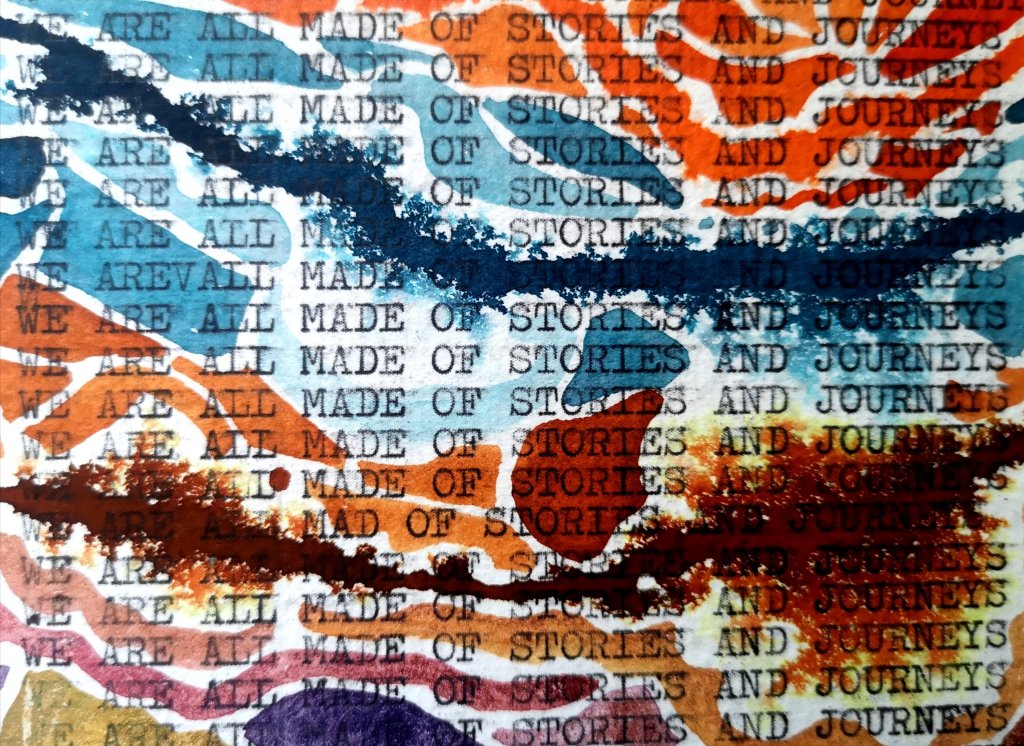
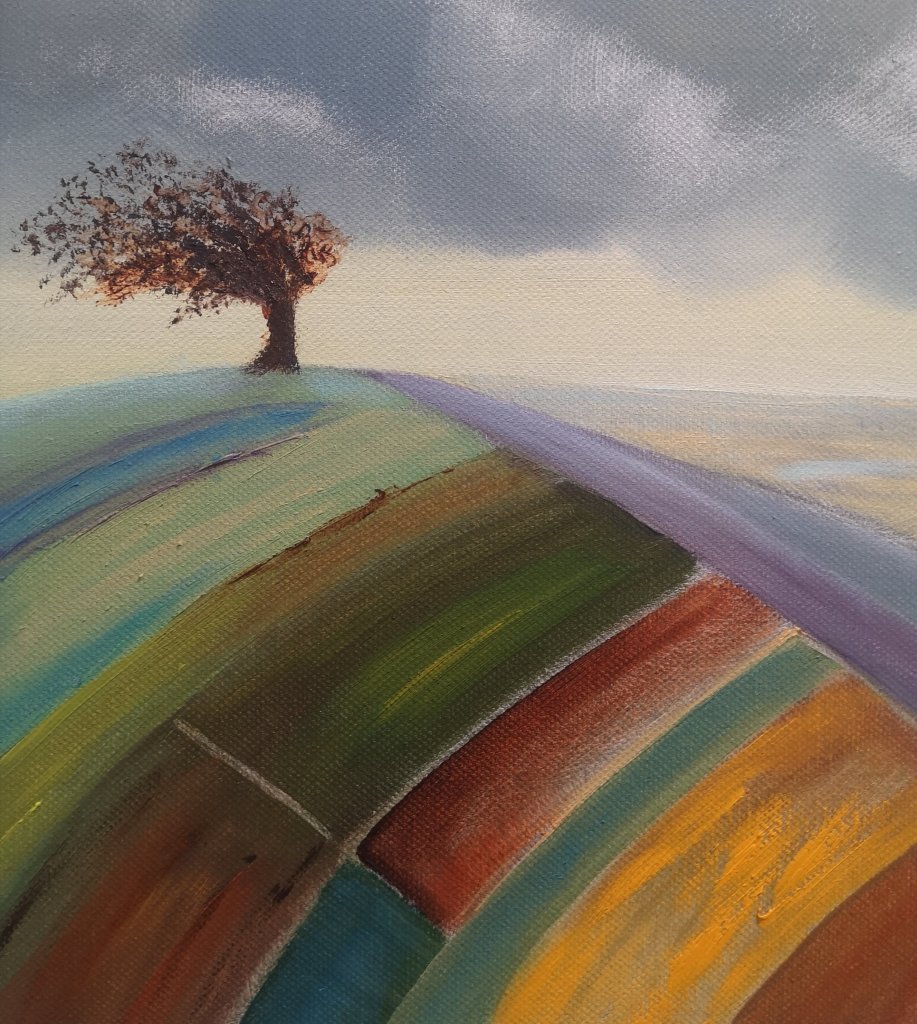
One of my recent paintings combined with typewriting sums this whole blog up really. Todays in particular but pretty much in general too.
What exactly was in the water last night? A fairly standard bob was called for the late afternoon/early evening. It all started just a little off normal by some random William Shakespeare quotations. A Midsummer Night’s Dream if that is of any interest. The proper swimmers went off to swim and the eponymous bobbers bobbed. But then the proper swimmers got all giddy by one of the buoys and started throwing a high vis safety buoy about. By the time they reached the bobbing zone a mass ‘piggy in the middle’ game had evolved that then sucked up the bobbers. The bobbers tend to swim in the safety of the bay. The combined effect of the number of people involved increasing and the acoustic properties of a cliff surrounded bay,amplified the noise, lowered the inhibitions and multiplied the competitive element of the game. We stayed in, possibly to the dismay of other bay users until our fingers resembled prunes and our salty faces were dried up by the setting sun.
With eyes stinging from too much splashed sea water and a few innocuous injuries the bobbers left the water. Allowing the waters of Tranquility Bay to settle and clear to the level of tranquil that the name suggests.
Calm restored in the bay but the whatsapp bobbing group bubbled and fizzed with the evenings events. Praise awarded and punishments for miscreants all with a hint of Midsummer Night’s Dream
“Lord what fools these mortals be”
“Though she be but little, she is fierce”
Proper quotes from Midsummer Nights Dream
Fake Shakespeare reimagined for Bobbing from the film Shakespeare in Love.
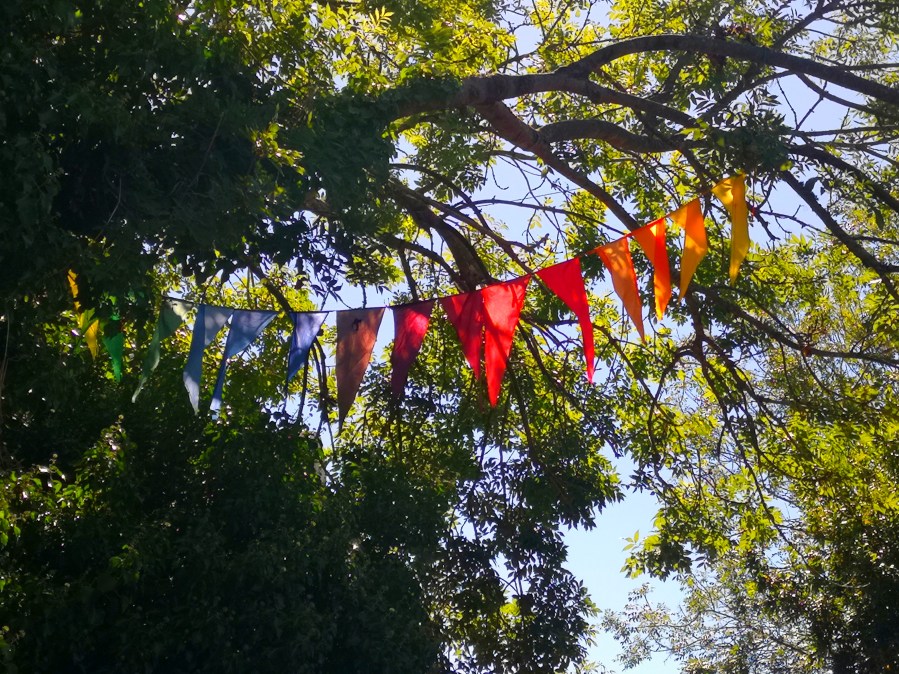
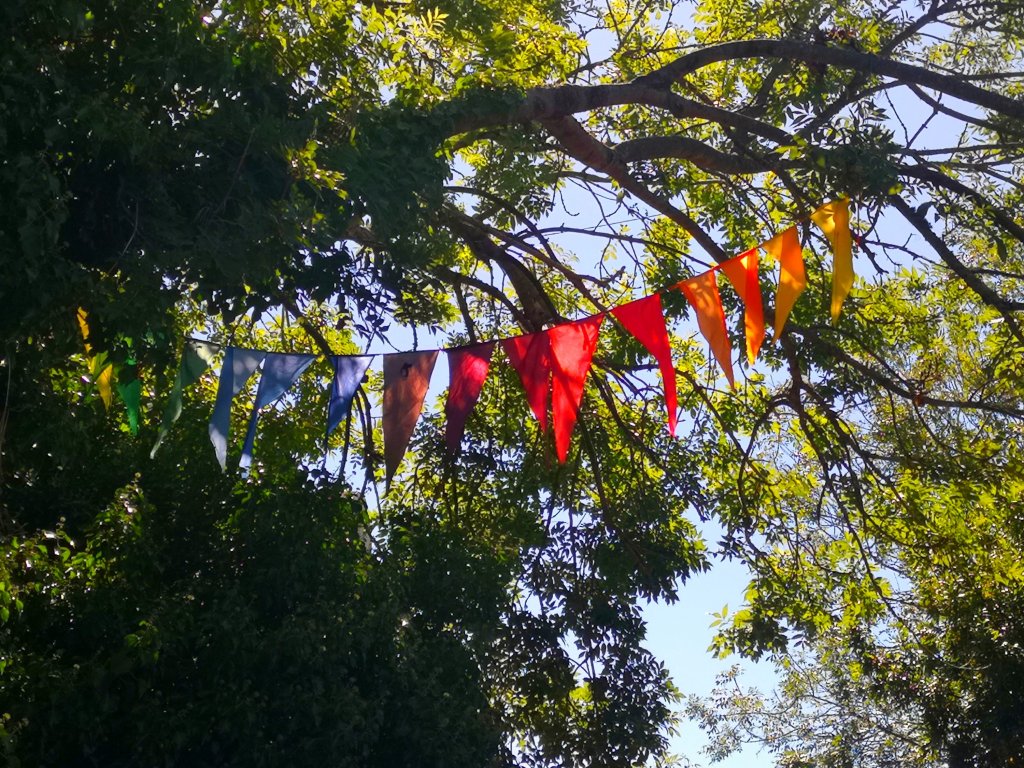
Hang out the flags. The Print exhibition I have been curating and managing, with others, has come to a close. With its closure comes the end of the most delightful commute of my life. Just a ten minute walk from home, today I took my car and parked even closer, under this bunting which was caught in this tree during the Queens Jubilee during a windy spell.
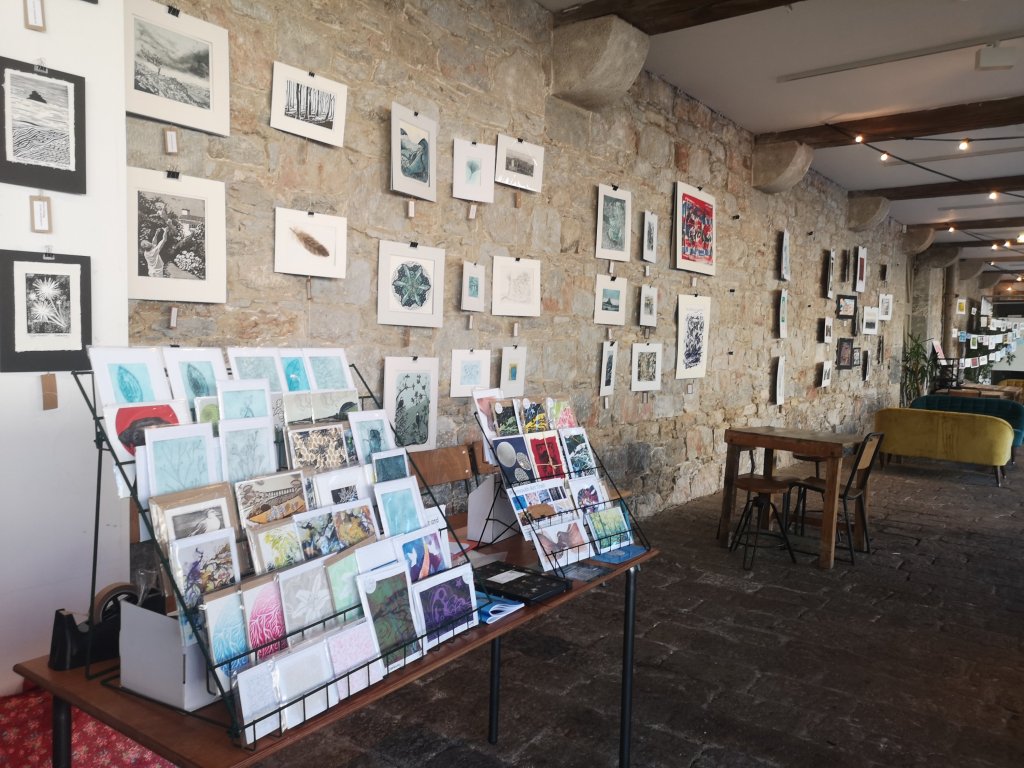
At 8 am the gallery was very peaceful before the take down team arrived.
Despite our best efforts of restocking after prints were sold some gaps have appeared but we only started to rum out during this last, very busy, weekend.
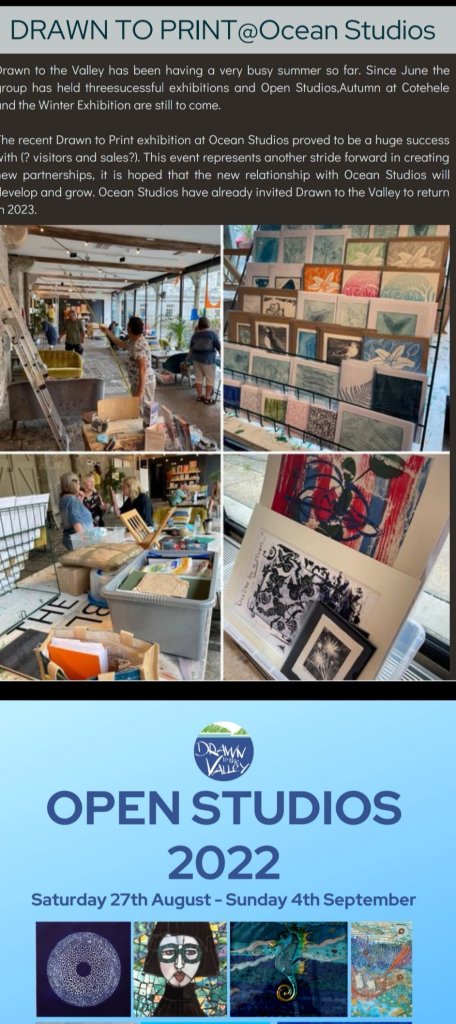
Ocean Studios in the Royal William Yard was a new venue for our art group. It has been a completely positive experience for the curating team and the Printers who took part. Our work has been seen by many of our regular visitors but we have also had a completely new audience and many international visitors. The next event for Drawn to the Valley is Open Studios.
The brochures for this Tamar Valley wide event were leaving Ocean Studios like the proverbial ‘hot cakes’
On a personal note I did sell enough prints to recoup my costs but I also bought quite a few prints so there may be a financial imbalance, but my house walls will thank me, I’m sure. And at last the purple note book and my emails do not need to be by my side or checked regularly.
Sunday, full disclosure, I didn’t write the main body of this blog. I am the ‘ old friend’ mentioned in the text. These blogs do all come out of somewhere, my daily interactions with people, this one comes from a real but email friendship. I love the writing style of my lovely friend Dai. We grew up in the same idylic village in North East Essex. We were awkward teenagers in the same location, young adults,medium adults and now older adults half a world apart. Our email contact mulls over all sorts of topics. We truly do not stick to reminiscing. I had no idea quite how to introduce this guest blog until a fact brought the 1970’s into sharp focus.
2022 is as far from 1970 as 1970 was from 1918. With that mind bending thought the blog is officially handed over to Dai. Not so much a blog more a Sunday Supplement.
It’s a modern trope often heard among the cohort of a certain age, that modern music isn’t a patch on the music of their day, which was without question the ‘golden age’ of popular music. Being a child of the 70s, I often find myself lapsing into this sort of diatribe in which the hopelessness and futility of the younger generation is laid bare by what passes as creative output in the form of the latest modern music. At such times I find myself sounding frighteningly similar to my own father who would bang on in the same vein whenever I cranked up the volume on the latest Slade single, or heaven forbid started playing that awful racket of an album, The Rise and Fall of Ziggy Stardust.
As far as my father was concerned the zenith of popular music had already been reached by the likes of Mr Acker Bilk, Vera Lynn, Paul Robeson, and in all likelihood such heights would never be surpassed despite all the recent advances in recording technology. So, what is it with popular music? Is it simply a generational thing, or is there more to it than that? George Bernard Shaw, observed that, “music is the brandy of the damned.” But then, again, he also promoted eugenics and opposed vaccination, so it could well be that when it came to popular music old Georgie boy was more of a conservative in his views than my father. Noel Coward, on the other hand claimed, “It is extraordinary how potent cheap music is.” And that is a statement with which we can agree because there is no doubting the power of music to uplift, to decrease anxiety and to invoke memories and emotions long locked away and all but forgotten. “Music has the charms to soothe the savage breast (yes, the correct quote is breast and not beast as is often quoted), to soften rocks, or bend a knotted oak.” William Congreve (dramatist of the 1600s). Music provides the soundtrack to our lives and in cases of individuals suffering even severe dementia, music has proven to possess the power to slice through the fog to release and retrieve old memories believed, lost forever, as well as restoring a sense of happiness and a lessening of depressive thoughts. Medical research, through the use of brain imaging technology has also demonstrated that listening to melodic music can stimulate the brain to produce increased amounts of dopamine and serotonin, the ‘feelgood’ hormones which may even result in the improvement of some disease symptoms without the need for pharmaceutical intervention. Without too much effort we can all probably name a piece of music which can instantly transport us back to a specific time and place, complete with the attendant emotions and sensations we were experiencing that particular moment in time. In the case of an old school friend the trigger is the song by America, The Horse With No Name. The mere sound of the opening strummed chords and she is instantly teleported back 50 years in time and immediately becomes once again, despite all her subsequent achievements and success, that awkward, insecure lonely teenager trying to negotiate that most difficult of transitions from a small insular primary school to the overwhelming chaos of a large comprehensive secondary school. It isn’t just the music and the song she can recall so vividly but all of the associated emotions, passions and feelings. Music has the power to summon forth this episodic memory, often connected with a difficult or stressful period in life, which can lie dormant and suppressed until released by the strains of a familiar song. For me it’s Bachman Turner Overdrive belting out You Ain’t Seen Nothing Yet. The reason being this song was on high rotation at the time my family decided to emigrate to Australia, a decision with which I was not in total agreement as it meant being uprooted and removed from all that was familiar, including an only recently discovered love-interest, at a critical time in my life. Hearing that song and I am immediately transported from the perpetually sunny climes of cosmopolitan Melbourne back to the damp overcast mediocrity and greyness of Northeast Essex. The reaction on hearing the music is a visceral one. Yes, it can be a painful experience but simultaneously an uplifting and joyful one as I morph once again into that wide-eyed 17-year-old ready to take on the world; and, as things turned, out more or less succeed. We’ve probably all got a song that can performe a similar time-shifting trick, complete with stirring emotional resonances but does this prove that music of yesteryear is better than the contemporary efforts? Well, no, but there are further aspects to this argument which should be explored before we cast a final judgement. The thing about music in the 70s was that it was generally speaking new and fresh. When Jimi Hendrix burst onto the scene the things, he was doing with the electric guitar had never been done before, and I don’t just mean setting fire to it. It was like WOW! Did you hear that? What made Bowie so incredible was the originality and creativity of the man as he strode so confidently down a road absolutely no one had walked before him. Bob Dylan may not have been everyone’s cup of Lap sang su Chong but he was a pioneer in fusing popular music with older more traditional forms such as folk he may never win any prizes for his singing but he did win a prize for his lyric writing, a Nobel prize for literature no less. Which means that today’s music almost inevitably is saddled with a sense that it’s all been done before and let’s be honest usually much better. But I believe there’s more to it than that. The way the music was presented was also an integral part in the way it was consumed. The pop charts mattered, most of us listened to the same radio station and watched the same tv music show simply because there weren’t many options. This meant that when a song became popular it permeated and left an indelible mark on the collective consciousness.This was also the age of the long form content. In this time of Tick Tock and Twitter and SMS texts, the concept of the LP is probably a totally alien one for the present generation to grasp. But back in the day the album reigned supreme, The artist would put as much care and effort into sorting out the track listing as in the writing of the material. And the listener would devour the album as a complete entity not as individual pieces of music. The other aspect of albums was the cover artwork, many album covers of this period became as iconic as the music itself, think Pink Floyd’s Dark Side of the Moon, the Rolling Stones Sticky Fingers, the Beatles, Sgt Peppers. The list is extensive. The songs on an LP can’t be shuffled skipped or readily rearranged. The listener is forced to hear the work complete in the exactly way the artist intended. This requires a certain commitment and level of concentration on behalf of the listener, which would not come naturally to the fickle, more easily distracted youth of today. On the subject of albums when I was 17 there were three albums that were played constantly on the rickety old turn-table in the 6th form common room, namely Rick Wakeman’s Journey to the centre of the Earth Mike Old field’s Tubular Bells and Emerson Lake and Palmer’s Brain Salad surgery These records were what was referred to as progressive rock, in fact they were quasi classical in style. And not a hit single between them. They definitely required commitment and a certain intellectual response from the listener. Yet they were all highly successful both critically and commercially and would be played from start to finish over and over again. Each track, you could hardly call them ‘songs’. Would go on for 20 minutes or more. I would argue that our brains were obviously more highly developed than those of the present custodians of popular culture who are so easily satisfied by gorging themselves stupid on the output of Justin Beiber, Katy Perry and One Direction. And as problematic and contentious as it may be. I am happy to state for the record, no pun intended, that the both the music and the listening public of my youth, are in a completely different class when compared to the examples of today.
Or am I being too harsh? After all, no matter how dismissive and disparaging I am of the state of modern music it is the batch of contemporary artists who will create the soundtrack and music memories for the current generation, though, only time will tell whether this output will be as memorable and enduring as that of earlier eras. Then again, not all music generated in the 70s was fresh, innovative and ground-breaking, some examples were derivative, shallow, disposable bubble-gum pap, I’m looking at you Gary Glitter. Perhaps trying to decide whether one period of music is better than another is simply too subjective an exercise to be able to produce a really definitive answer. For example, if 20 people were asked to compile a list of the best albums of all time, the chances are no more than one or two albums would appear on multiple lists. Still, maybe thinking about constructing such a list might provide an interesting and equally contentious subject for a future blog.
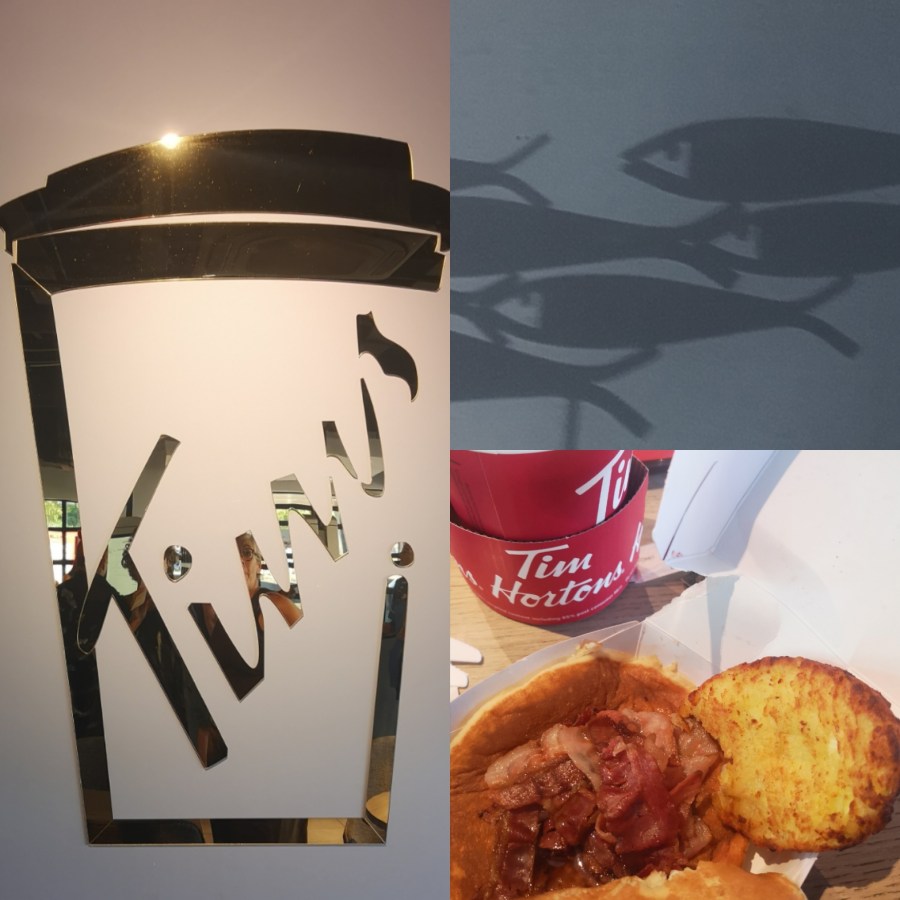
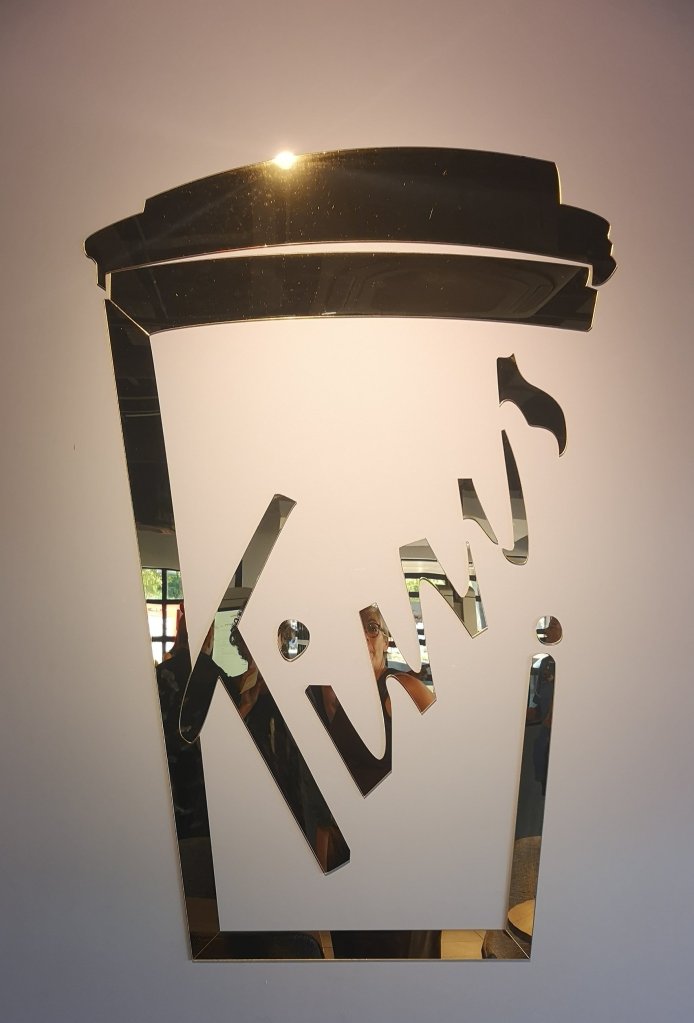
A late blog that is all about the early morning. Our fish sculpture swims across the bedroom wall as the sun rises. And as the sun rose we were up and off to sample a Tim Horton’s breakfast in Plymouth. Tim Horton’s is a favourite when we visit family in Canada.
5 days after Tim’s opened, there were no queues and we achieved breakfast pancakes with bacon and gorgeous Maple Syrup.
Late evening swimming has become an add on to the very last dog walk of the day. Last night the tide and sunset concurred to facilitate some skinny dipping. I have been a life- long, intermittent skinny dipper. In my youth I used to sneak into posh hotels and swim in their closed for- the -night swimming pools. In London the icy charms of the Hampstead Ladies Pond was a post on-call treat on a few occasions. Any deserted beach is an opportunity not to be missed and abroad I am much freer to just get on and do it as I always believe that I will never see any accidental observers again.
Now I live in a close knit community, a village in a city. I will, almost certainly, meet any casual observer again and yet even that didn’t matter when the chance to swim between rocks with only bats for company presented itself last night.
I was not alone, as the dimpsy light darkens, others cast off their bathing suits for a brief sensation of complete freedom, the moment marked with squeals of joy as celebration.
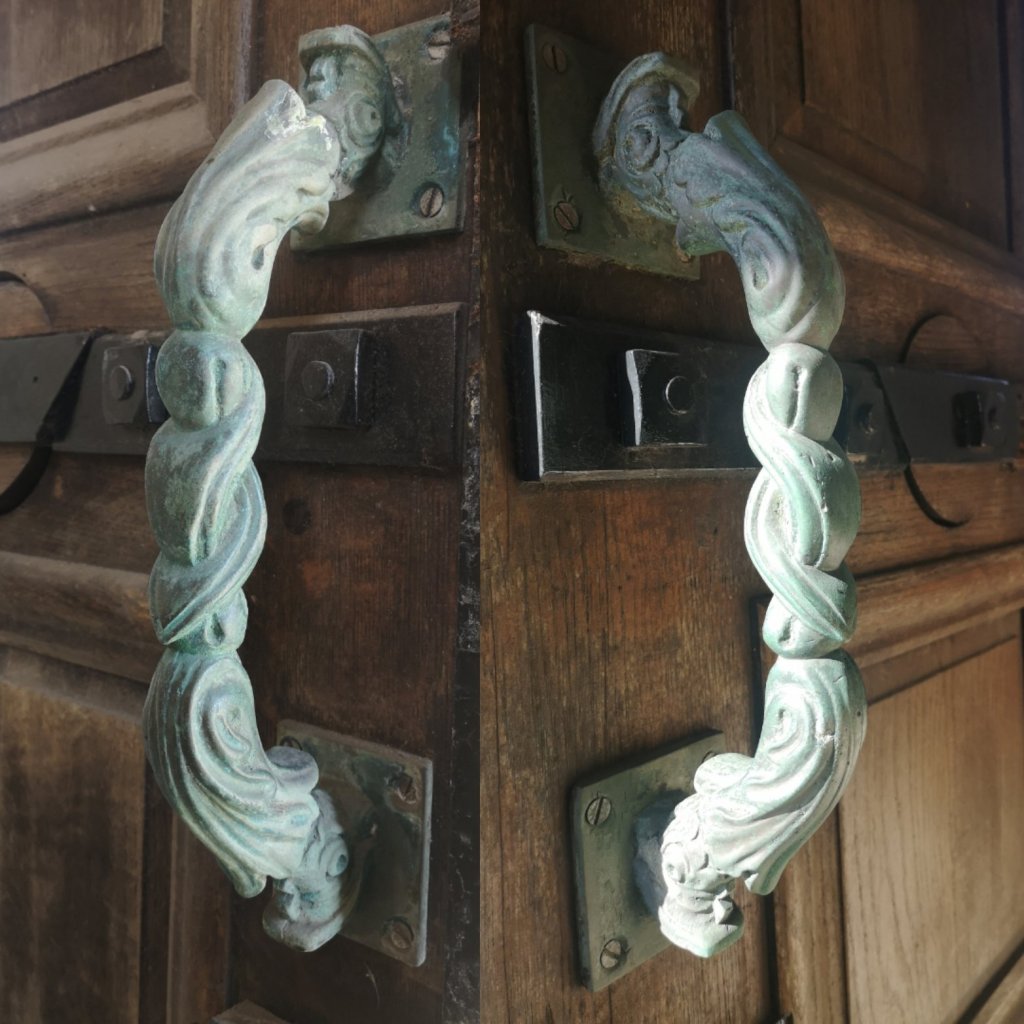
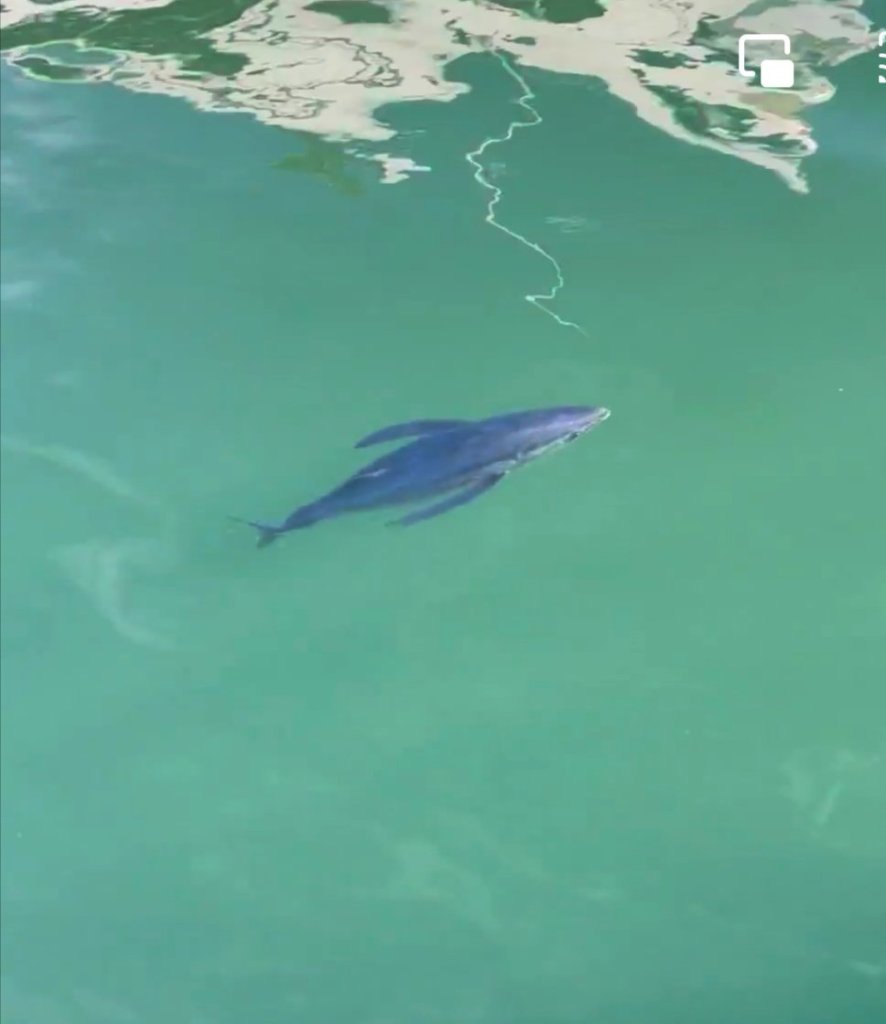
I must walk past these lovely handles most days but have never noticed them before. Today turned out to be a day for first experiences in every day places. These doors can act as a portal for the day. A little bit of Plymouth as a Mediterranean location. A Tuna was seen this morning in Sutton Harbour .
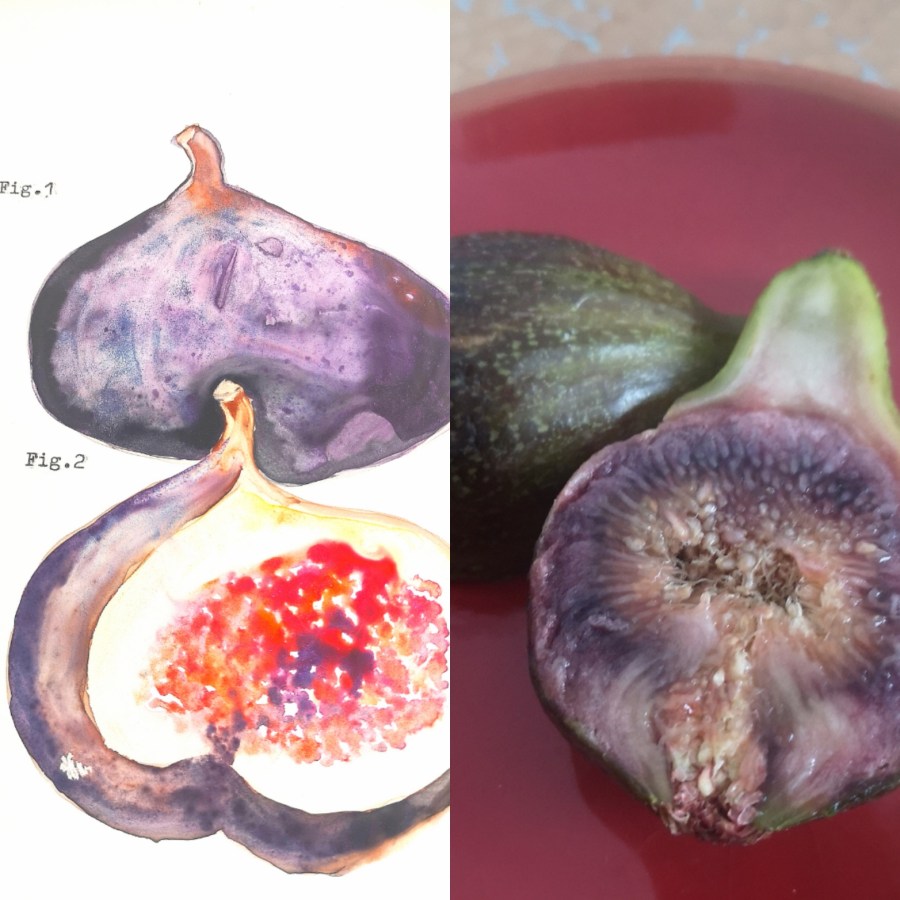
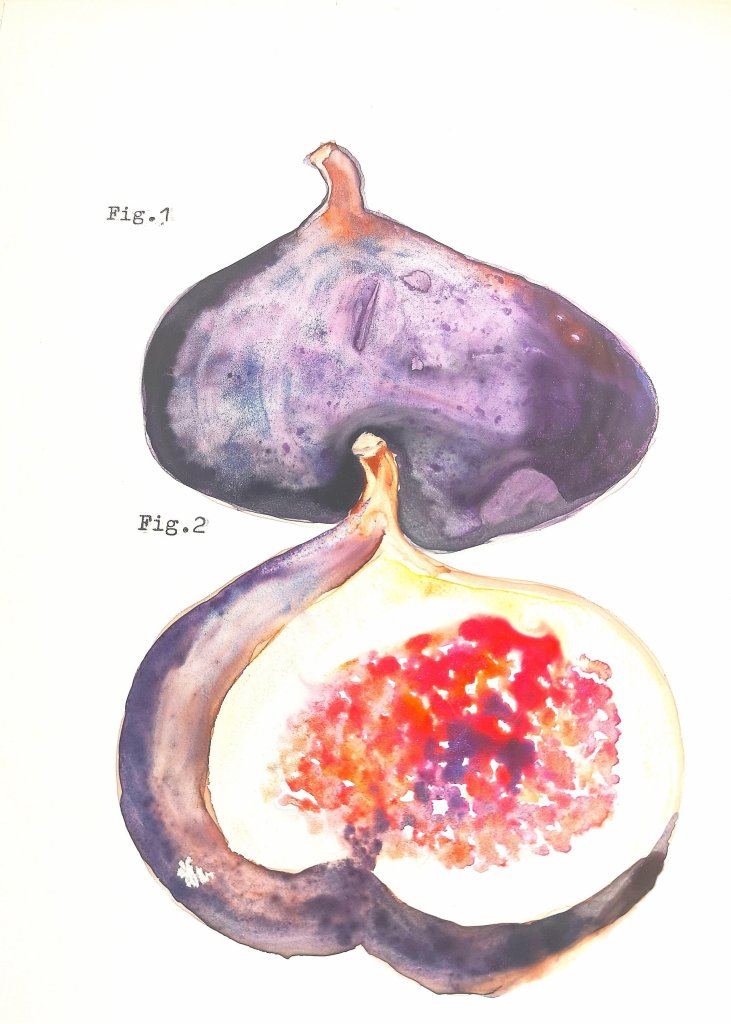
And a neighbour gifted me a home grown fig.
The fig was eaten soon after this posed image but may feature posthumously in a sketch. Possibly one of my watercolours with typing.
After a day of delicious figs and fabulously diverse natterings the evening dog walk had a little surprise.
This walkway into the sea was empty and we were hot, an impromptu swim was decided upon, just a quick dip in our knickers. It was glorious.
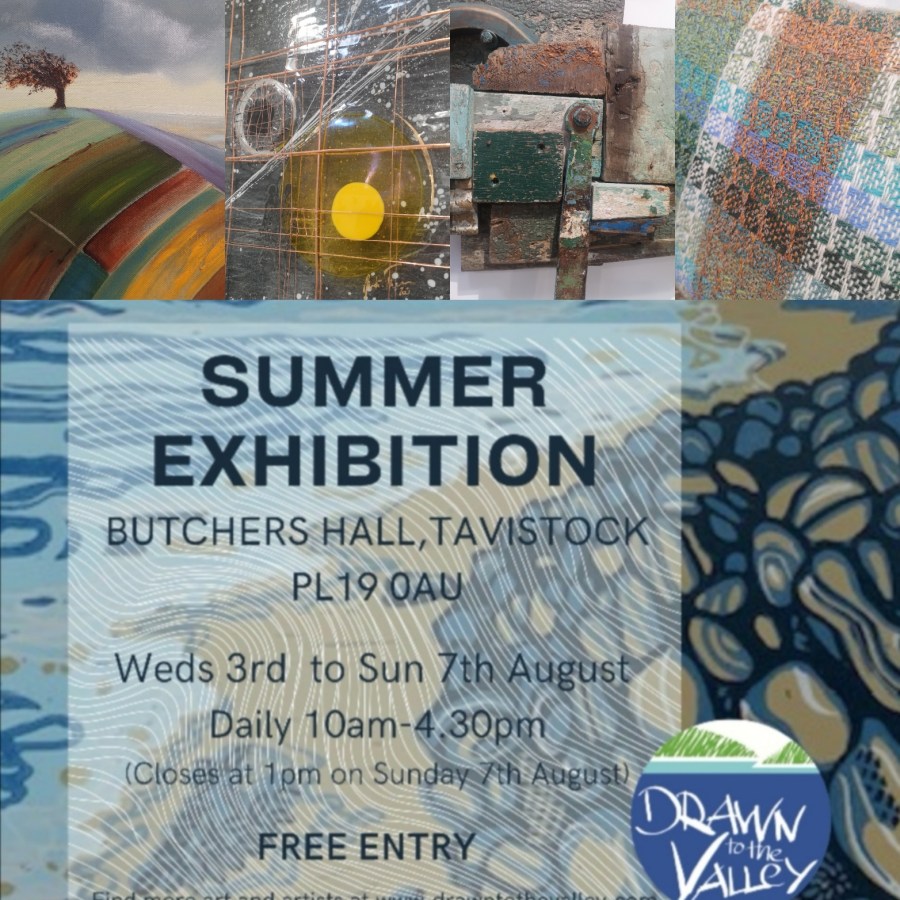
Yesterday was a day of Drawn to the Valley , stewarding at the print exhibition during the day and then a quick trip to Tavistock for the Summer Exhibition Private View. It was refreshing to visit an exhibition that I had no responsibility for and no work submitted. Anne and Michael have curated a stunning exhibition at Butchers Hall.
Councillor Caroline Mott, Mayor of West Devon with Anne and Michael.
Visitors to the Private View were treated to a fabulous Mid-Century Modern buffet of vol au vents and intricate delicacies mounted on Ritz biscuits, served to accompany locally produced apple juice. The wines may have come from beyond the valley…
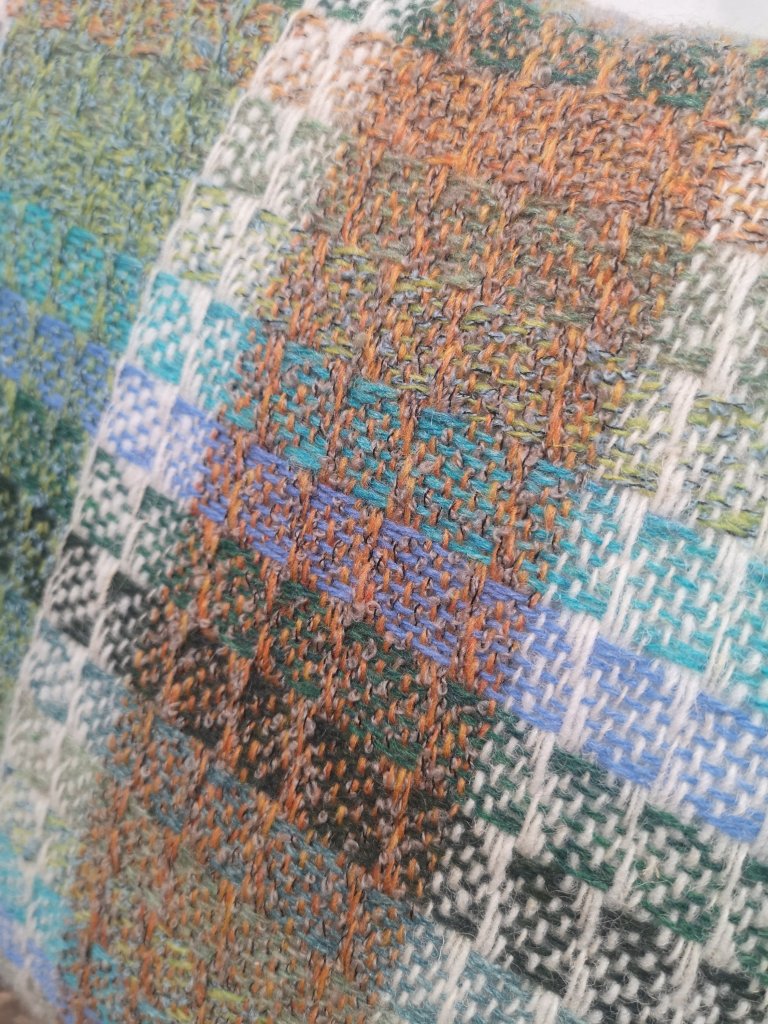
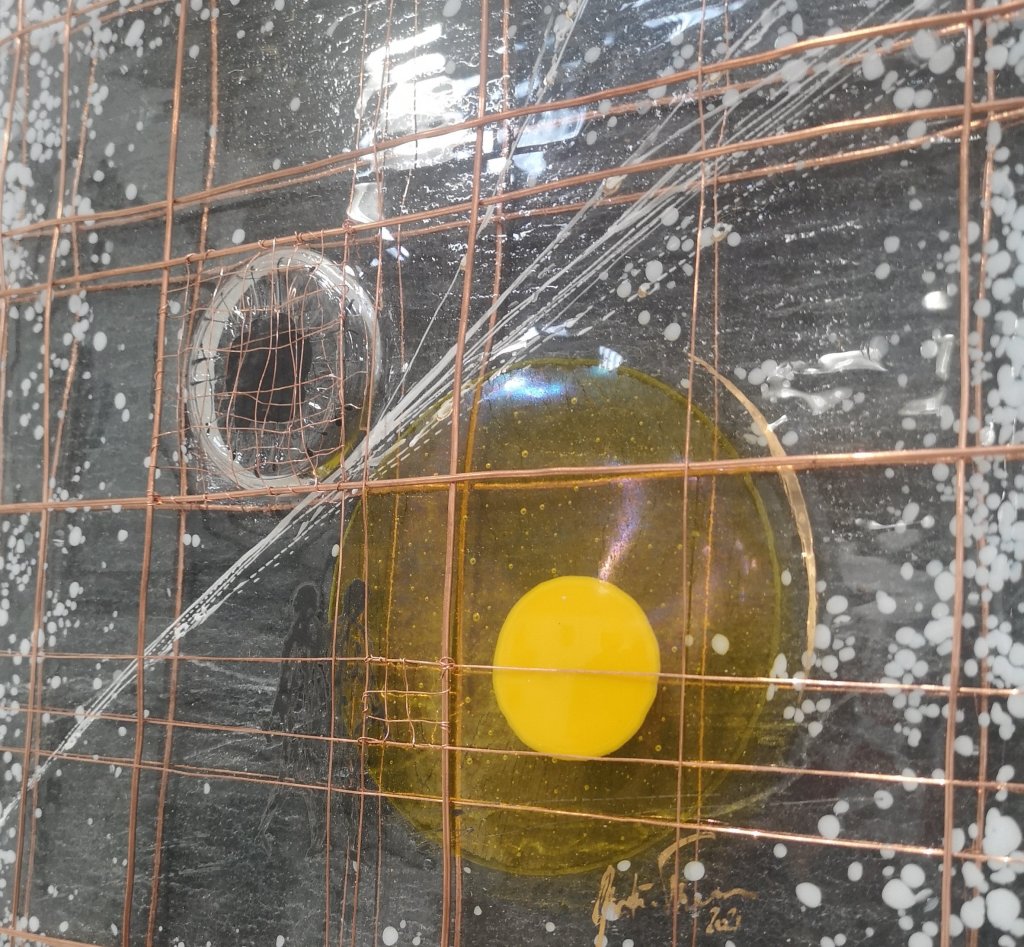
Vol au vents are an exploding confection of Coronation Chicken and flaky pastry. My terrifically arty outfit, a concoction of various blacks was a terrific background for the crumbs that my greed created. Undeterred by my flaky appearance I set about talking, a lot, to artists and friends and enjoying the art. The picture at the top of the blog is by a member Glenis Blakiston, she was a long term member of Drawn to the Valley until her recent death. Her husband, very kindly, submitted some of her pictures to this years Summer Exhibition. Her Encaustic wax image is one of the first things visitors to the exhibition will see this year. The terrific texture in her work gave me the theme for a few pictures from the exhibition. Texture.
I love that the two creations above share the same colour palate but have a significantly different visual heft. Similarly the next two share similar colour and line but could not be more different.
Facebook reminds me that it is five years since I was in North America. That is a timely reminder as yesterday we had planned a North American experience.
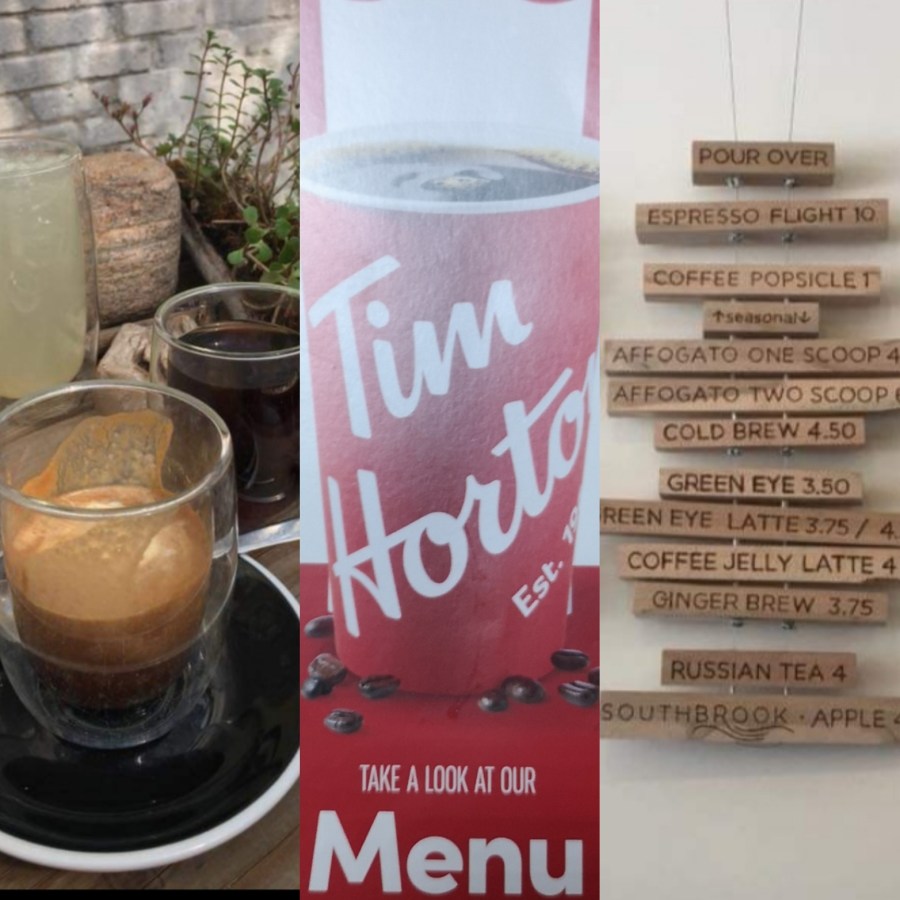
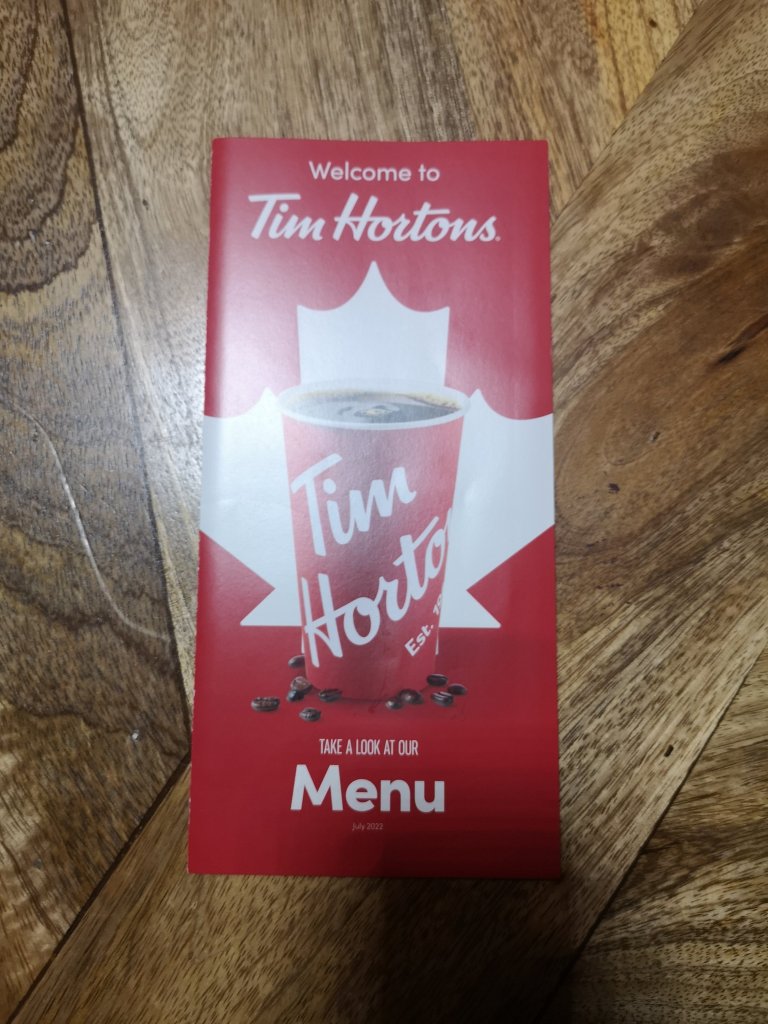
Lets be honest a coffee in an independent Coffee Shop, Hot Black Coffee, in Toronto is a very different experience from a Tim Horton coffee, but needs must and we are in Plymouth not Canada. Tim Horton opened in Plymouth yesterday.
Now that was the plan. But domestic life got in the way and inadvertantly solved a year old problem.
When we moved house a year ago we had made a grab bag of important documents and items that must not be lost. The plan was that one of us would grab the, highly visible, leopard print clutch bag, and move it safely from one house to the other. That didn’t happen and neither of us know how. The bag has been missing for over a year. The contents were so important that every room in the new house has been turned upside down and inside out several times. The loss of some of these items has been crucial and the 6 month wait for new passports is probably the most painful result of our loss.
We were up early yesterday to visit Tim Horton’s for breakfast. In the quiet of the morning there was the sound of a drip in our utility room.
Our utility room is know as the ‘Futility Room’ as it is too small for its true purpose and yet somehow is a perfect store room, and loo!
We had to move a lot of stuff to get at the drip. Having located and fixed the fault we decided to reconfigure some of the shelving installed by our diligent removal men. Unbelievably behind the shelving the Leopard print clutch bag was resting, safely holding all of our important things. One of the removal men must have picked it up, tucked it under his arm and moved it with the shelving and then just put it to one side at the new house. That is the end of a year of puzzlement. It was also the end of breakfast at Tim Horton’s. We did drive over at 2pm having mentally swapped breakfast for doughnuts but the rest of Plymouth had got there before us. Huge queues for drive-thru and eat in. Maybe we will go back, maybe not. In less than a month we are Toronto bound, the queues will be shorter there and we can also go independent. After 5 years we may well do both.
























 theoldmortuary.design